
Protein is the nutrient with the clearest evidence for building muscle alongside resistance training. The questions that matter are how much you need in a day, how to spread it out, and whether a protein powder adds anything your food does not. This guide answers each one with the research behind it, compares whey, casein and plant protein, and explains when powder is simply the cheapest convenient option. Our range is in the protein shop.
Protein: the short version
- The UK reference intake for adults is 0.75 g of protein per kilogram of body weight a day. People training for muscle generally benefit from more.
- A large 2018 analysis found gains from extra protein level off at around 1.6 g per kilogram a day, with some people benefiting up to about 2.2 g.
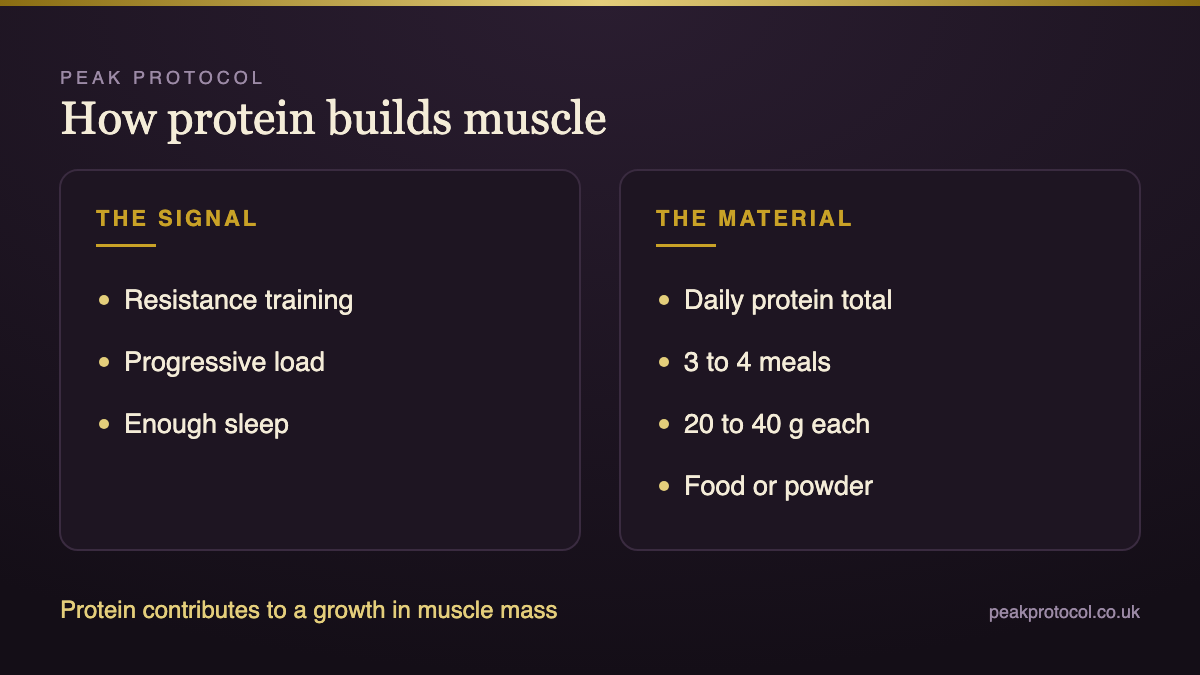
- Total daily intake matters most. Spreading it across three or four meals of roughly 20 to 40 g each is a sensible pattern.
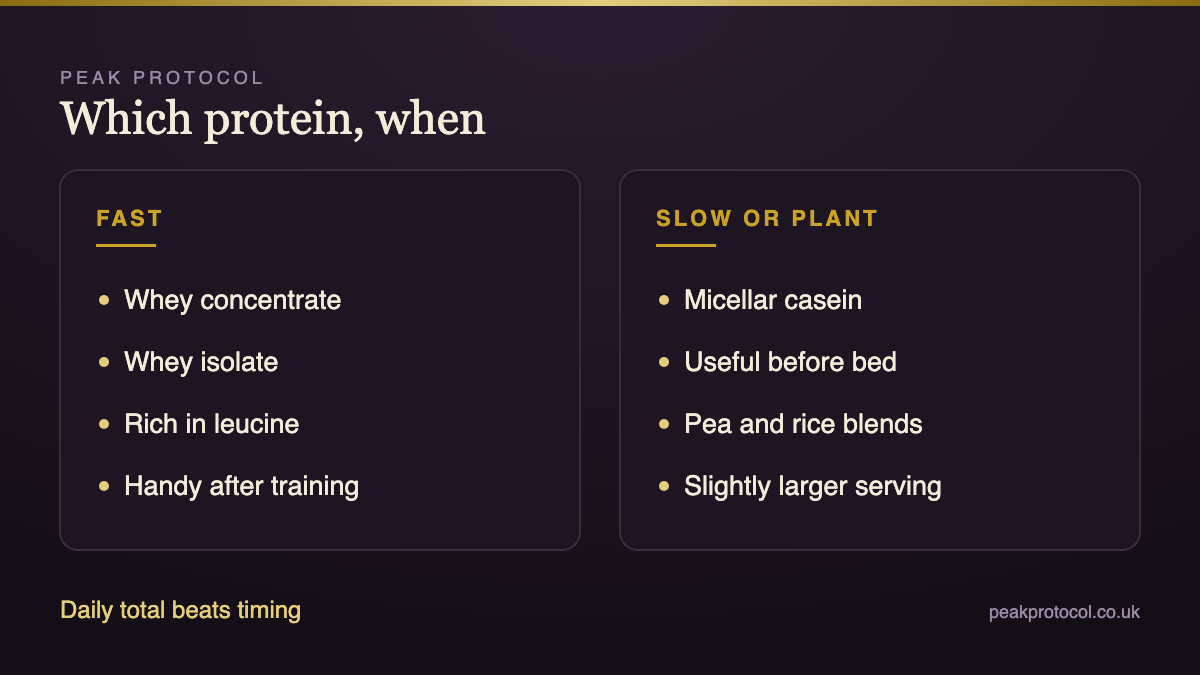
- Whey is fast and rich in leucine, casein is slow, and blended plant proteins work well when the total is high enough.
- Protein powder is food in a convenient form. It is not more effective than the same protein from a meal.
- Protein contributes to a growth in muscle mass. That is the authorised GB claim, and it is the whole of what we say.
How much protein you need
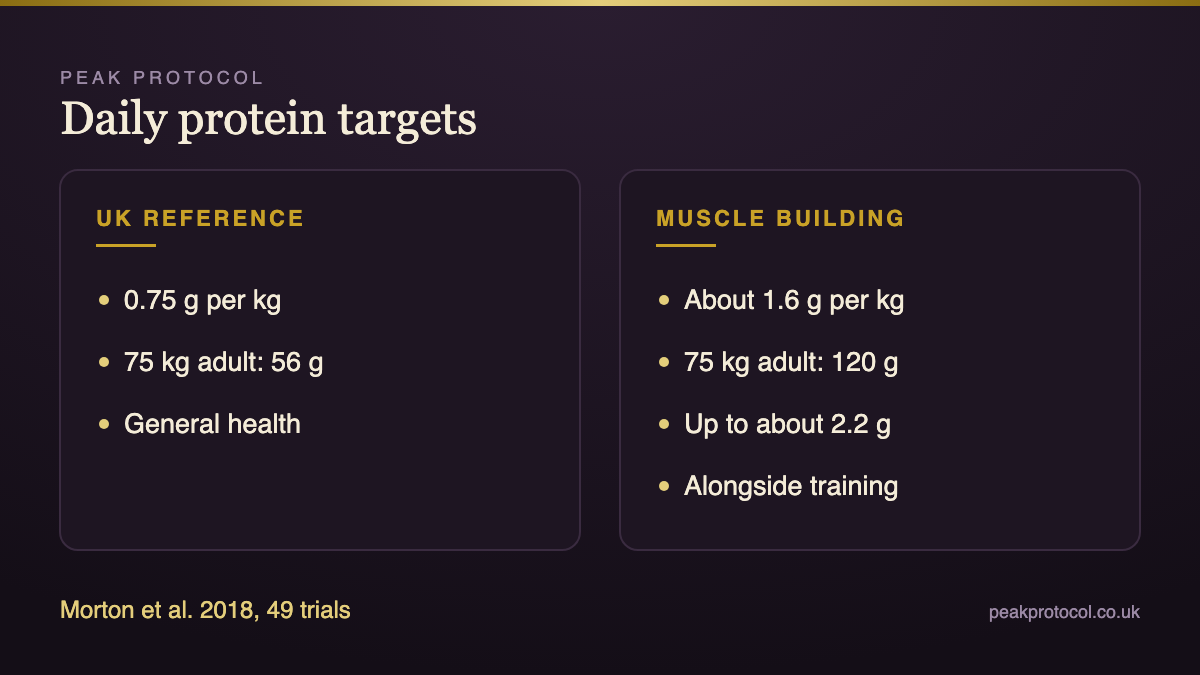
The UK reference nutrient intake for adults is 0.75 g of protein per kilogram of body weight per day, which covers basic needs for most people, as the British Nutrition Foundation explains. It is not designed around building muscle.
For people doing resistance training, the best single summary is a 2018 meta analysis of 49 trials by Morton and colleagues, British Journal of Sports Medicine, 2018. Protein supplementation increased gains in strength and muscle, and the benefit levelled off at around 1.6 g per kilogram per day, with the upper confidence limit near 2.2 g. The International Society of Sports Nutrition position stand on protein and exercise gives a similar range of 1.4 to 2.0 g per kilogram for most people who exercise.
| Body weight | UK reference intake (0.75 g/kg) | Muscle building target (about 1.6 g/kg) |
|---|---|---|
| 60 kg | 45 g | About 96 g |
| 75 kg | 56 g | About 120 g |
| 90 kg | 68 g | About 144 g |
| 105 kg | 79 g | About 168 g |
Protein timing
Your total for the day matters much more than exact timing. The idea of a narrow window after training in which protein must be eaten has not held up well; if you ate a meal with protein in the hours before training, the window is wide.
Distribution still helps. Muscle protein building responds to each protein containing meal, so three or four meals of roughly 0.25 to 0.4 g per kilogram, often 20 to 40 g, spaced through the day is a practical pattern. A protein rich meal or shake before bed is a reasonable way to add to the daily total, and slow digesting casein is often used for it.
Whey, casein and plant protein
| Type | Digestion | Strengths | Consider |
|---|---|---|---|
| Whey concentrate | Fast | High in leucine, good value | Contains some lactose |
| Whey isolate | Fast | Higher protein per scoop, lower lactose | Costs more per gram |
| Micellar casein | Slow | Steady release, thick texture | Less convenient straight after training |
| Plant blends (pea, rice, others) | Moderate | Suitable for vegans, blends cover amino acids | May need a slightly larger serving |
| Mass gainers | Varies | Adds calories easily | Mostly carbohydrate, check the protein per serving |
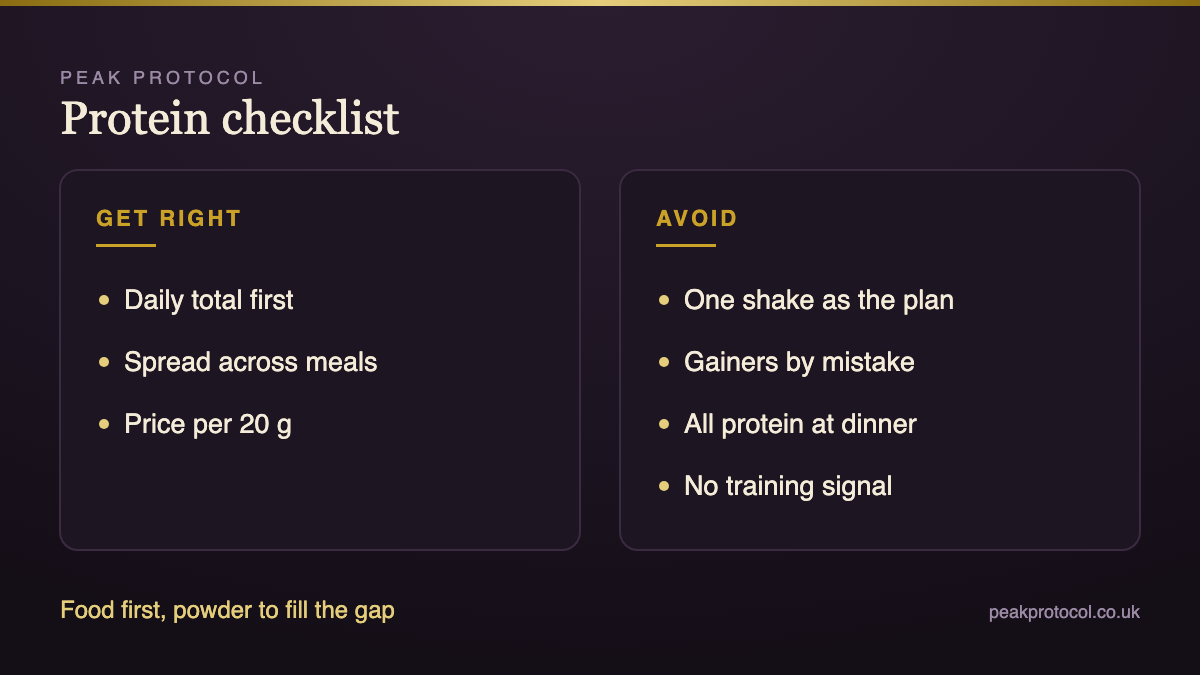
For most people the right type is the one they will use consistently and can digest comfortably. Compare products on protein per serving and price per 20 g of protein rather than per tub, because scoop sizes vary widely. Every product page in our protein range prints the protein per serving so that comparison is straightforward.
Protein for muscle growth
Protein supplies the amino acids that muscle is built from, and resistance training is the signal that tells the body to use them. Without the training, extra protein does little for muscle. With it, getting enough protein each day is one of the few nutrition habits with strong, consistent evidence. The authorised GB claims are that protein contributes to a growth in muscle mass and to the maintenance of muscle mass, and we limit ourselves to those.
Protein also helps older adults hold on to muscle, where the per meal amount needed tends to be higher. Anyone over about 65 may benefit from paying particular attention to the protein in each meal.
Protein powder versus whole foods
Protein powder is not more effective than food. Chicken, fish, eggs, dairy, tofu, beans and lentils all count, and whole foods bring fibre, vitamins and minerals that a shake does not. Powder earns its place on convenience and cost: a scoop of whey often costs less per 20 g of protein than many whole food sources, and it is easy to carry.
A reasonable approach is to build meals around protein foods and use a shake to close the gap on days when you fall short. If you already reach your target from food, a powder adds nothing to your results.
Is a high protein intake safe?
For healthy adults, intakes in the ranges above have not been shown to harm the kidneys or bones. People with kidney disease should follow their doctor’s advice on protein, as needs differ. Very high intakes can crowd out other foods, and some powders contain sweeteners that upset some stomachs. If you have a milk allergy, avoid whey and casein and choose a plant protein.
Protein, creatine and the legal steroid question
People searching for legal steroids are often looking for anything that builds muscle faster. The honest answer is that the things with strong evidence are unglamorous: enough protein, creatine, progressive training and sleep. Products sold as legal steroids mostly rely on ingredients with weak evidence, as explained in our legal steroids UK guide. Anabolic steroids themselves carry serious risks and legal consequences covered in our steroids in the UK hub.
Five common protein mistakes
- Relying on a shake to fix a low protein diet. One scoop is about 20 to 25 g; the rest has to come from meals.
- Comparing tubs, not grams of protein. Price per 20 g of protein is the fair comparison.
- Eating most of the day’s protein in one meal. Spreading it out is more effective.
- Buying a mass gainer when you only need protein. Many are mainly carbohydrate.
- Expecting protein to work without training. Training is the signal.
Where protein fits
Protein sits alongside creatine as the two supplements with the strongest case for anyone training for strength or size. How we grade the evidence for every ingredient we sell is on our supplement evidence page, and essential amino acids and BCAAs are covered in our amino acids range, where we say plainly that BCAAs add little if you already eat enough protein.
Protein for vegetarians and vegans
Plant proteins tend to contain less leucine and, individually, may be low in one or more essential amino acids. Combining sources across the day, such as legumes with grains, soya, and blended plant powders, covers the full range. Aiming for the upper part of the target range and slightly larger servings per meal makes up for lower digestibility. Soya and pea based blends are well studied and work well for muscle building when the total is sufficient.
How to read a protein label
Look at protein per serving and per 100 g, and check the serving size in grams, because some scoops are smaller than others. Check the ingredients for added free amino acids such as glycine or taurine near the top of the list, a practice known as amino spiking that can inflate the protein figure on some tests. Flavour systems and sweeteners are normal; lots of added sugar in a product sold as protein is not. Every product page in our range lists protein per serving so you can compare on the number that matters.
Protein when you are losing weight
Protein is filling, and during a calorie deficit a higher intake helps preserve muscle while fat is lost. Research on dieting athletes suggests aiming towards the upper end of the ranges above while in a deficit, alongside continued resistance training. Protein does not burn fat on its own; it makes a sensible calorie deficit easier to sustain and protects the muscle you have. Anyone with a medical condition, or planning a large weight loss, should discuss it with a GP.
Protein: common questions
How much protein do I need to build muscle?
Research suggests benefits level off at around 1.6 g per kilogram of body weight a day, with some people benefiting up to about 2.2 g. The UK reference intake for general health is 0.75 g per kilogram.
Does protein timing matter?
Total daily intake matters most. Spreading protein across three or four meals of roughly 20 to 40 g is a sensible pattern.
Is whey better than plant protein?
Whey is fast digesting and rich in leucine. Blended plant proteins work well when the serving is large enough. Choose the one you will use consistently.
Do I need protein powder?
No. Powder is a convenient and often cheap source of protein, but food works just as well. Use powder to close the gap when meals fall short.
Is too much protein bad for your kidneys?
Studies have not found harm to healthy kidneys at the intakes used for muscle building. People with kidney disease should follow medical advice.
Can protein replace steroids?
No supplement works like anabolic steroids. Enough protein, creatine and consistent training are what the evidence supports, without the health and legal risks.
Sources and review status
This guide draws on Morton and colleagues, British Journal of Sports Medicine, 2018, the International Society of Sports Nutrition position stand on protein and exercise, the GB nutrition and health claims register and guidance from the British Nutrition Foundation.
Written by the Peak Protocol editorial team. This page has not been reviewed by a medical or legal professional. It is information, not medical or legal advice, and it is not an encouragement to use any drug. Peak Protocol sells legal sports supplements and does not sell anabolic steroids, SARMs or prescription medicines. How we research and correct content is set out in our editorial policy.