
Thirty four guides covering UK law, side effects, harm reduction, testosterone replacement and the legal supplement market. All written to be read by someone making a real decision, which means they include the parts that are inconvenient for a shop to publish.
On this page
- Steroids and the law
- Side effects and health
- Harm reduction
- TRT and testosterone
- Supplements
- Legal supplements
- Guides worth starting with
- TRT clinics by city
- Compound guides
- How the guides are organised
- Which guides to read first
- What these guides deliberately do not do
- Why the supplement guides sound cautious
- How the guides are kept current
- Questions about the guides
- Why there are fifteen city guides
Every health page carries a notice while our medical reviewer position is being filled. See our editorial policy for how this content is sourced and corrected.
Start here: steroids in the UK
The hub page for everything on this site about anabolic steroids: the law, the types, the risks, testing, TRT and the legal alternatives, with links to every guide below.
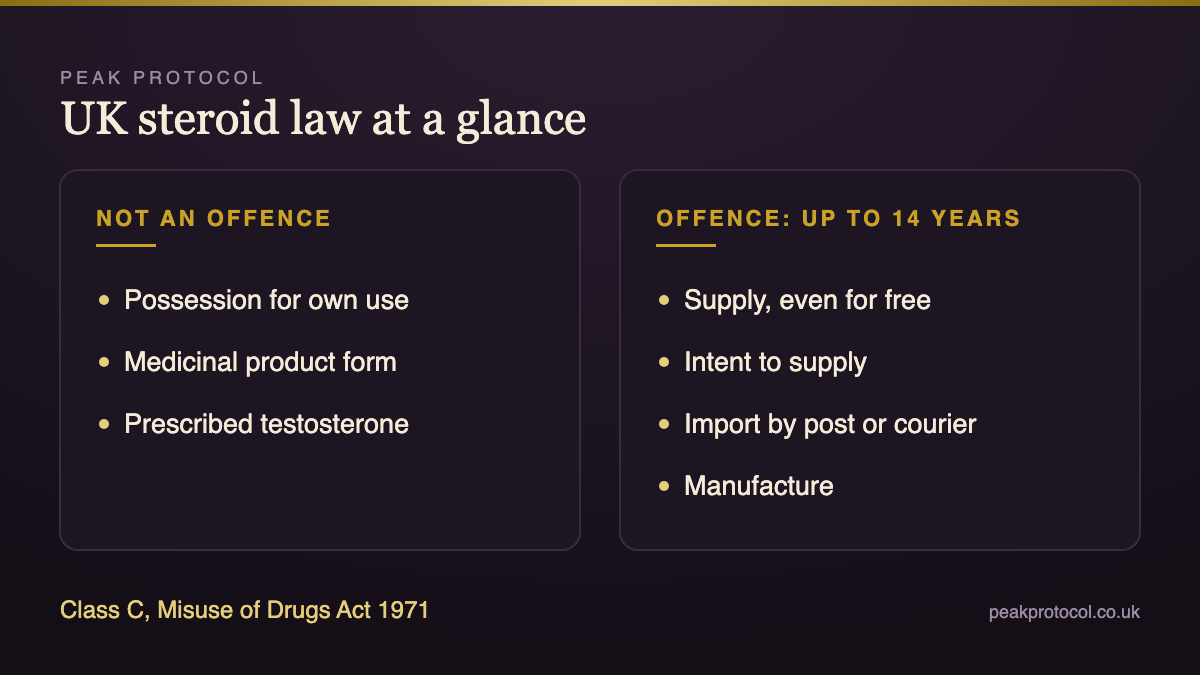
Steroids UK: laws, risks, types and what you need to know
The complete overview. Start here if you are new to the subject, then follow the links to the detail.
Hub page · Read the guide
New guides
The latest additions, covering the law in depth, the heart and fertility, counterfeit products, sport, TRT routes and the supplements with the strongest evidence.
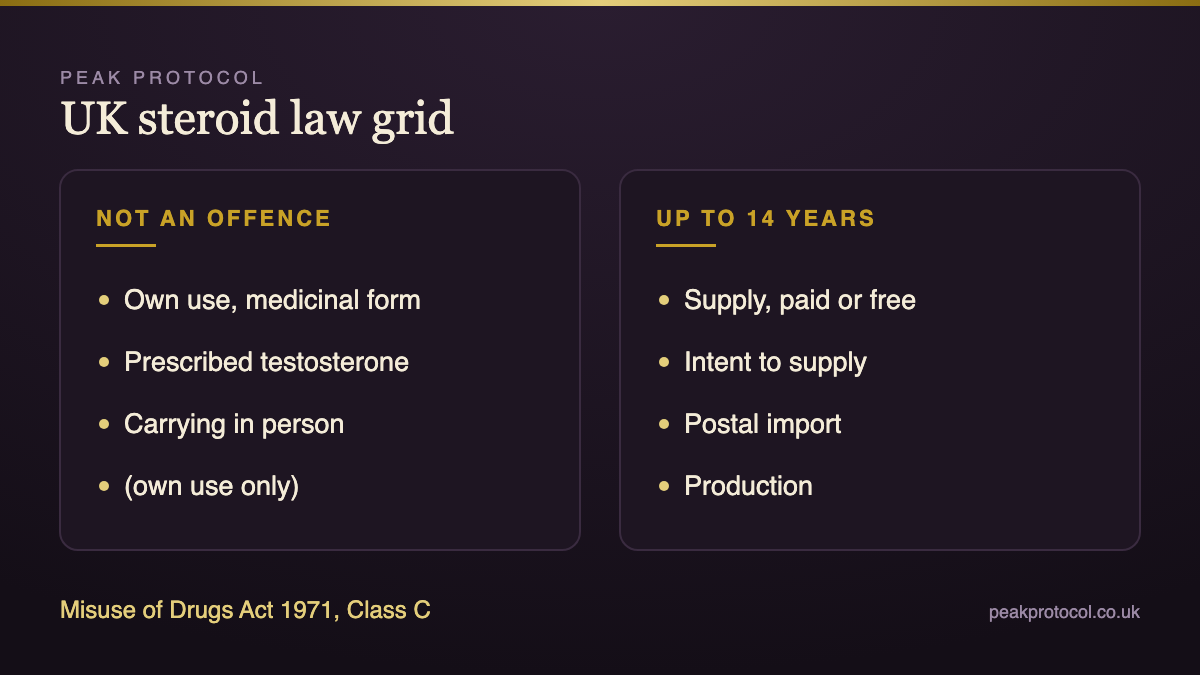
UK steroid law: possession, supply and import explained
What is legal to possess, why supply and postal import carry up to 14 years, and what happens after a seizure.
17 July 2026 · Read the guide
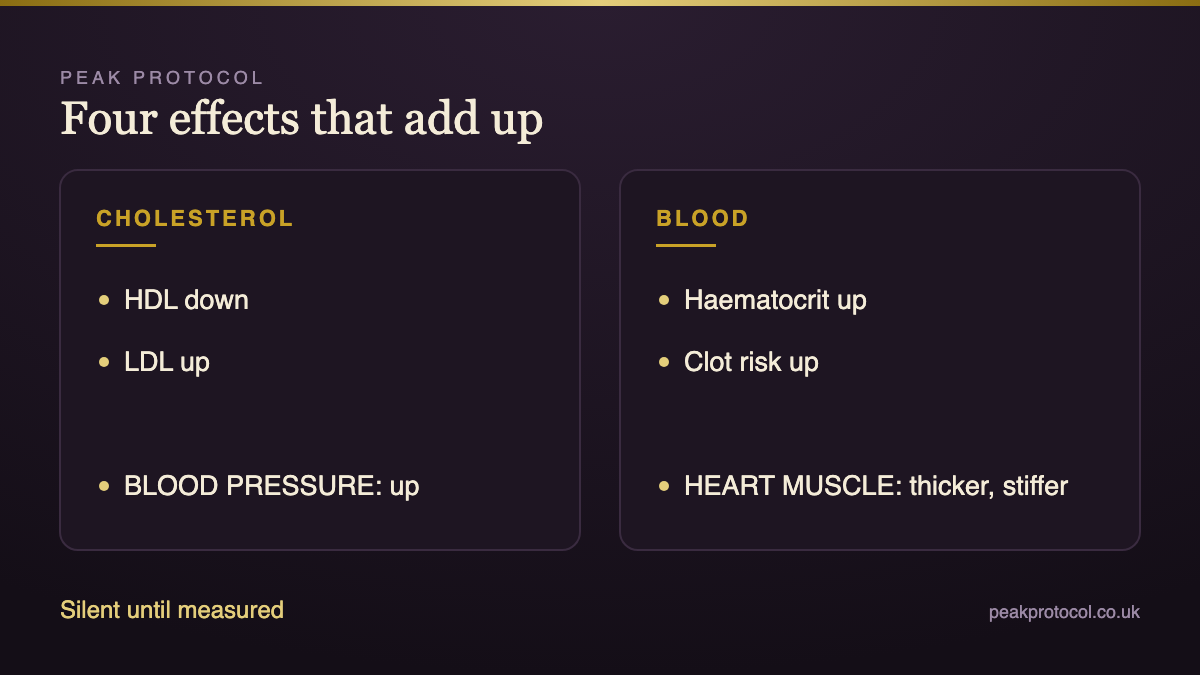
Steroids and heart health
Blood pressure, cholesterol, thicker blood and changes to the heart muscle, and which checks to ask for.
19 August 2026 · Read the guide
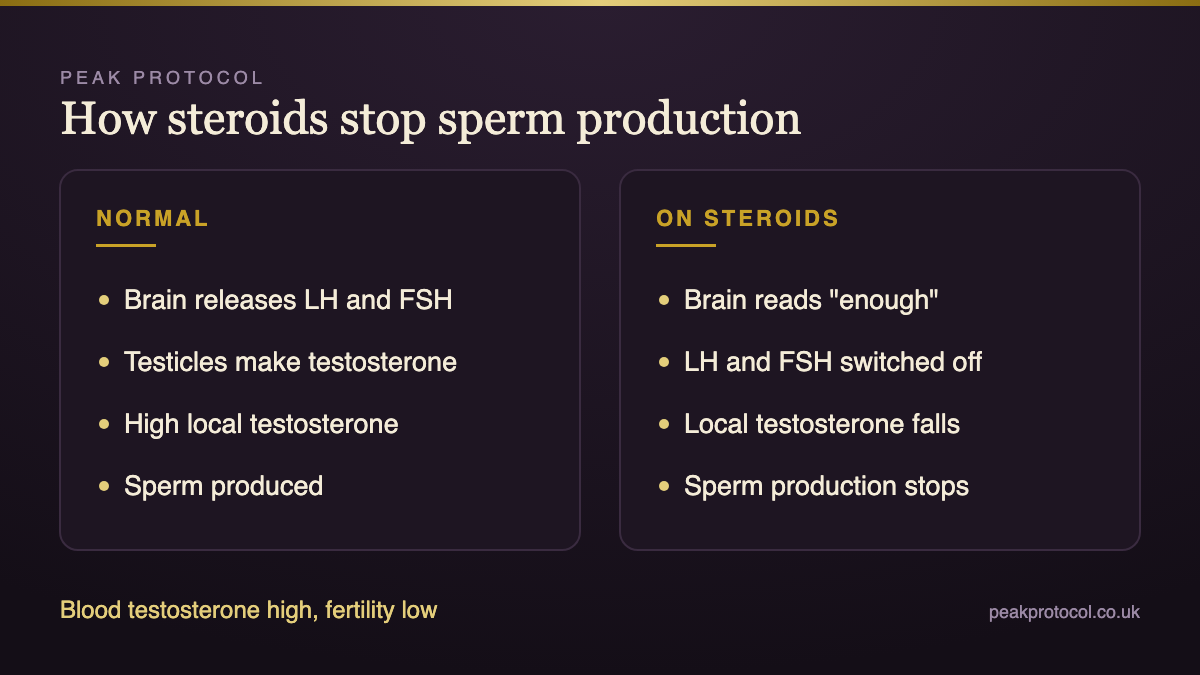
Steroids and fertility
Why sperm production stops, how long recovery takes, and when to see a GP about testing.
7 August 2026 · Read the guide
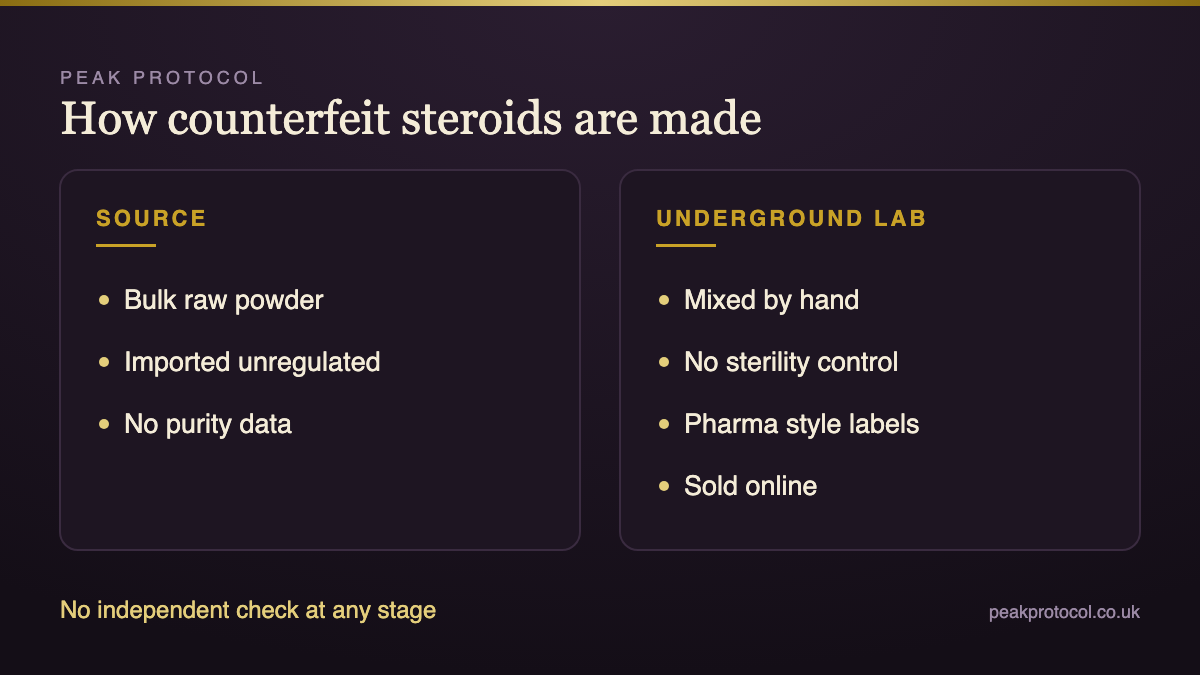
Counterfeit steroids: what is really in the vial
Why labels, holograms and batch numbers prove nothing, and how to report fake medicines.
1 September 2026 · Read the guide
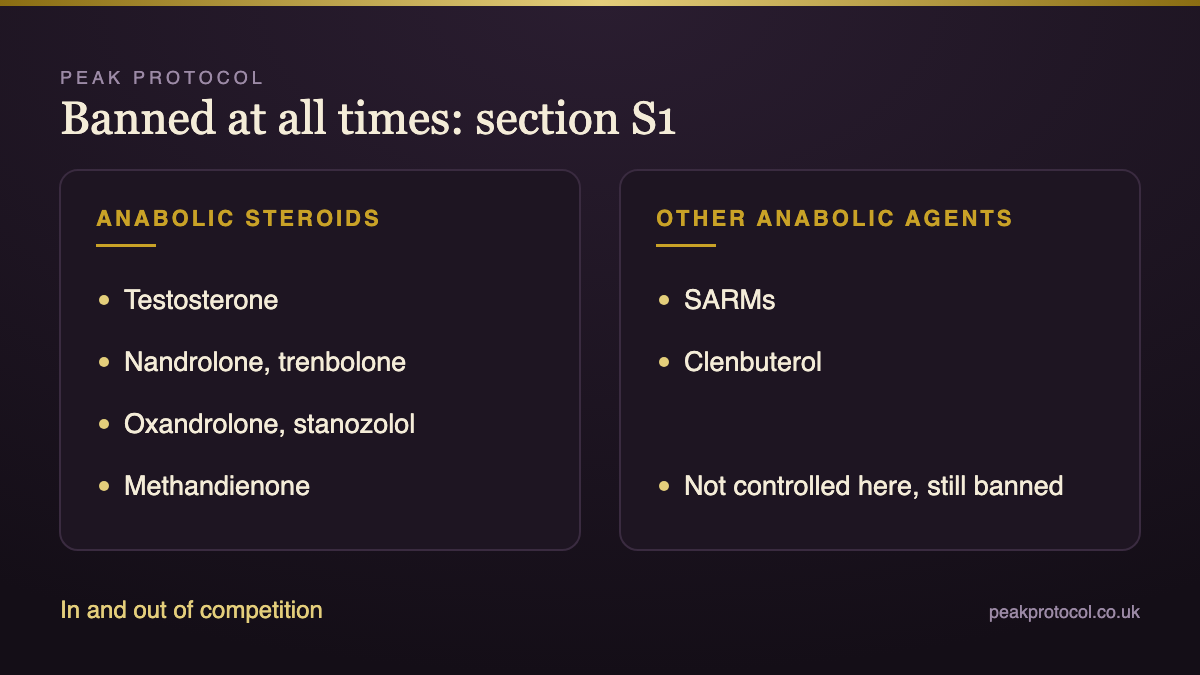
Anti-doping in the UK
Why steroids, SARMs and clenbuterol are banned at all times, strict liability, TUEs and supplement contamination.
16 September 2026 · Read the guide
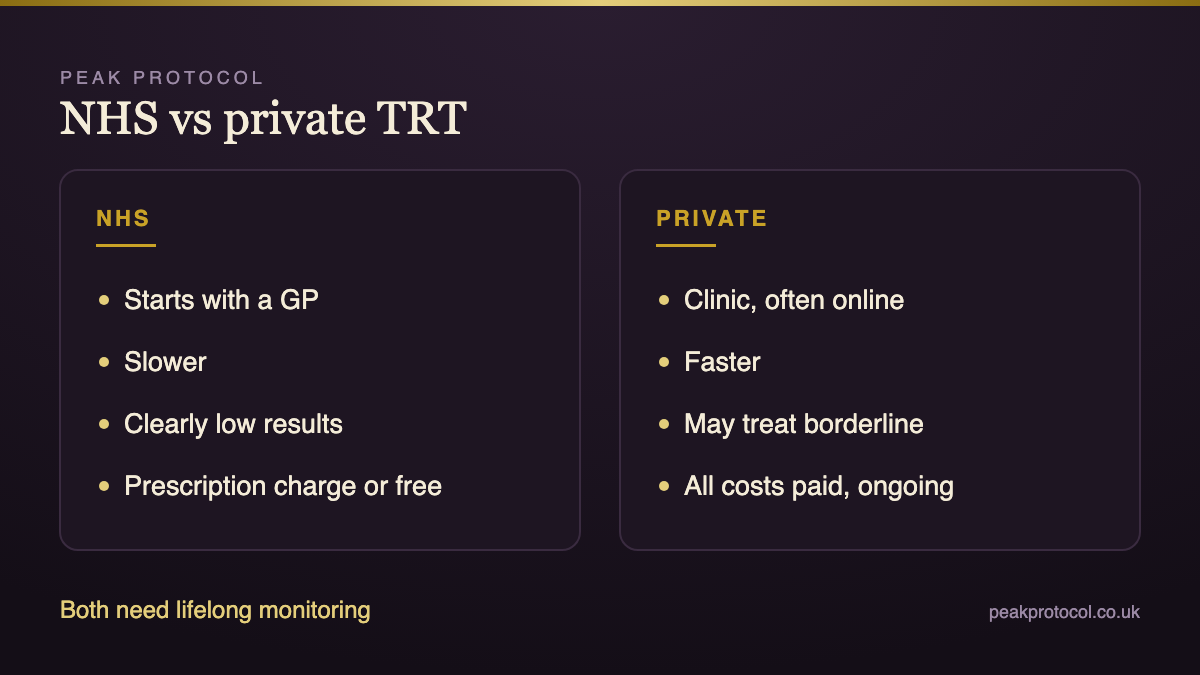
NHS vs private TRT
Diagnosis, speed, cost, monitoring and red flags on each route to testosterone treatment.
24 June 2026 · Read the guide
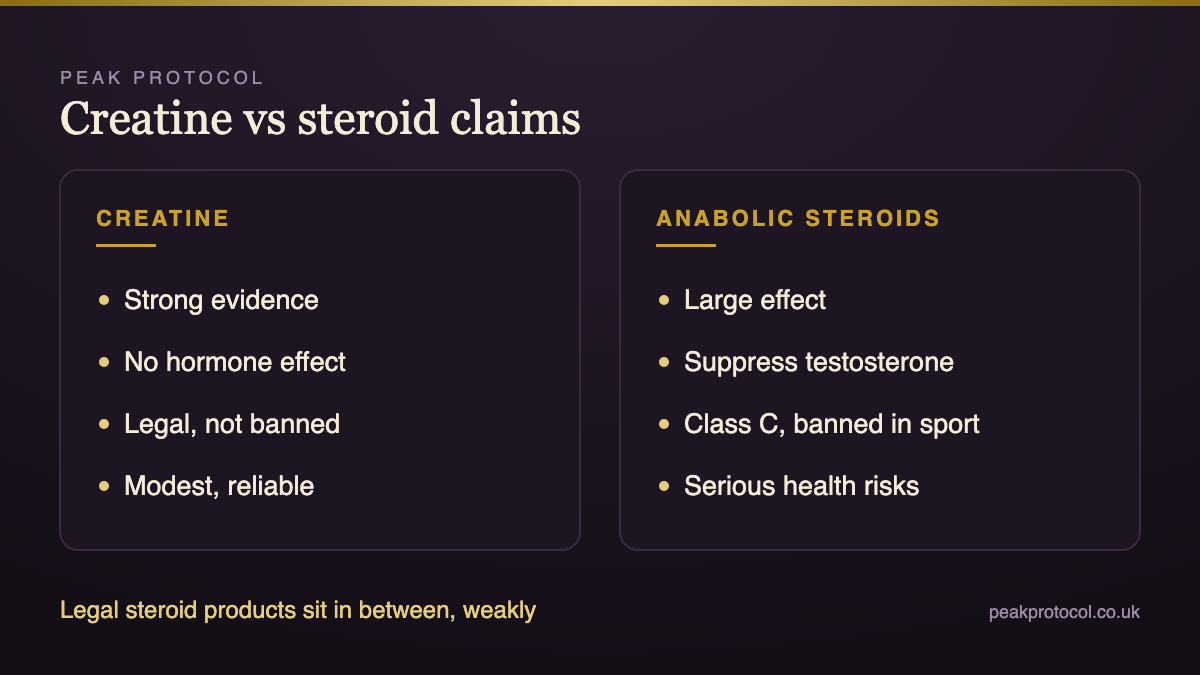
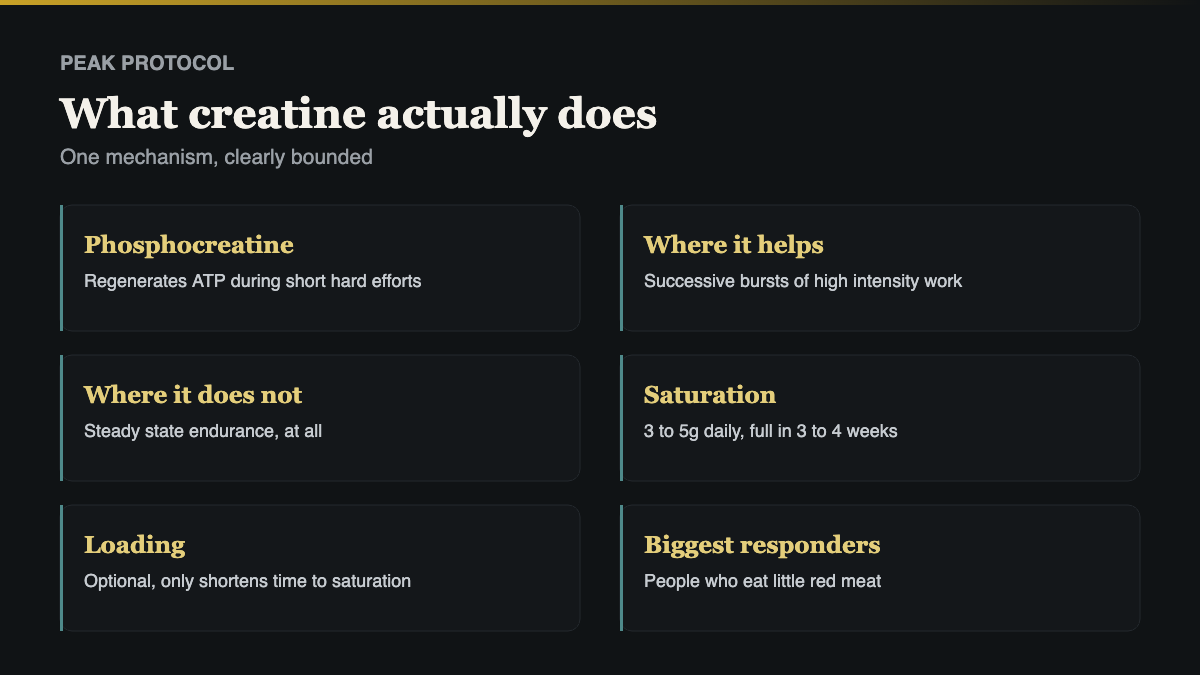
Creatine: benefits, dosage, timing and safety
The best researched sports supplement, explained without the hype.
Supplement guide · Read the guide
Protein for muscle growth
How much you need, when to eat it and which kind to choose.
Supplement guide · Read the guide
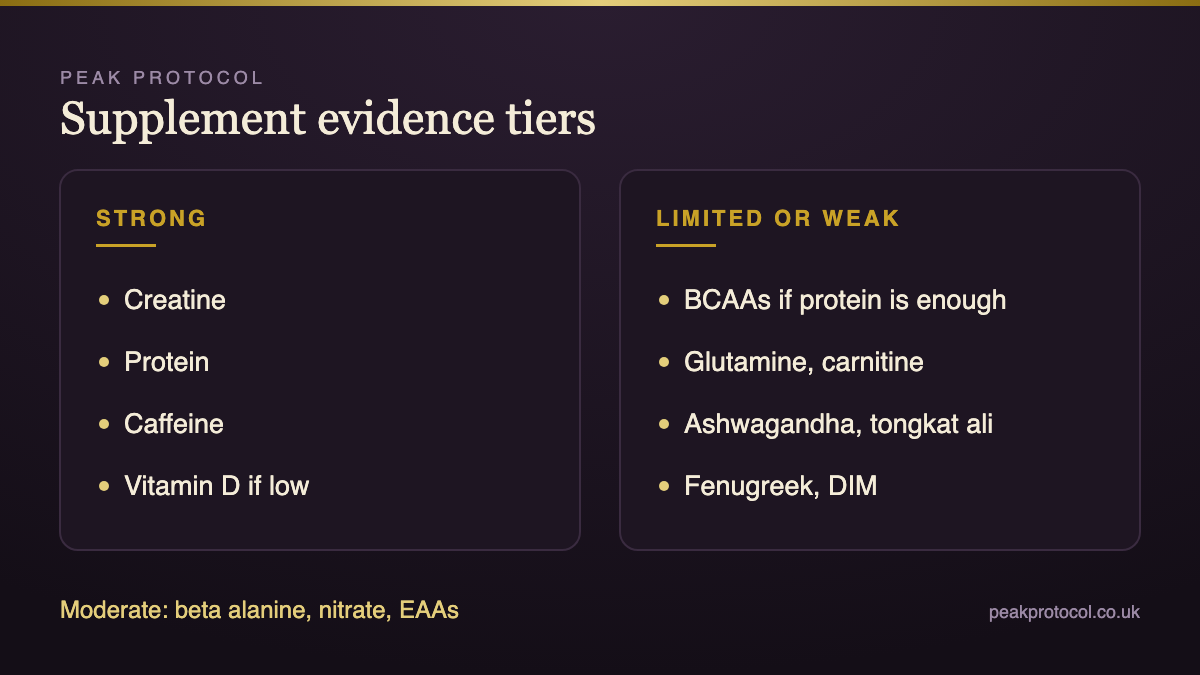
Supplement evidence: how we judge what works
Our four question method and ratings for common sports supplements.
Method · Read the guide
Steroids and the law
What the Misuse of Drugs Act actually says, and the distinction between possession and supply that most articles get wrong.
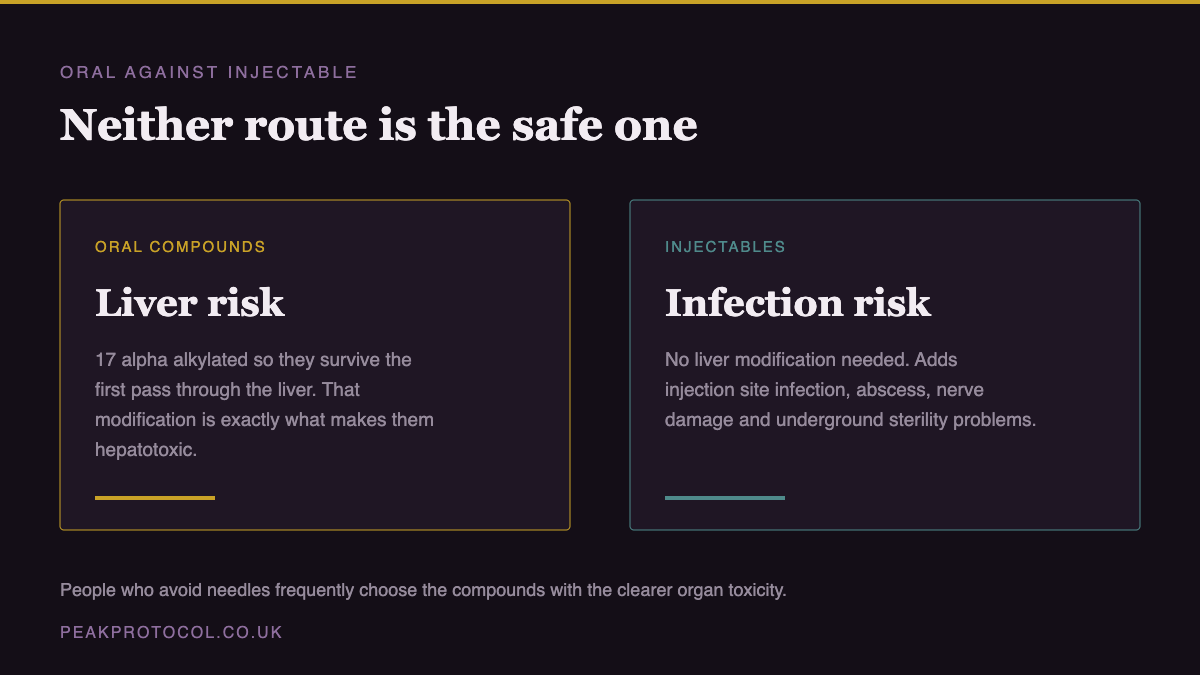
What anabolic steroids are: types, risks and UK context
What anabolic steroids are, how they work, the compounds people actually use, and how large the effect really is according to the controlled trials.
18 December 2025 · Read the guide
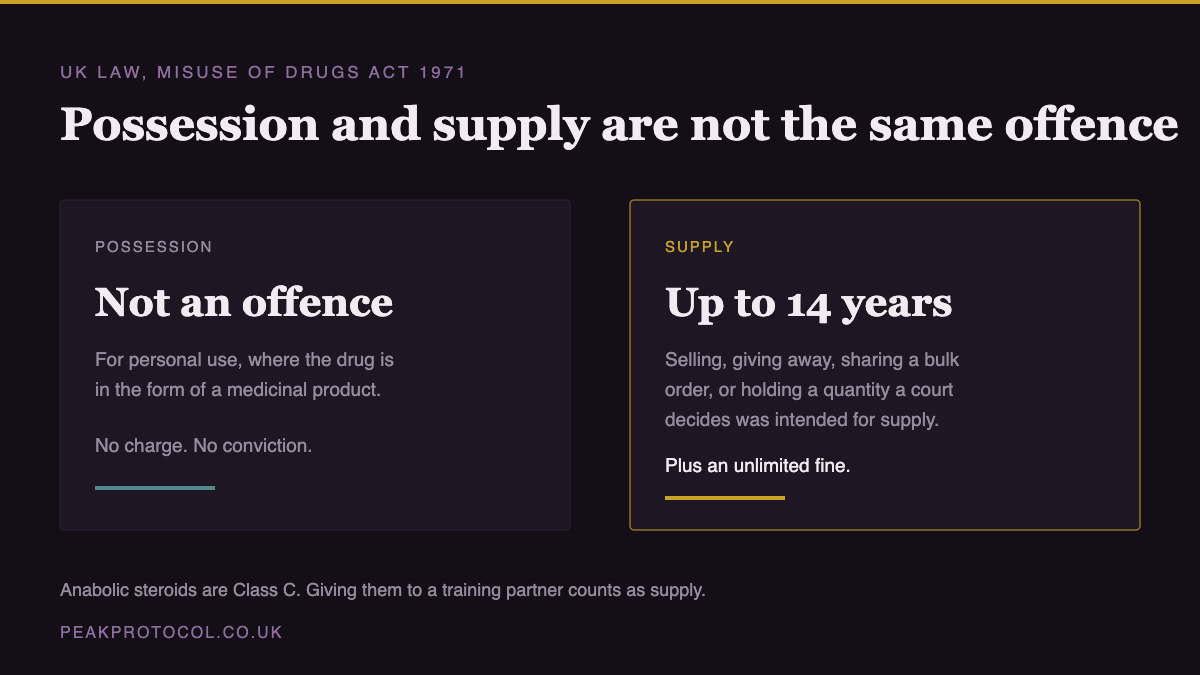
Are steroids legal in the UK?
Possession for personal use is not an offence. Supply carries up to fourteen years. The distinction most articles get wrong, plus how cases actually arise.
2 December 2025 · Read the guide
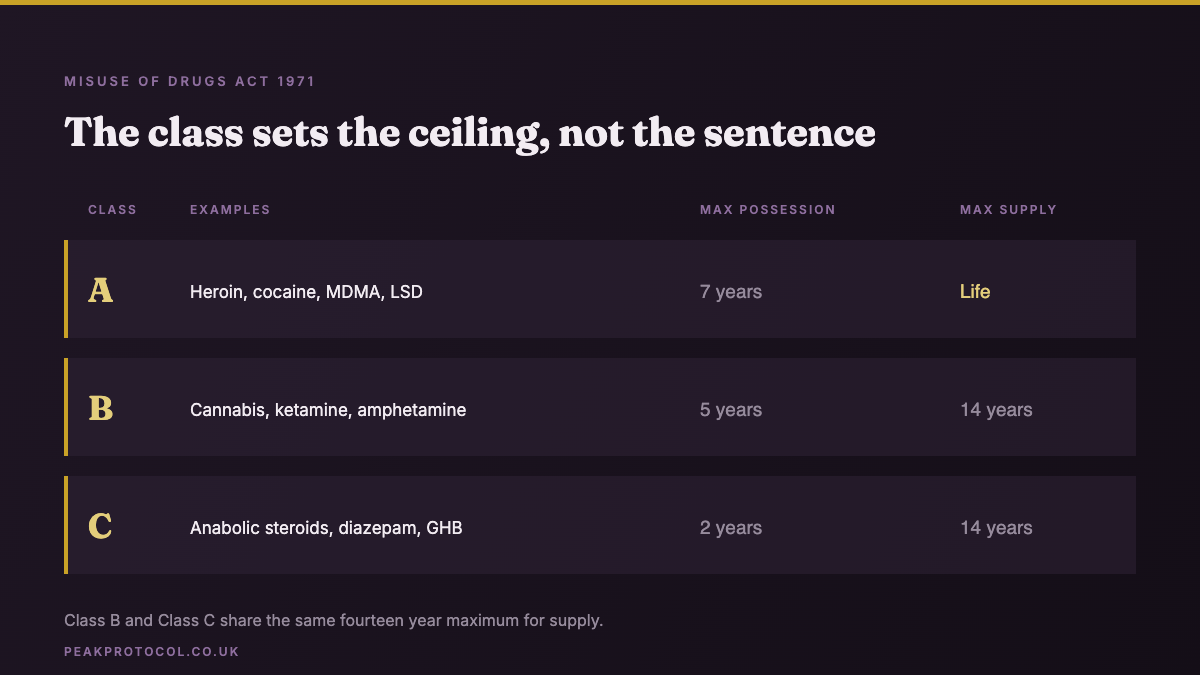
Classification of Drugs in the UK: The 3 Classes Explained
Class A, B and C under the Misuse of Drugs Act 1971, the real maximum penalties for each, why schedules are not classes, and exactly where anabolic steroids sit.
30 July 2026 · Read the guide
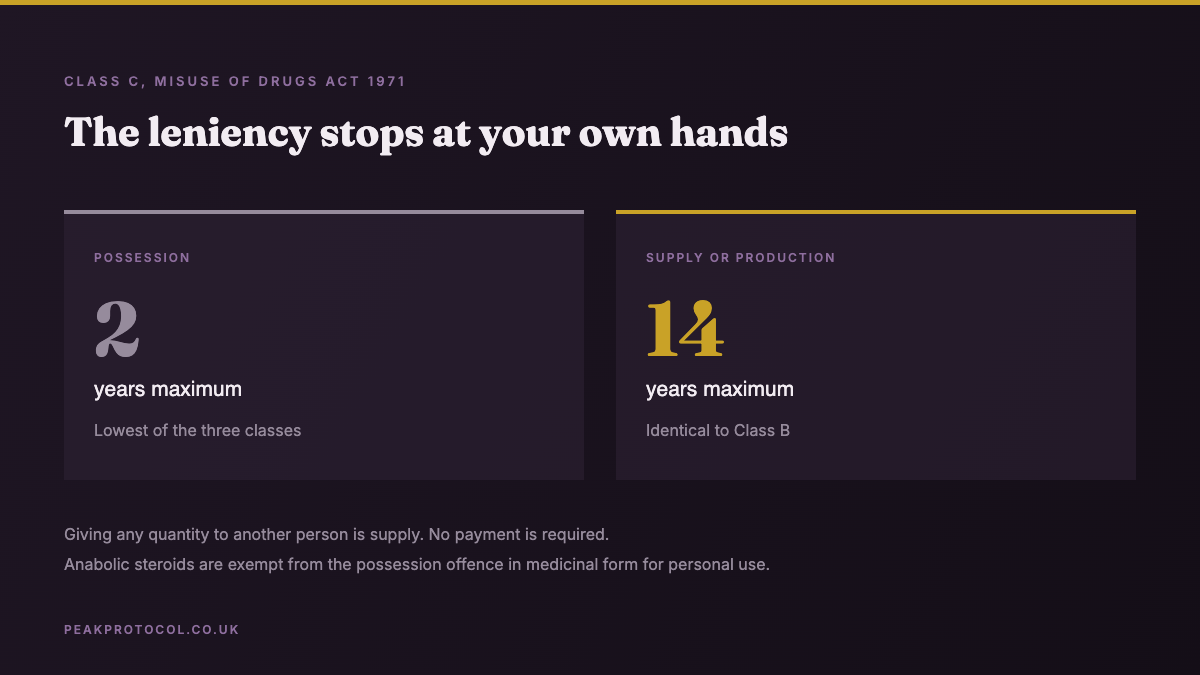
Class C drugs UK: the full list and what the law says
Every drug in Class C, the real penalties for possession against supply, and the Schedule 4 exemption that makes anabolic steroids behave unlike anything else on the list.
13 August 2026 · Read the guide
Side effects and health
What the evidence shows rather than what the forums say, including which effects reverse and which do not.
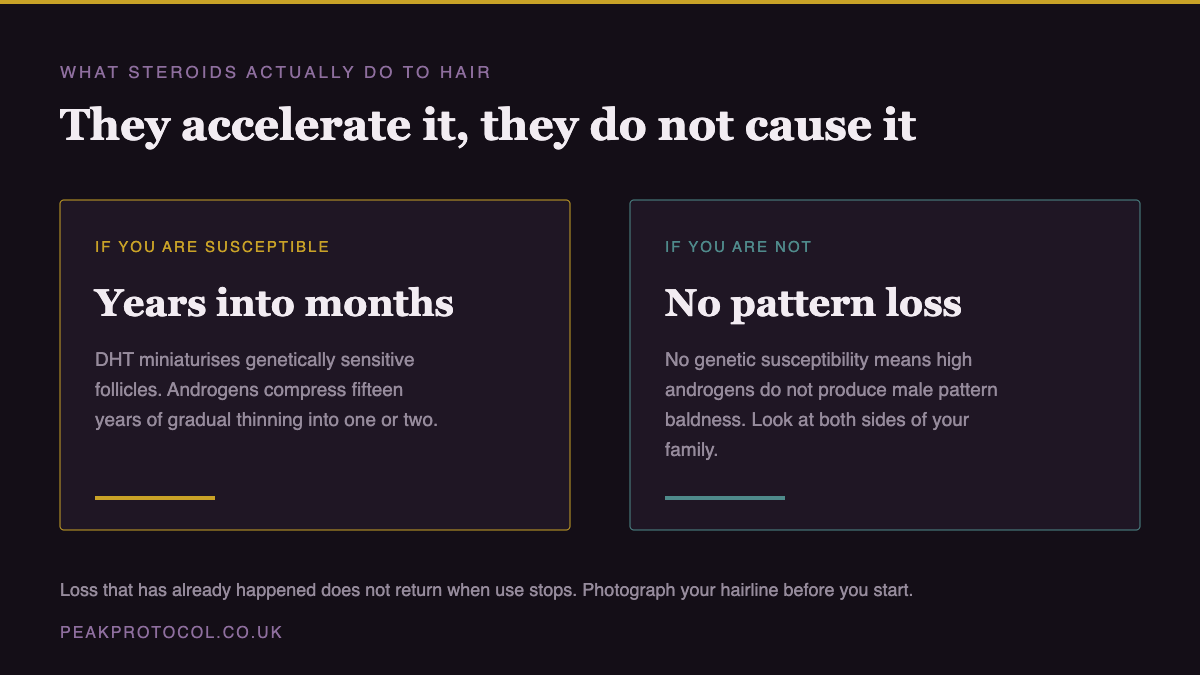
Steroids and hair loss: what is actually happening and what helps
Steroids accelerate male pattern baldness rather than causing it. What DHT does to follicles, which compounds are worse, and what genuinely helps.
25 June 2026 · Read the guide
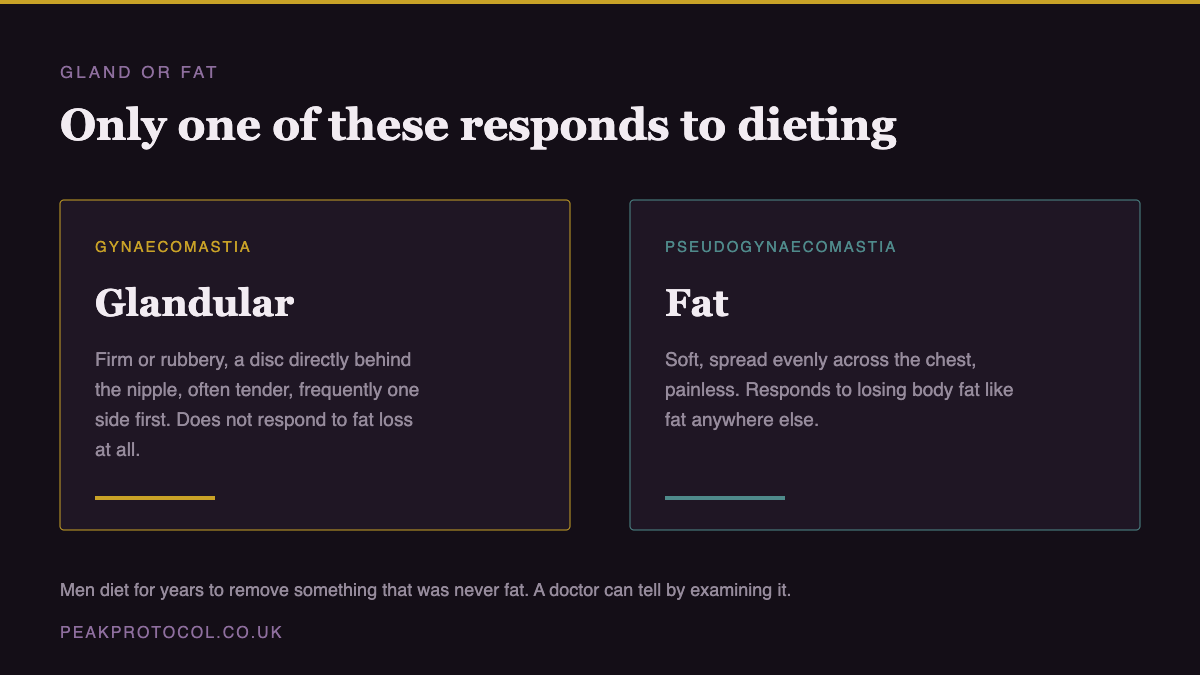
Gynaecomastia and steroids: why it happens and why it is permanent
Why steroids cause it, how to tell glandular tissue from fat, the early warning that opens the only window to act, and why surgery is the route back.
11 June 2026 · Read the guide
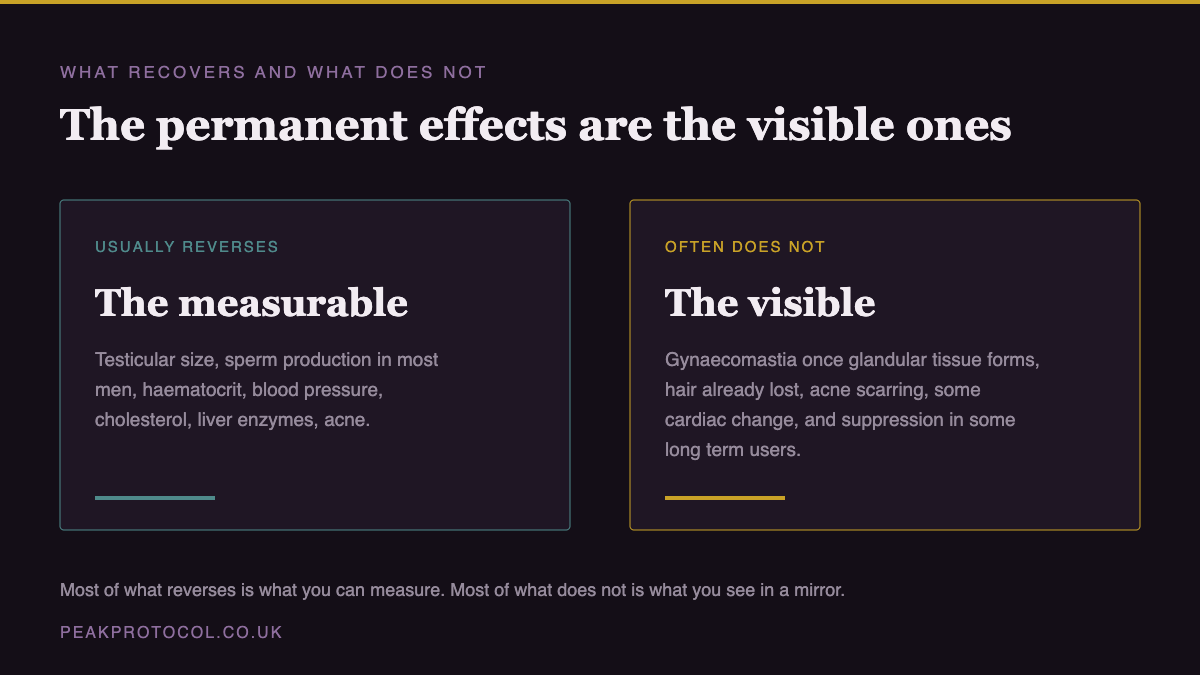
Steroid side effects: what the evidence actually shows
Cardiovascular, liver, fertility, gynaecomastia, hair and mental health effects, what reverses, what does not, and the signs that need A and E.
5 February 2026 · Read the guide
Harm reduction
Written for people already using. Bloodwork, injection safety and what actually happens when you stop.
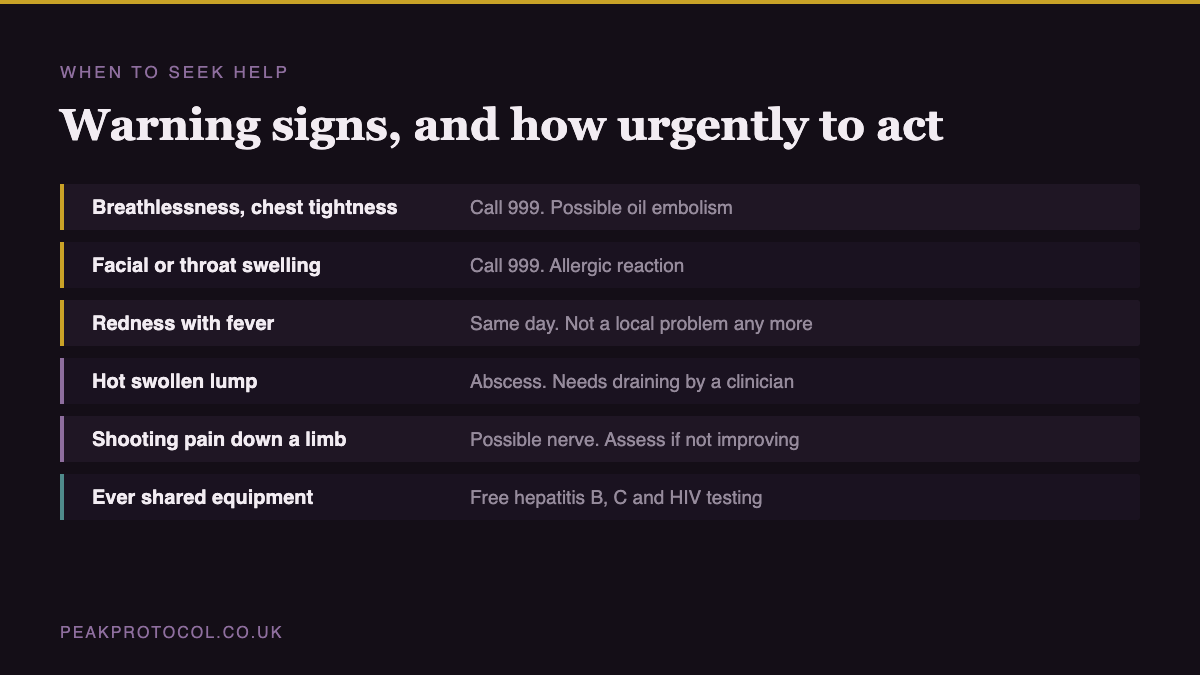
Steroid injection safety: infection, sterility and what to watch for
Infection, abscesses, nerve damage and underground vial sterility, where to get clean equipment free, and the signs that mean call 999.
21 May 2026 · Read the guide
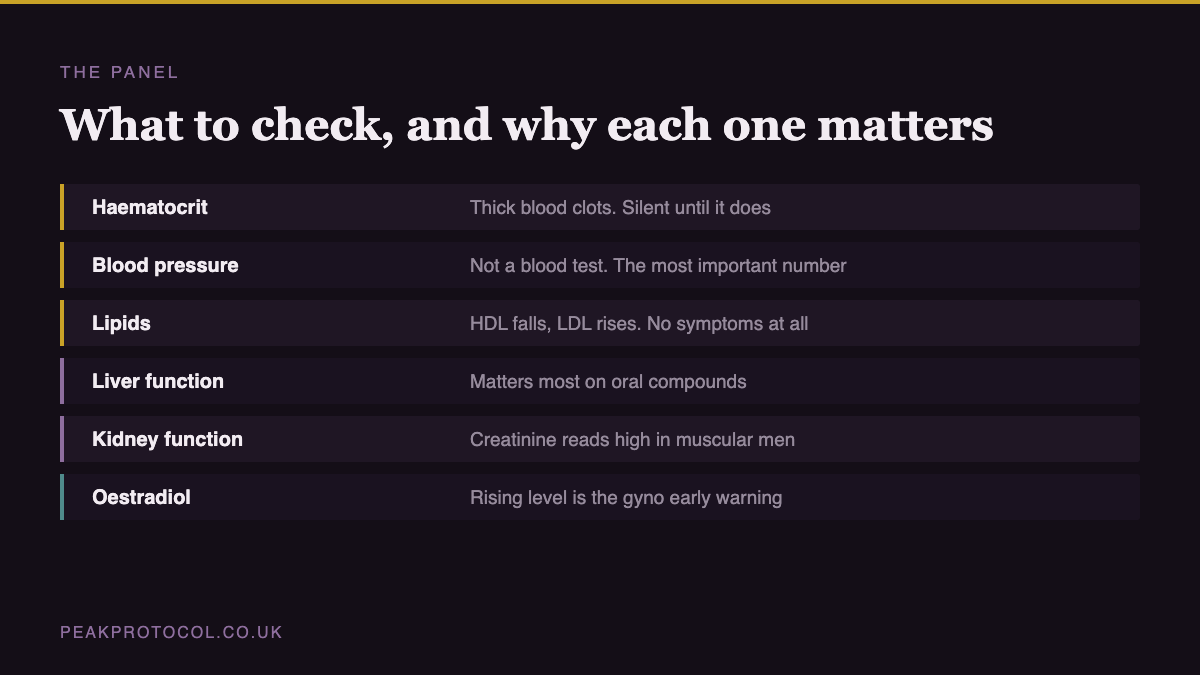
Steroid blood tests: what to check and how often
Which markers to monitor and how often, why haematocrit and blood pressure come first, and the training artefacts that cause false alarm.
23 April 2026 · Read the guide
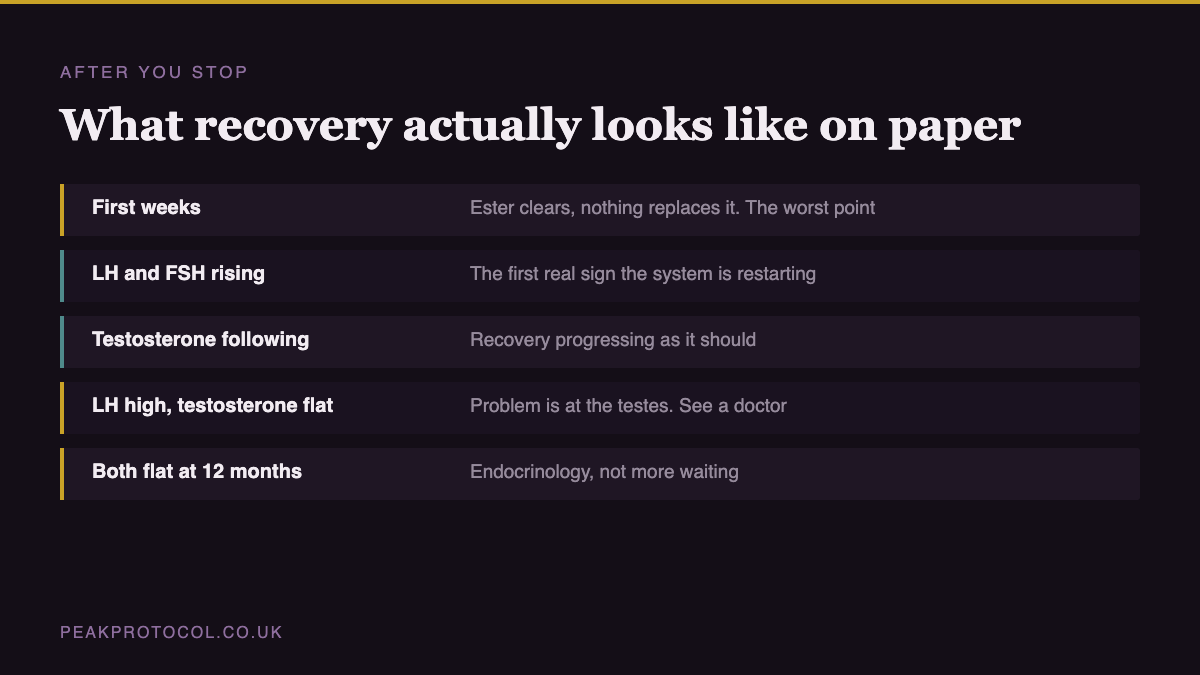
Coming off steroids: what actually happens and what helps
What actually happens when you stop, the recovery timeline, the legal position on PCT drugs, and the trap that turns one cycle into permanent use.
20 March 2026 · Read the guide
TRT and testosterone
The legal route. How diagnosis works, what treatment costs, and how to tell a proper clinic from one selling testosterone.
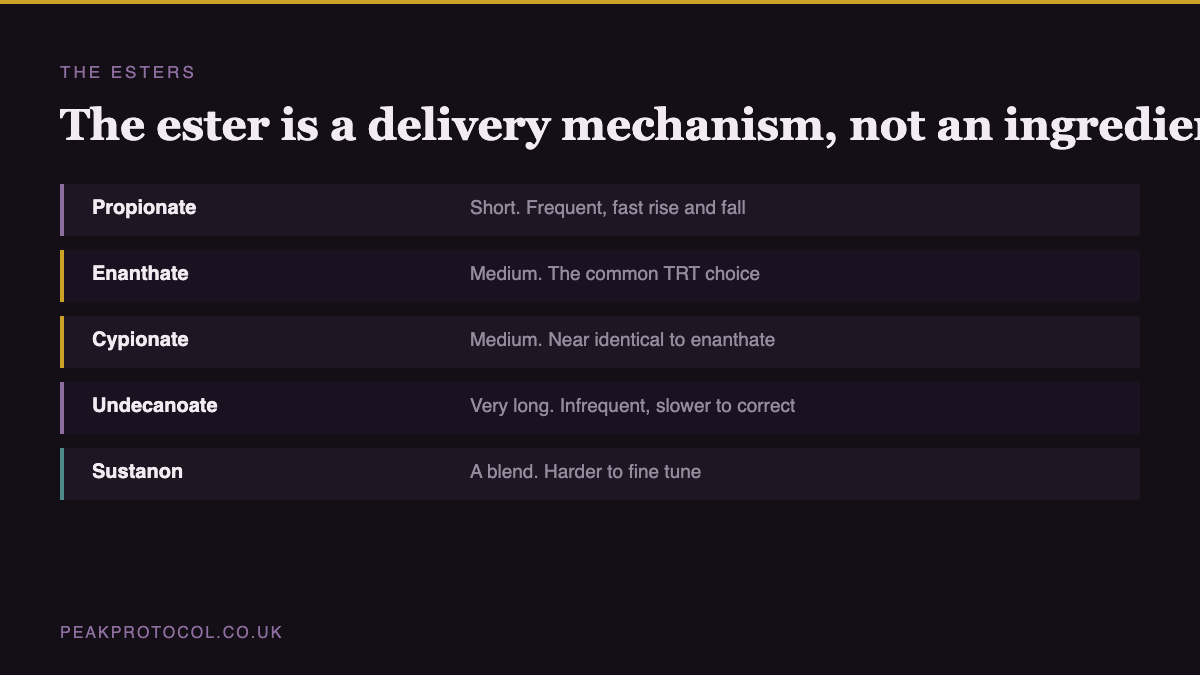
Testosterone in the UK: esters, law and what it actually does
What testosterone is, how the esters differ, where UK law sits, and the difference between a replacement dose and a supraphysiological one.
16 July 2026 · Read the guide
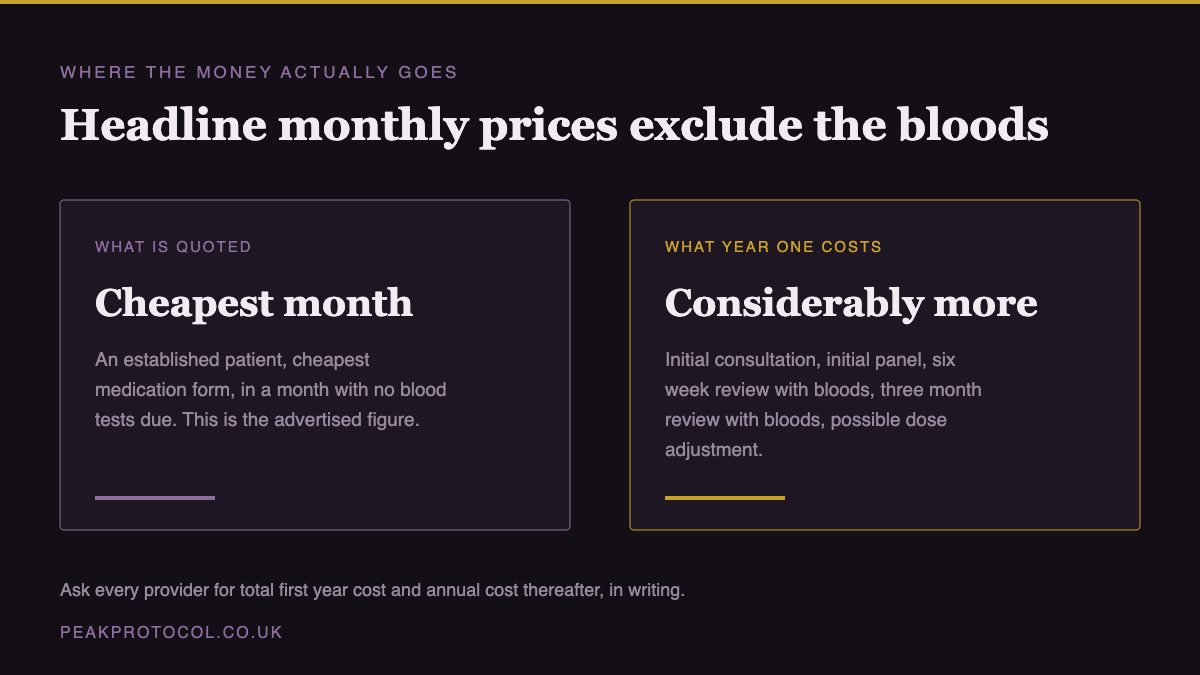
TRT cost and clinics in the UK: how the pricing actually works
How TRT pricing is structured, why headline monthly figures mislead, and the six questions to ask a clinic before you pay anything.
9 April 2026 · Read the guide
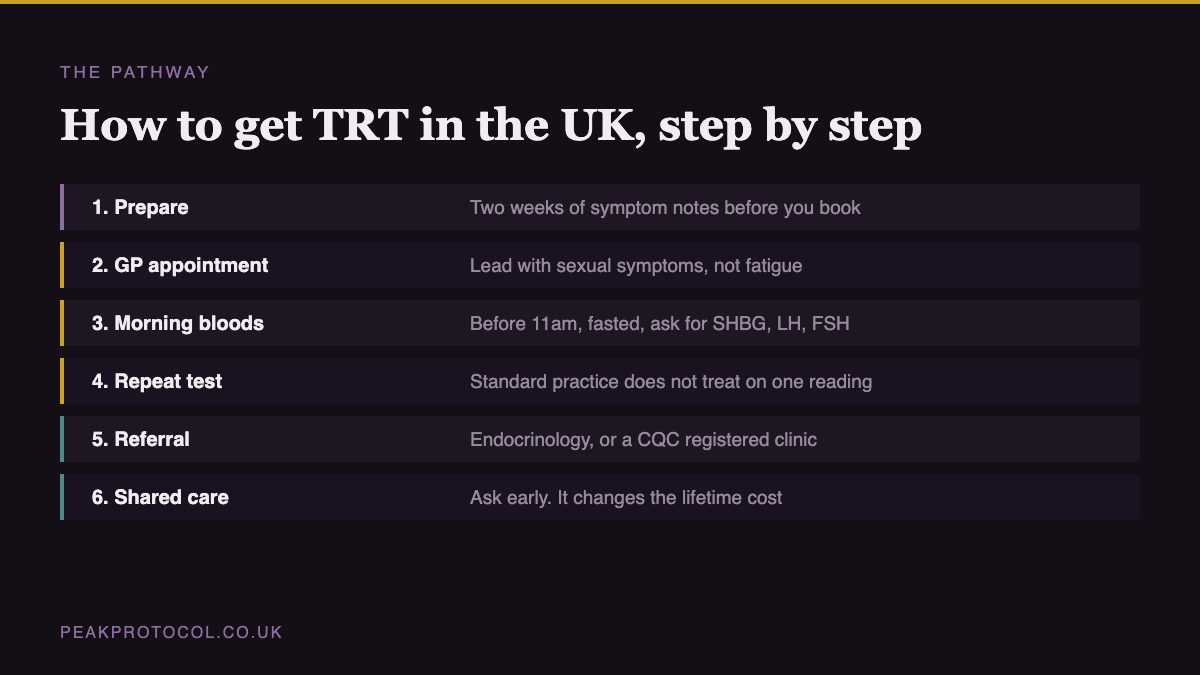
How to get TRT in the UK: the step by step process
The practical route on the NHS and privately, what to say to your GP, what to do if you are refused, and how shared care changes the cost.
6 March 2026 · Read the guide
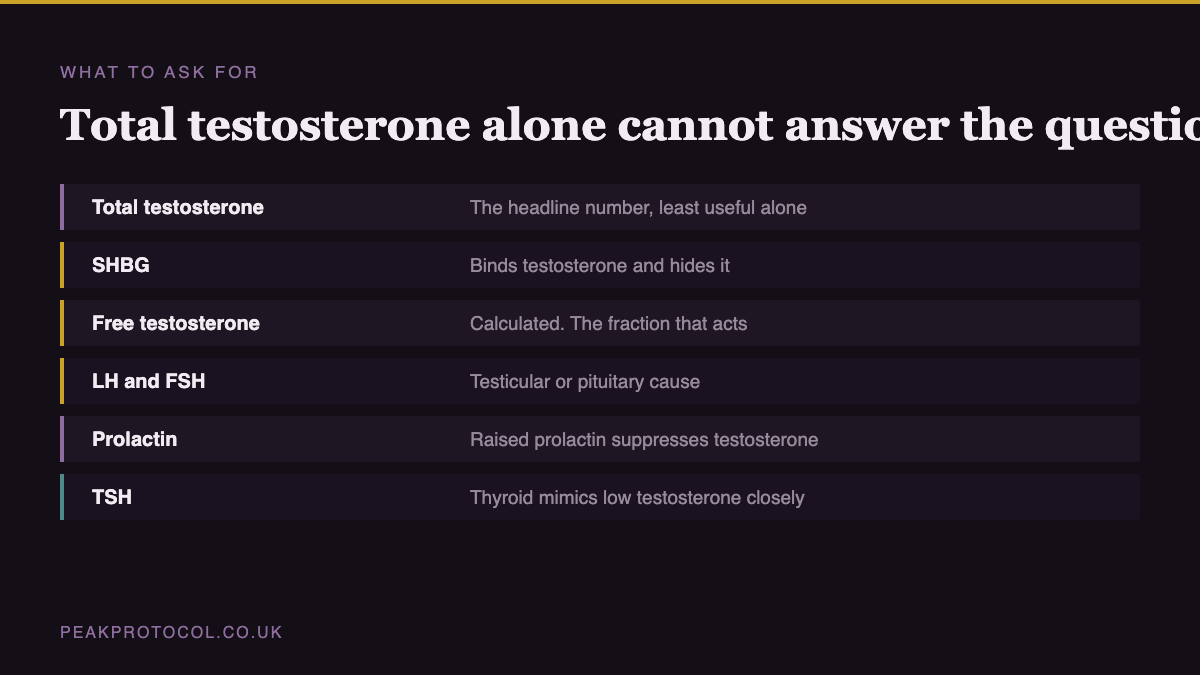
Testosterone blood test UK: what to ask for and how to read it
Which markers to request, why morning timing decides your result, and why total testosterone alone cannot answer the question.
19 February 2026 · Read the guide
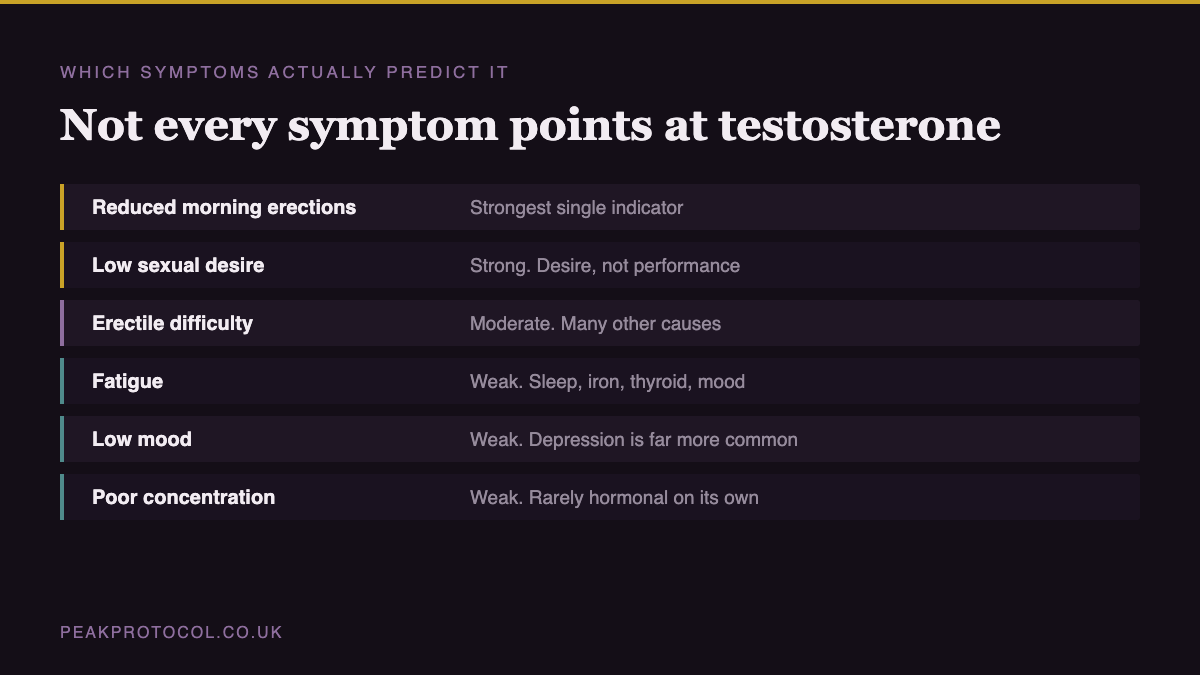
Low testosterone symptoms: which ones actually mean something
Which symptoms genuinely predict low testosterone and which barely discriminate at all, plus the seven conditions that produce an identical list.
22 January 2026 · Read the guide
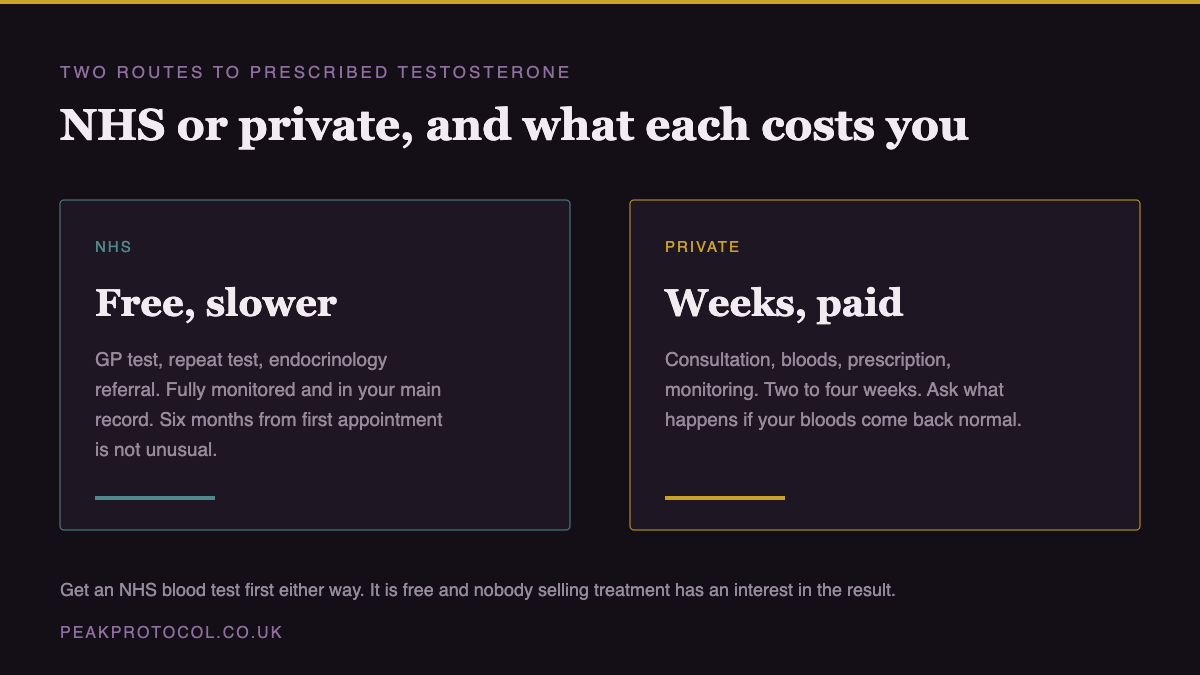
TRT in the UK: how testosterone replacement actually works
What testosterone replacement is, who it suits, how diagnosis works, and how to tell a proper clinic from one that is simply selling testosterone.
8 January 2026 · Read the guide
Supplements
What the legal supplement market is actually selling, and which ingredients have evidence behind them.
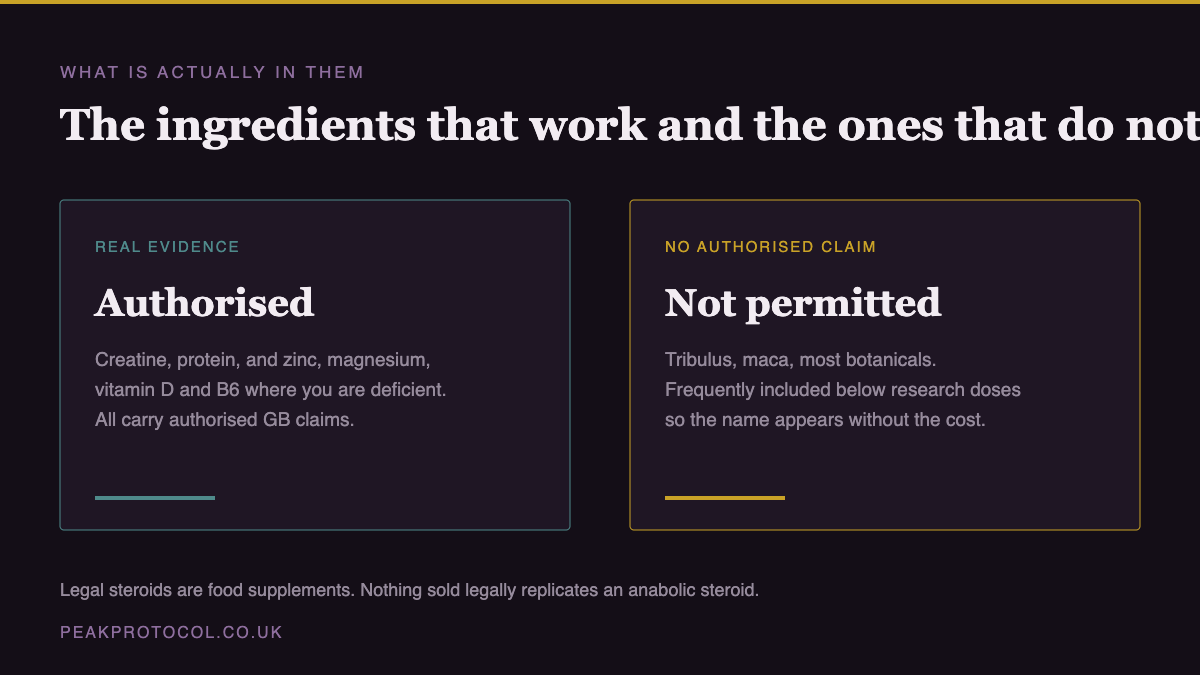
Legal steroids UK: what they actually are and what works
What products marketed as legal steroids actually contain, which ingredients have evidence, and what UK advertising rules permit anyone to claim.
7 May 2026 · Read the guide
Legal supplements
Our shop sells only legal food supplements, with doses printed and claims kept inside what is authorised in Great Britain. Several product pages tell you when a product will do very little for you, which is unusual for a shop and entirely deliberate.
Guides worth starting with
This guides page is part of Peak Protocol, a UK site that explains the law and the evidence plainly before it sells anything.

Read the legal supplements we sell, or see the NHS for independent background.
TRT clinics by city
Fourteen city guides covering what the NHS route actually looks like where you live, what private care costs locally, and how the law is applied by your police force. They are indexed on TRT clinics UK by city.
Every city guide
Prescription charges, waiting times and health service structure all change between the four nations, so the answer changes with your postcode.
Compound guides
Seven compounds people actually search for, covered without dosing advice and without a sales pitch. Each one sets out the legal position, what the evidence shows, the harms that appear in blood work, and what the unregulated British market actually contains. The overview sits in anabolic steroids in the UK.
Compound by compound
Two of the seven are not anabolic steroids at all, and the legal category changes completely between them.
- Anavar UKOxandrolone: the law, the lipid cost, and why the mild reputation is only half earned
- Dianabol UKMethandienone: aromatisation, blood pressure, and why the early weight is not muscle
- Winstrol UKStanozolol: the worst HDL suppression here, joint pain, and why injecting spares nothing
- Trenbolone UKNo human licence, no safety trial, and a supply chain that starts with cattle implants
- Nandrolone UKDeca: months of detectability, prolactin effects, and unusually slow recovery
- Clenbuterol UKNot a steroid at all: a beta 2 agonist with a different legal position and cardiac risks
- SARMs UKNone licensed, testosterone suppression is real, and most products are mislabelled
How the guides are organised
Thirty four guides is enough that a flat list stops being useful, so they are grouped by the question that brought you here rather than by subject. The law guides answer what is and is not an offence. The health guides answer what a compound does to a body over time. The harm reduction guides answer what to do if someone is going to use anyway. The TRT guides answer how a legitimate prescription is actually obtained in Britain, and the supplement guides answer which legal products have evidence behind them.
The seven compound guides sit apart from the rest because they are reference pages rather than arguments. Each one covers a single substance, its legal classification, what the research shows about its effects and its risks, and what happens when people stop. They are deliberately unexciting.
The fifteen city guides are a separate group again. They exist because TRT access in the UK varies enormously by where you live, and a national answer is close to useless if your GP is in Sheffield and the nearest endocrinology clinic has a two year list.
Which guides to read first
Most people arrive with one of four situations, and the right starting point differs for each.
You want to know whether something is legal
Start with are steroids legal in the UK, then UK drug classification and Class C explained. Between them those three guides cover the distinction that trips almost everybody up: possession for personal use and supply are treated very differently under the Misuse of Drugs Act 1971, and importing is the part that catches people who thought they were within the law.
You are worried about symptoms
Read low testosterone symptoms and then the blood test guide before anything else. Both guides push in the same direction, which is to get a number before you get an opinion. The NHS page on the so called male menopause is worth reading alongside them, because a large share of what gets attributed to testosterone turns out to be sleep, alcohol, bodyweight or stress.
You already use, or are about to
The harm reduction guides are the ones written for you: injection safety, which blood markers to check, side effects and coming off. None of these guides tells you not to. They tell you what the risks actually are and which of them are monitorable, which is a more useful conversation.
You want to know what legal supplements can do
Legal steroids in the UK is the honest version of that question, and the answer is narrower than the marketing suggests. From there the category pages on protein and creatine carry the detail, and the brand index covers who makes what.
What these guides deliberately do not do
There is no dosing protocol anywhere in the library. Not for anabolic steroids, not for SARMs, not for anything that requires a prescription. Explaining what a compound does and explaining how to take it are different acts, and the guides stop at the first.
There is no cycle planning, no compound stacking advice and no source information. There is also no attempt to talk anyone out of a decision they have already made, because that is not what a reference page is for and it is not what makes people safer.
What the guides do carry is the part most sites leave out: what the evidence is thin on. Several of these pages say plainly that a question is unsettled, or that the trials are small, or that a widely repeated claim traces back to one study with twelve participants. Those passages are the reason to trust the rest.
Why the supplement guides sound cautious
Everything sold on this site is a food supplement rather than a medicine, and in Great Britain that sets hard limits on what may be said. Only the wording on the Great Britain nutrition and health claims register is permitted, and only where a product delivers the required amount of the nutrient. The Food Standards Agency guidance for supplement businesses sets out how that works.
In practice it means the supplement guides can tell you creatine increases physical performance in successive bursts of short term high intensity exercise, because that claim is authorised at a three gram daily intake, and cannot tell you it builds muscle. When a competitor makes the second claim they are either outside the register or relying on nobody checking. Anyone competing under anti doping rules should also read the UK Anti-Doping guidance on supplements, because contamination is a batch level risk rather than a brand level one.
How the guides are kept current
Every guide carries the date it was last reviewed. Law changes rarely and evidence changes slowly, so most of these pages are stable, but three things trigger a rewrite: a change to the classification of a substance, a new trial large enough to move a conclusion, and a change to what may lawfully be claimed.
Where a guide links out, it links to a primary source rather than to another blog. Legislation comes from legislation.gov.uk, health information from the NHS, drug information from Talk to Frank, and claim wording from the government register. If a statement in one of these guides matters to a decision you are making, the link is there so you can check it rather than take our word for it.
Our editorial policy covers who writes and reviews this material, and our experts lists the people behind it. If you find something in the guides that is wrong or out of date, tell us and it gets corrected rather than quietly buried.
Questions about the guides
Why do the guides cover illegal compounds if you only sell legal supplements?
Because people search for them either way, and the alternative to accurate information is the information they would otherwise find. Nothing in the library is a sales page for a controlled substance, and nothing on the shop side is presented as an alternative to one.
Are the guides written by a doctor?
They are written and reviewed against primary sources, and the editorial policy sets out the process. None of it is medical advice and none of it replaces a consultation. Where a question is genuinely clinical, the guides say so and point at a blood test and a GP.
How often are the guides updated?
On event rather than on schedule. A guide gets rewritten when the law changes, when the evidence moves, or when the rules on what may be claimed change. Each page carries its review date so you can see how old the position is.
Can I use these guides to decide on a cycle?
No, and they are written so that you cannot. There are no doses, no protocols and no stacking advice anywhere in the library. What is there is what the compounds do, what the risks are, and which of those risks can be monitored.
Which guides are most useful if I am completely new to this?
Start with the law guide, the low testosterone symptoms guide and the legal supplements guide. Those three between them answer most of what people arrive wanting to know, and they take about twenty minutes to read.
Why there are fifteen city guides
Testosterone replacement is the one subject in this library where a national answer genuinely fails. NHS access depends on which trust your GP refers into, and the private market is distributed so unevenly that the same consultation costs materially different amounts depending on the postcode. That is why the city guides exist as separate pages rather than as a single table.
Each one covers the same ground for its own area: which NHS trust handles endocrinology referrals, what the realistic wait looks like, which private clinics operate there, what they charge, and which of the local search results are clinics rather than lead generation sites dressed up as clinics. The city index lists all of them, and the national cost guide covers the pricing patterns that hold everywhere.
The uncomfortable finding running through those guides is that the busiest private markets produce the worst search results. Where demand is highest, paid listings crowd out genuine endocrinology, and a clinic’s position in the results says nothing about whether it will assess you properly before prescribing. Each city guide names the checks worth making before you book, and they are the same checks everywhere: who assesses you, what bloods they take, how many times they retest before treating, and what the monitoring looks like once you are on it.
If your city is not covered yet, the national guides carry the same reasoning without the local detail. How to get TRT in the UK is the one to read.