Protein
Protein powder is a convenience, not a magic ingredient. It exists because hitting a daily protein target from food alone takes planning, and a scoop in water takes thirty seconds. That is the entire value proposition, and any brand telling you otherwise is charging you for the story.
What follows is how much you actually need, which type is worth buying, why the anabolic window turned out not to matter much, and how to compare what is on this page by the only number that counts, which is cost per gram of protein.
On this page
- How much protein you actually need
- Whey, isolate, casein and plant compared
- Timing, and the anabolic window myth
- Who needs a powder and who does not
- Lactose, bloating and what to do about it
- Powder against food
- Protein for women
- Quality, testing and amino spiking
- What a serving should cost
- How to choose from this range
- Common questions
How much protein you actually need
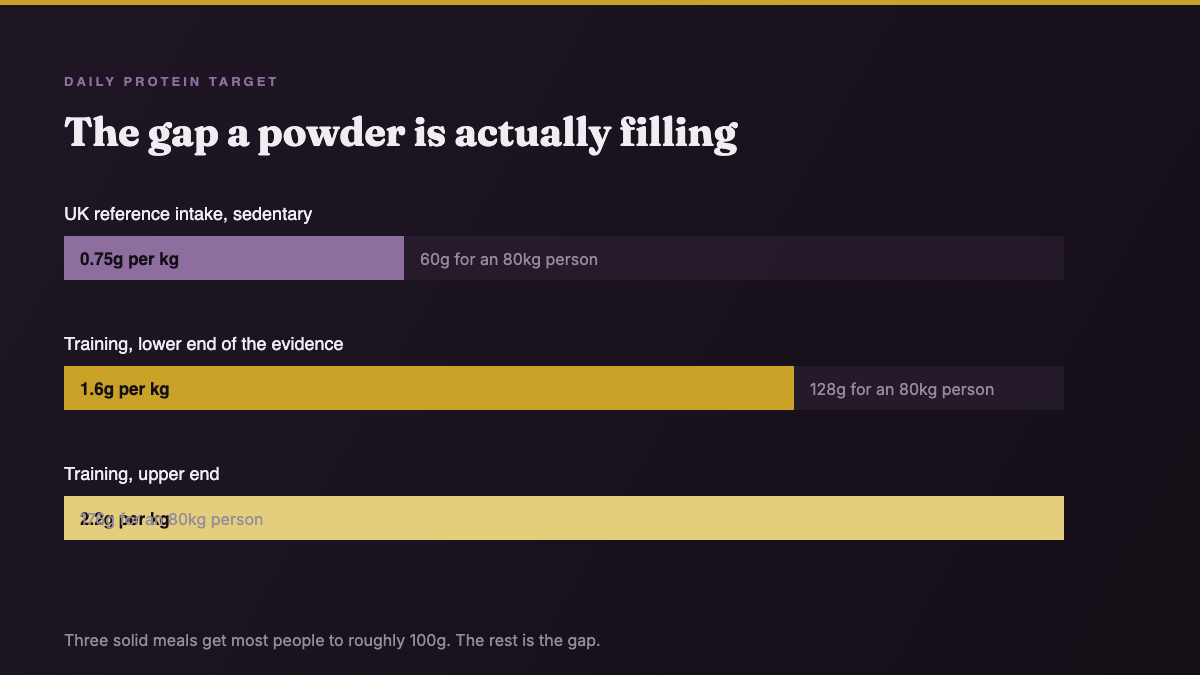
The UK reference nutrient intake is 0.75g per kg of bodyweight a day, which is the amount that prevents deficiency in a sedentary adult. It is not the amount that supports training. For anyone doing resistance work, the research consistently lands between 1.6g and 2.2g per kg of bodyweight a day, and the gains flatten out above roughly 1.6g.
For an 80kg person that is about 128g to 176g a day. Three meals containing a decent portion of meat, fish, eggs, dairy or legumes will typically get you to 100g or so. The gap is where a powder earns its place, and it is usually one or two servings, not four.
Eating more than about 2.2g per kg does not appear to add anything for muscle, though a higher intake can help with satiety while dieting. There is no evidence of harm from high protein intake in people with healthy kidneys.
Whey, isolate, casein and plant compared
All of these will do the job if the daily total is right. The differences are digestion speed, lactose content, amino acid profile and cost per gram.
| Type | Protein by weight | Suits | Worth knowing |
|---|---|---|---|
| Whey concentrate | 70 to 80 percent | Most people | Best value per gram. Retains some lactose and fat. |
| Whey isolate | 90 percent or more | Lactose sensitivity, cutting | Filtered further. Costs more for a marginal difference unless lactose is a problem. |
| Hydrolysed whey | 80 to 90 percent | Very few people | Pre digested for faster absorption. Expensive, bitter, no meaningful outcome advantage. |
| Casein | 70 to 80 percent | Before bed, long gaps | Digests slowly over hours. Thicker texture. |
| Soy | 80 to 90 percent | Plant based | The one plant protein that is complete on its own. |
| Pea and rice blend | 75 to 85 percent | Plant based, soy free | Blended because pea is low in methionine and rice is low in lysine. Together they cover it. |
Digestion speed is the difference people fixate on and it matters least. Whey empties from the stomach faster than casein, which is measurable in a laboratory and close to irrelevant across a day where you eat several times. Choose on lactose tolerance, dietary restriction and price per gram, and treat absorption speed as a tie breaker rather than a reason to pay more.
If you have no digestive issues and no dietary restriction, whey concentrate is the correct answer and everything above it on the price list is optional.
Timing, and the anabolic window myth
For years the advice was to get protein in within thirty minutes of training or waste the session. That came from studies in fasted trainers, and it did not survive better research. If you have eaten protein within a few hours either side of training, the window is hours wide, not minutes.
What does matter is distribution. Spreading intake across three or four servings of roughly 0.4g per kg each stimulates muscle protein synthesis more effectively than one enormous serving and two small ones. A shake is a convenient way to fill whichever gap is thinnest, which for most people is breakfast.
Casein before bed has reasonable evidence behind it for overnight recovery. It is a small effect and it is not compulsory.
Who needs a powder and who does not
You probably benefit if you are training seriously and currently eating under about 1.6g per kg, if your schedule makes cooking protein at every meal unrealistic, if you are dieting and need protein without much else attached, or if you are plant based and finding the target hard from food.
You probably do not need it if you already hit your target from food. In that case a powder adds cost and nothing else. We would rather tell you that than sell you a tub you do not need, and it is the same position we take across the amino acid range, which does very little once protein intake is adequate.
Protein is also not a fat loss product. It helps with fullness and it protects lean mass in a deficit, both of which matter, but a shake on top of an unchanged diet is simply extra calories.
Lactose, bloating and what to do about it
Most bloating blamed on whey is lactose. Concentrate keeps more of it, isolate has very little, and hydrolysate has almost none. Switching from concentrate to isolate resolves it for most people who have the problem.
If isolate does not fix it, the issue is more likely a sweetener. Sugar alcohols and some high intensity sweeteners cause gas and loose stools in sensitive people at the doses used in flavoured powders. An unflavoured product mixed into food is the cleanest test.
True cow milk protein allergy is different from lactose intolerance and is uncommon in adults. If dairy protein genuinely does not agree with you, soy or a pea and rice blend gives the same result.
Powder against food
A powder has no metabolic advantage over chicken, eggs, fish, dairy or legumes. Whole foods bring iron, zinc, B12, choline and fibre that a powder does not, and they are more filling per calorie. If you can hit your target from food, do that.
Where powder wins is cost and speed at the margin. A 25g serving of whey concentrate typically lands well under a pound and takes thirty seconds. The equivalent protein from a chicken breast costs more and needs cooking. Neither is better nutrition, they are different tools, and most people end up using both.
The trap is treating the shake as an addition rather than a replacement. Two shakes on top of an unchanged diet is several hundred extra calories a day, and that shows up on the scale whether or not you wanted it to.
Protein for women
The same per kilogram targets apply. The persistent worry that protein powder will make a woman bulky has no basis, because the powder is a source of an ordinary macronutrient and building substantial muscle requires years of hard training and a calorie surplus regardless of where the protein came from.
Two situations where intake matters more than average are dieting, where adequate protein protects lean mass while you lose fat, and the years around the menopause, where combining resistance training with sufficient protein is part of preserving muscle and function. In both cases the useful move is hitting the daily total, not buying a product marketed specifically at women, which is usually the same powder with a different label and a higher price.
Quality, testing and amino spiking
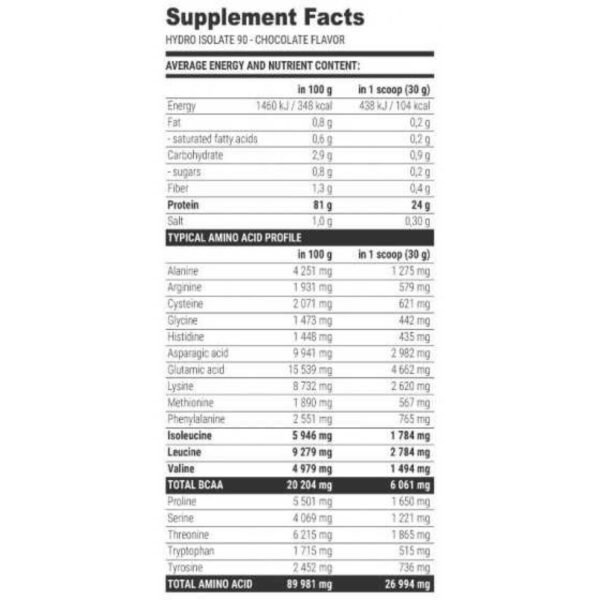
Amino spiking is the practice of adding cheap free form amino acids such as glycine or taurine so that a nitrogen based protein test reads higher than the actual usable protein content. It is less common than it was, but it is the reason a label should be read for what is in the scoop rather than the headline percentage.
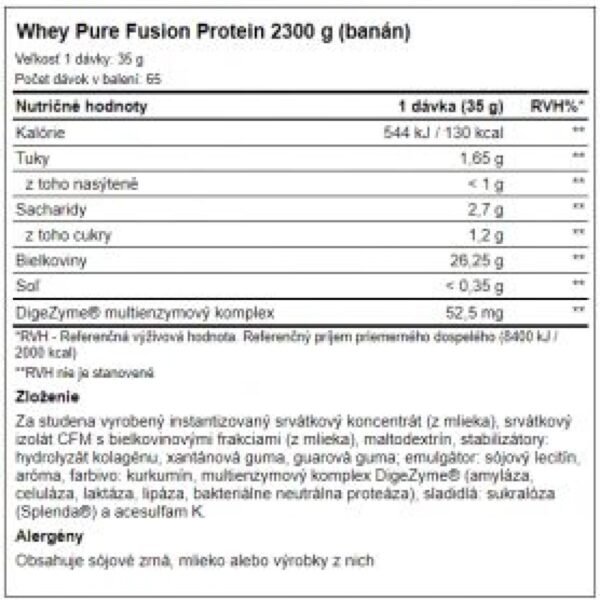
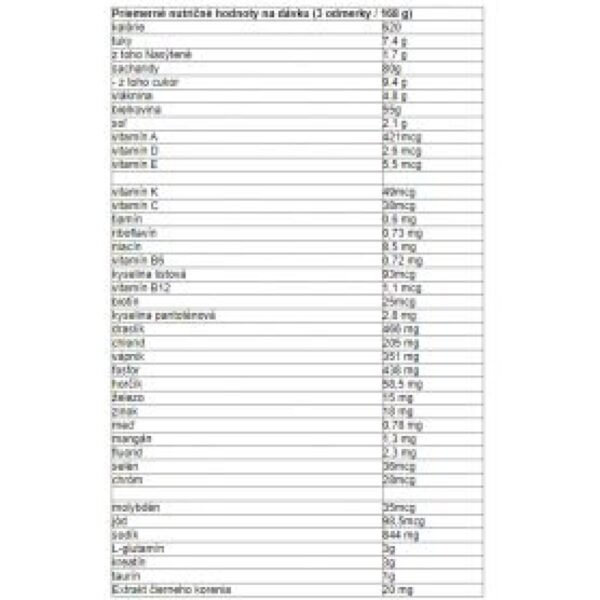
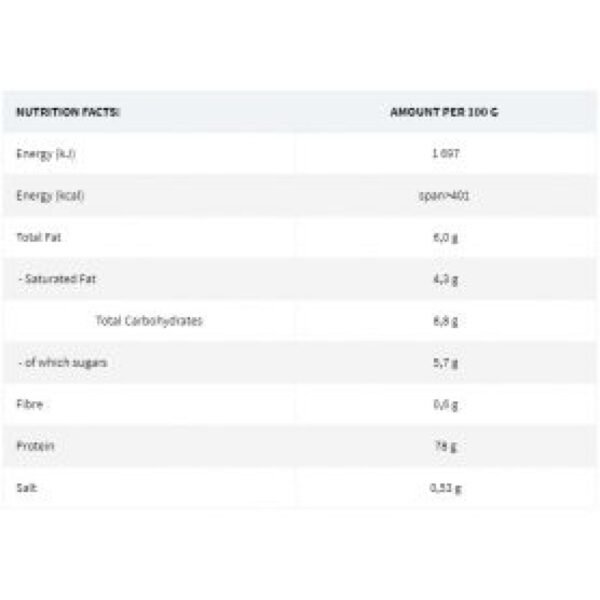
The check that works is arithmetic. Take the protein per serving, divide by the serving size in grams, and see whether the result matches the claim on the front. A 30g scoop delivering 24g of protein is 80 percent, which is honest concentrate. A 40g scoop delivering 24g is a different product being sold at the same headline number.
For anyone in tested sport, a named third party testing programme with a batch number you can look up is the only meaningful assurance. A badge on a web page is not a test result.
How to choose from this range
Ignore the front of the tub and work out cost per gram of protein. Divide the price by the number of servings, then divide that by the grams of protein per serving. That single number sorts the range faster than any review.
Then apply three filters. Do you have a lactose problem, in which case start with isolate. Are you plant based, in which case soy or a pea and rice blend. Do you actually like the flavour enough to drink it daily, because the best value tub is worthless if it sits unopened.
Larger bags are almost always cheaper per gram than tubs, and unflavoured is cheaper than flavoured. If you are pairing protein with the other thing that reliably works, our creatine range is the other half of that, and the bundles put both together. Everything we stock is listed in the shop.
What a serving should cost
Cost per gram of protein is the only comparison that survives contact with marketing, and the spread across the market is wide. Plain whey concentrate bought in a large bag is usually the cheapest usable protein you can buy, ahead of most whole foods on price alone. Isolate carries a premium of roughly a third for the extra filtering. Hydrolysate can cost double concentrate for no outcome you will notice.
Flavour and format add cost without adding protein. Ready to drink bottles are convenient and are several times the price per gram of the same protein as powder. Protein bars are usually a confectionery product with protein added, priced accordingly, and worth buying only if the alternative is skipping the meal.
Work out the number once for the products you are considering and the decision usually makes itself. Every product page here prints protein per serving and servings per pack so you can do that arithmetic without emailing us.
Common questions
How much protein do I need a day?
For resistance training the research supports 1.6g to 2.2g per kg of bodyweight daily, with gains flattening above about 1.6g. The UK reference intake of 0.75g per kg prevents deficiency in sedentary adults and is not a training target.
Is whey isolate better than concentrate?
Only if lactose is a problem for you or you are cutting calories tightly. Isolate is filtered further and is 90 percent or more protein by weight, but concentrate at 70 to 80 percent gives the same result for most people at a lower cost per gram.
Do I have to drink protein straight after training?
No. The anabolic window is hours wide rather than minutes. Total daily intake spread across three or four servings matters far more than the timing of any one of them.
Which protein powder is best if I am vegan?
Soy is the one plant protein that is complete on its own. A pea and rice blend also works well, because pea is low in methionine and rice is low in lysine, so together they cover the profile.
Why does protein powder make me bloated?
Usually lactose in whey concentrate, which switching to isolate resolves. If isolate does not help, sweeteners are the next most likely cause, and an unflavoured product is the cleanest way to test that.
What is amino spiking?
Adding cheap free form amino acids so a nitrogen based test reads higher than the usable protein. Check it by dividing protein per serving by serving size and comparing the result with the claim on the front of the tub.
Is high protein bad for your kidneys?
There is no evidence of harm from high protein intake in people with healthy kidneys. Anyone with existing kidney disease should take advice from their doctor.
Where this comes from
The International Society of Sports Nutrition position stand on protein and exercise is the clearest summary of intake and timing. UK reference intakes and general dietary advice are published by the NHS.
Food supplements are not a substitute for a varied diet and a healthy lifestyle. Nothing here is medical advice.
Read before you buy protein
We would rather you bought the right thing, or nothing. These guides cover the evidence, the law and the risks in plain terms.
- Protein and recoveryProtein supports recovery but does not shortcut it. What recovery actually involves.
- What actually has evidenceWhere protein powder sits against everything else on the shelf.
- Health contextWhat the evidence says about performance drugs, and why food first still wins.
Every guide is in the Peak Protocol guide library.
Showing 1 to 12 of 25 results