
Steroids and fertility are closely linked, and in a way many users do not expect. Anabolic steroids are versions of a male hormone, yet one of their most reliable effects in men is to reduce or stop sperm production. In women they disrupt ovulation and the menstrual cycle. This guide explains why, how long recovery usually takes, what testing is available on the NHS and when to get help. It is part of our steroids in the UK hub.
Steroids and fertility: the short version
- Outside testosterone switches off the brain signals (LH and FSH) that drive sperm production in the testicles.
- Low sperm counts and temporary infertility are common during and after steroid use. Shrunken testicles are the visible sign.
- Sperm takes around two to three months to develop, so recovery after stopping is measured in months, and after long use it can take a year or more.
- Most men recover, but not all, and the risk of incomplete recovery rises with longer and repeated use.
- Prescribed testosterone replacement therapy also suppresses sperm production, which is why fertility is discussed before TRT starts.
- In women, steroids disrupt ovulation and periods and cause masculinising changes, some of them permanent.
Why a male hormone stops sperm production
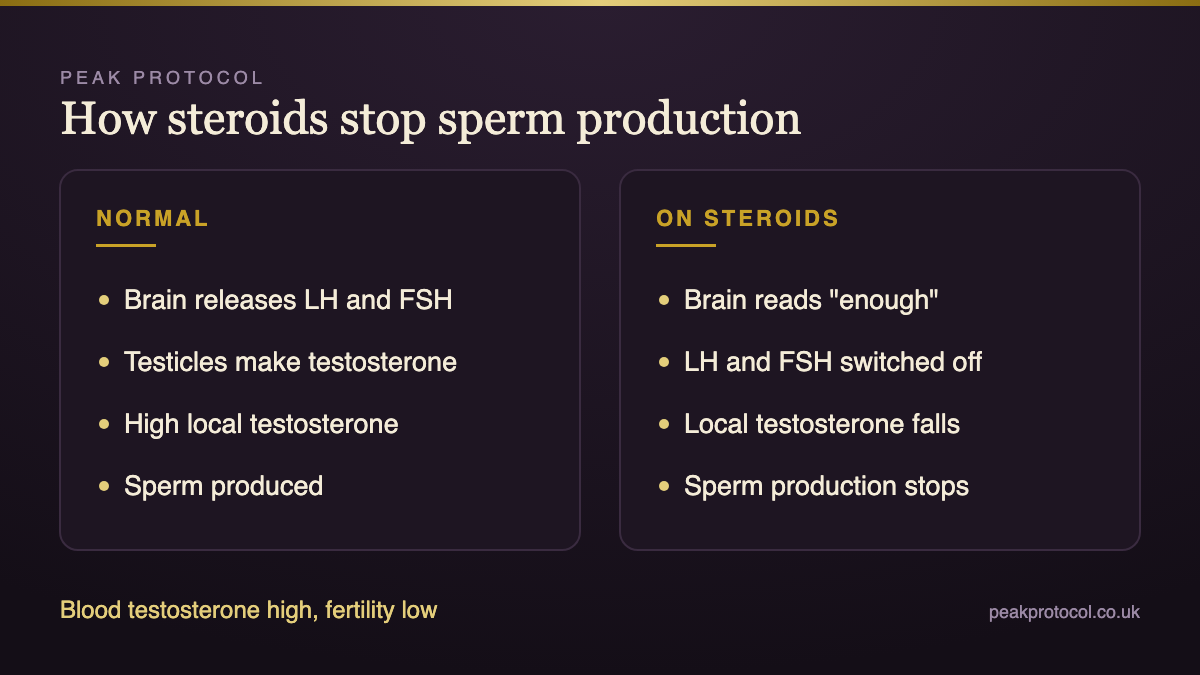
Sperm production depends on a chain of signals. The hypothalamus in the brain releases a hormone that tells the pituitary gland to release two more: luteinising hormone (LH) and follicle stimulating hormone (FSH). LH tells the testicles to make testosterone. FSH, together with a very high concentration of testosterone inside the testicle itself, drives the production of sperm.
The brain constantly measures how much testosterone and related hormones are circulating. When steroids push those levels up from outside, the brain reads the signal as “enough” and turns LH and FSH down, often to almost nothing. Testosterone in the blood may be very high, but testosterone inside the testicles falls, and without FSH and local testosterone, sperm production slows or stops.
The testicles shrink because the cells that make testosterone and sperm are no longer being stimulated. That shrinkage is the visible sign of a suppression that is otherwise silent. The same mechanism is behind the low mood and low libido many people feel after stopping, which we cover in coming off steroids.
Effects on male fertility
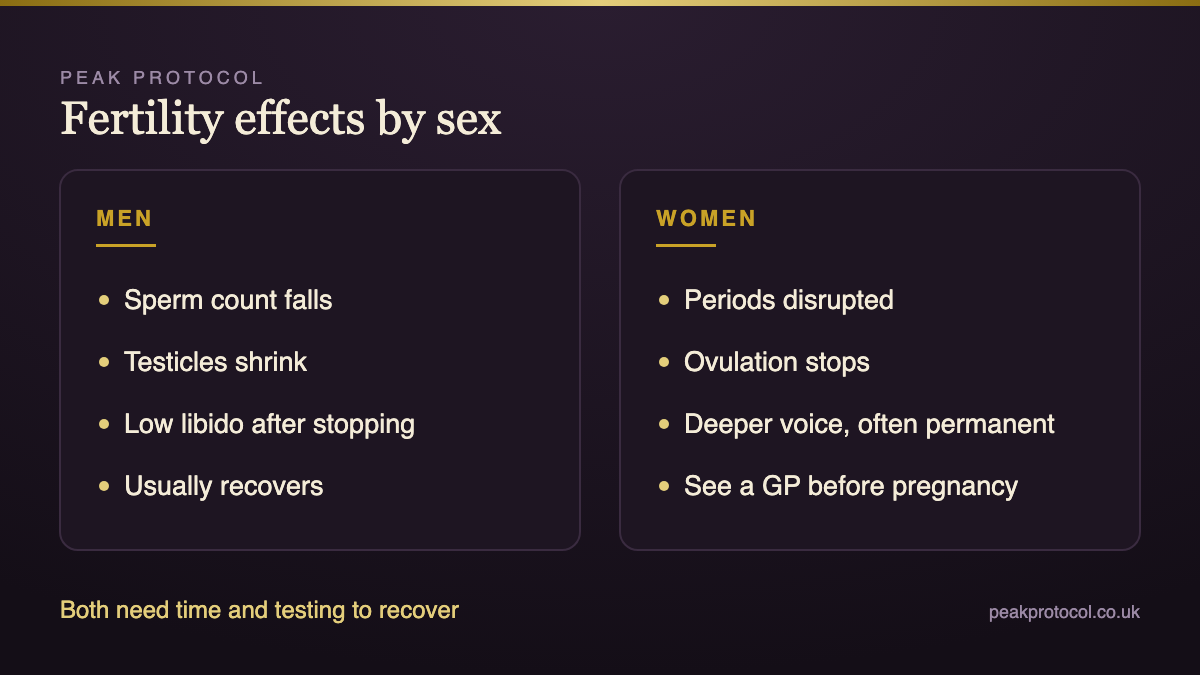
Research on anabolic steroid users consistently finds reduced sperm counts, with many users having very few or no sperm in their semen during use. Sperm that are produced are more likely to have abnormal shape and movement. Sex drive and erections are often affected once the drugs stop.
Some compounds cause additional problems. Drugs that convert to oestrogen or act on progesterone receptors can raise prolactin or oestrogen, adding to the suppression and sometimes causing gynaecomastia. Nandrolone in particular is associated with long suppression, as our nandrolone guide explains.
These effects do not depend on the drug being counterfeit. A genuine, correctly dosed product suppresses fertility just as effectively, and a contaminated one simply adds further risks.
Effects on female fertility
In women, anabolic steroids interfere with the hormonal cycle that controls ovulation. Periods become irregular or stop, and ovulation may not happen. Masculinising effects follow: acne, facial and body hair, a deeper voice and clitoral enlargement. A deepened voice is frequently permanent, even after stopping.
Any woman who is using steroids and wants to become pregnant, or who might become pregnant, should speak to a GP. Androgens can affect the development of a female baby in the womb, so this matters before conception as well as during pregnancy.
How long recovery takes
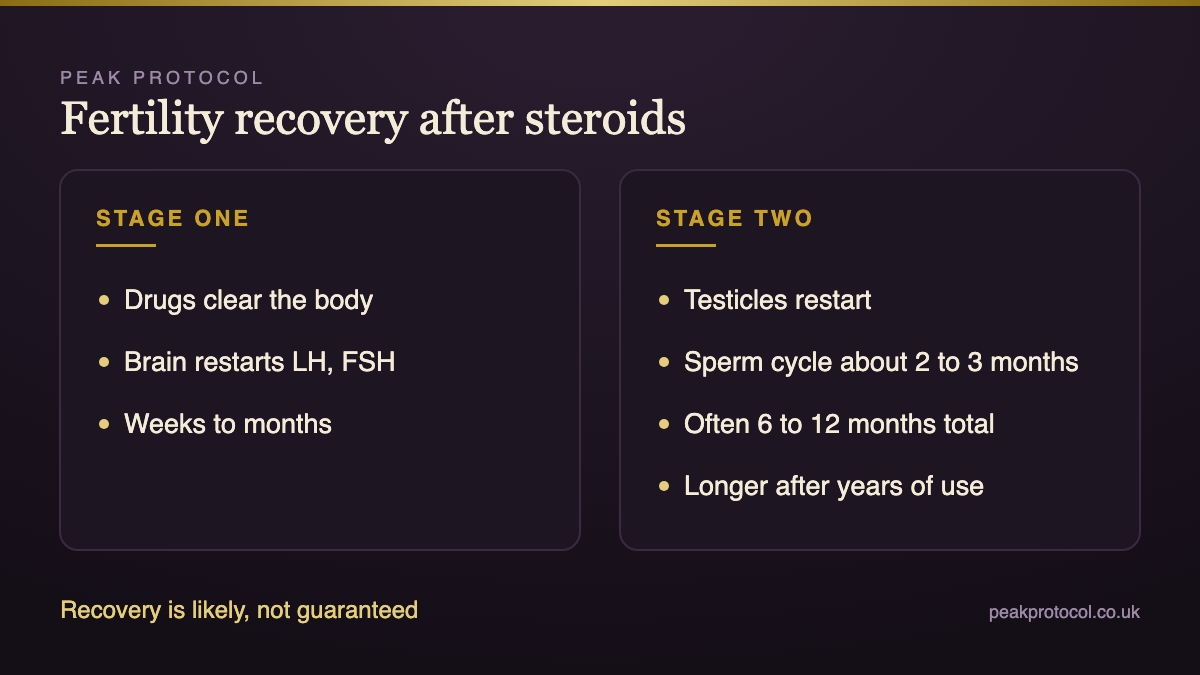
Recovery has two stages. First the brain has to restart LH and FSH, which may take weeks to months depending on how long the drugs were used and how slowly they clear. Long acting injectables can keep suppressing for months after the last dose. Then the testicles have to rebuild sperm production, and a complete cycle of sperm development takes around two to three months on its own.
Put together, many men see sperm return within six to twelve months of stopping. After years of use, or repeated cycles without breaks, it can take longer, and a minority never return to their previous levels. Age, the specific drugs used and underlying fertility all influence the outcome, which is why there is no reliable timeline for any individual.
| Factor | Tends to shorten recovery | Tends to lengthen recovery |
|---|---|---|
| Duration of use | Short, single course | Years of use or back to back cycles |
| Drugs used | Short acting compounds | Long acting injectables, nandrolone |
| Age | Younger | Older |
| Fertility before use | Normal | Already reduced or unknown |
| Medical support | Specialist assessment | Self treatment with unregulated drugs |
Why do it yourself restart drugs are not the answer
Drugs sometimes used to restart hormone production, such as clomifene, tamoxifen and hCG, are prescription only medicines with their own side effects. A fertility specialist or endocrinologist may use them in carefully selected cases, alongside monitoring. Bought online, they come from the same unregulated sources as the steroids themselves, with the same problems described in counterfeit steroids, and are taken without tests to show whether they are working. We do not sell them, and we do not recommend taking them without a doctor.
TRT and fertility
Prescribed testosterone replacement therapy suppresses sperm production in the same way, because it is the same hormone arriving from outside. It is a well known effect and a good clinician will ask about plans for children before starting treatment. Men who want to keep their fertility may be offered other options first. Our TRT UK guide explains how treatment is assessed, and testosterone in the UK explains the hormone itself.
Getting tested
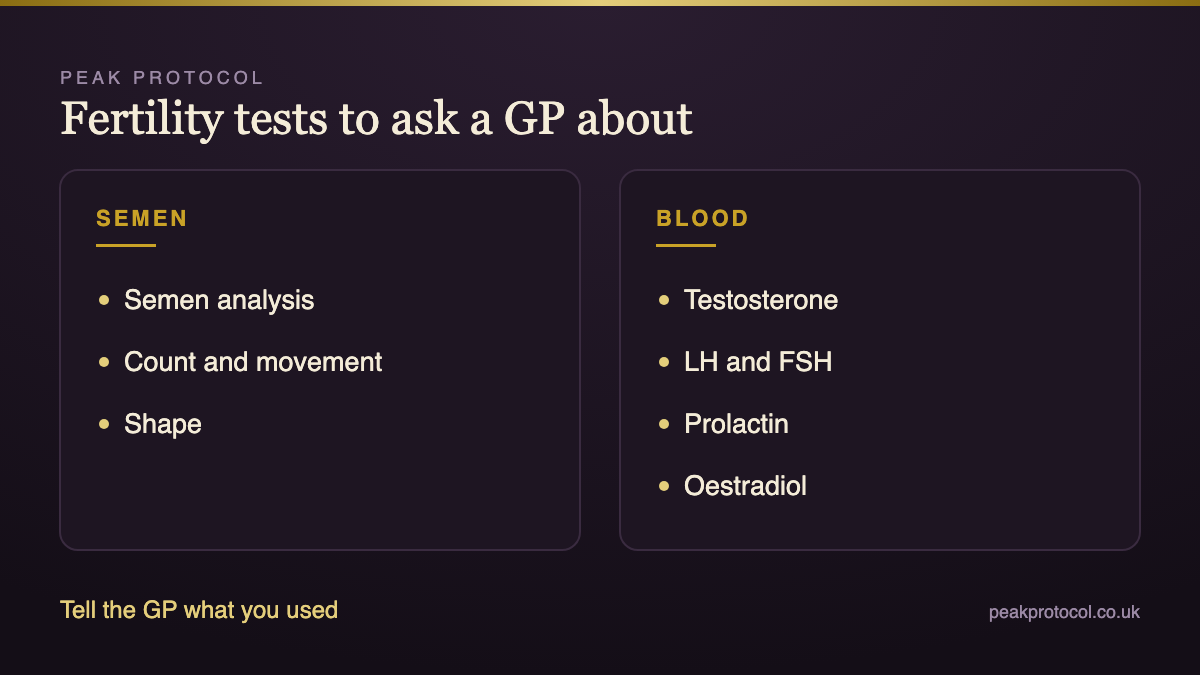
If you are trying for a baby, or worried about fertility after steroid use, a GP can arrange a semen analysis and blood tests for testosterone, LH, FSH and prolactin. Be open about what you have used, because it changes how the results are read. The NHS infertility guidance explains how the NHS investigates fertility problems for couples, and the Human Fertilisation and Embryology Authority regulates fertility clinics and publishes independent information on treatment.
A general steroid health check is also worthwhile, because the same drugs affect the heart, blood and liver. Our guide to steroid blood tests lists what to ask for, and steroids and heart health covers the cardiovascular side.
Can supplements help?
No supplement restarts suppressed hormone production. Zinc contributes to normal fertility and reproduction and to the maintenance of normal testosterone levels, and selenium contributes to normal spermatogenesis, but these authorised claims describe the role of nutrients in a normal diet. They are useful if you are short of them and do nothing to reverse steroid suppression. Our vitamins and minerals range is sold on that basis and no stronger claim.
Planning a family after steroid use
If you have used anabolic steroids and want children, the most useful step is to find out where you stand before you start trying, rather than after a year of trying without success. A semen analysis and hormone tests give a baseline. If sperm is present and hormones are recovering, time may be all that is needed. If sperm is absent months after stopping, early referral gives a specialist more options.
Partners are often the ones who raise the question, and it helps to be open. Fertility investigations look at both partners, and a clinician who knows about past steroid use can avoid unnecessary tests on the other partner and focus on the likely cause. The Human Fertilisation and Embryology Authority regulates UK fertility clinics and publishes independent information on what treatments involve and how clinics perform.
Some men consider storing sperm before any hormone treatment. That is a conversation for a clinician, and it is one reason why fertility should be raised before starting prescribed testosterone treatment, not after.
Five misunderstandings about steroids and fertility
- “High testosterone means high fertility.” Blood testosterone can be very high while sperm production is switched off, because sperm depends on testosterone inside the testicle and on FSH.
- “A short course will not matter.” Suppression starts within weeks. Shorter use usually means faster recovery, not no effect.
- “Recovery is guaranteed if I stop.” Most men recover, but the risk of incomplete recovery rises with longer and repeated use.
- “Post cycle drugs fix it.” Self administered restart drugs are prescription only medicines bought from the same unregulated market, taken without monitoring.
- “TRT is different, so fertility is fine.” Prescribed testosterone suppresses sperm production in the same way.
When to see a GP
See a GP if you have been trying to conceive for a year without success, or sooner if you know you have used steroids, if your testicles have become noticeably smaller or softer and have not recovered, if you have persistent low libido or erectile problems after stopping, or if you notice a lump or pain in a testicle. A GP visit about fertility is confidential, and telling the doctor what you used is the quickest route to the right tests. Our guide to coming off steroids covers the wider symptoms of the months after stopping.
Steroids and fertility: common questions
Do steroids make you infertile?
They commonly cause temporary infertility in men by stopping sperm production. Most men recover after stopping, but recovery can take many months and is not guaranteed after long or repeated use.
How long after stopping steroids does fertility return?
Many men see sperm return within six to twelve months. It can take longer after years of use, and some men never fully return to previous levels.
Why do steroids shrink testicles?
Outside testosterone switches off the LH and FSH signals that stimulate the testicles, so the cells that make testosterone and sperm become inactive and the testicles reduce in size.
Does TRT affect fertility?
Yes. Prescribed testosterone suppresses sperm production in the same way. Men who want children should discuss this before starting treatment.
Can a GP test my fertility after steroid use?
Yes. A GP can arrange a semen analysis and hormone blood tests. Telling them about steroid use helps them interpret the results and will not be reported to the police.
Do steroids affect female fertility?
Yes. They disrupt ovulation and periods and cause masculinising changes, some of which, such as a deeper voice, may be permanent.
Sources and review status
This guide draws on the NHS guidance on anabolic steroid misuse, the NHS infertility guidance and information from the Human Fertilisation and Embryology Authority. Authorised nutrient claims are taken from the GB nutrition and health claims register.
Written by the Peak Protocol editorial team. This page has not been reviewed by a medical or legal professional. It is information, not medical or legal advice, and it is not an encouragement to use any drug. Peak Protocol sells legal sports supplements and does not sell anabolic steroids, SARMs or prescription medicines. How we research and correct content is set out in our editorial policy.