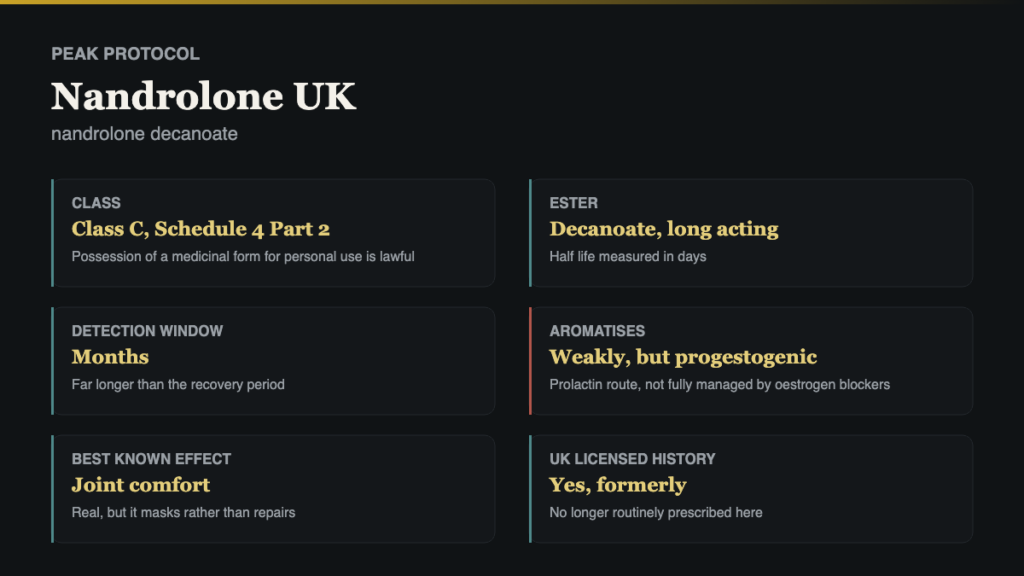
Nandrolone UK: 7 Essential Facts About Deca and Risks
An honest Nandrolone UK guide: the law, why deca stays detectable for months, the prolactin side effects, and how slow recovery really is.

This category covers what these compounds actually do to a body, which is a subject buried under two competing kinds of nonsense. One side says the side effects are exaggerated scare stories. The other says a single cycle will destroy you. Both are wrong, and the truth is more useful than either.
The guides here separate what is reversible from what is not, what is common from what is rare, and what can be monitored from what cannot. We sell none of the substances discussed and have no reason to soften or sharpen the picture.
On this page

Risk in this area is not a single number. It varies with the compound, the dose, how long it is run, what else is being taken, and the person taking it. A 25 year old on a modest dose for eight weeks and a 45 year old running four compounds year round are not in the same conversation.
What makes the side effects of these drugs different from most is that a meaningful share of them are silent. Blood pressure, lipids and left ventricular changes produce no sensation at all until they produce a great deal of it. That is the single most important thing in this category.
Eight guides sit here. Steroid side effects is the overview and the best starting point. Steroids and hair loss and gynaecomastia cover the two visible effects people ask about most, and the second of those is permanent once established.
The compound guides cover what is specific to each: Dianabol, Anavar, Winstrol, Trenbolone and Nandrolone. They differ more than the category suggests, particularly on liver handling and on cardiovascular impact.
This distinction matters more than any list of side effects, and it is the one most often left out.
| Effect | Reversible? |
|---|---|
| Suppressed natural testosterone | Usually, though recovery can take many months |
| Raised blood pressure | Usually, on stopping |
| Altered cholesterol profile | Usually, on stopping |
| Acne and oily skin | Usually |
| Water retention | Yes |
| Gynaecomastia, once glandular tissue forms | No. Surgery is the only route back |
| Male pattern hair loss, once triggered | No, though it can be slowed |
| Left ventricular hypertrophy | Partly at best, and not reliably |
| Tendon injury | Heals, but the tissue is rarely as it was |
Two rows in that table do not reverse at all. Those are the ones worth reading twice before any decision, because no amount of stopping undoes them afterwards.
This is the side effects category that matters most and gets discussed least, because it produces no symptoms while it develops.
Anabolic steroids lower HDL sharply and raise LDL, which is the opposite of what any cardiovascular guideline wants. Blood pressure rises, often substantially. Imaging studies of long term users have found reduced left ventricular function and increased wall thickness compared with matched non users.
None of that is felt. The person feels strong and the numbers are moving in a direction nobody would accept if they could see them. That is why blood pressure and a lipid panel are the two measurements our blood test guide puts first.

Oral compounds that are 17 alpha alkylated survive the liver by being chemically modified to do so, and that modification is what makes them hepatotoxic. Injectable compounds largely bypass this, which is why the oral against injectable distinction matters more than brand loyalty.
Liver enzymes rise in most oral users. In most cases they settle after stopping. In a minority the damage is cholestatic, and in a small number of case reports it has been fatal. The kidneys take a secondary hit, mostly through blood pressure and through the muscle mass itself.
Creatine kinase readings confuse this picture constantly, because heavy training raises them independently. A liver panel read without knowing the training context produces false alarms in both directions.
Exogenous testosterone shuts down natural production. That is not a side effect in the incidental sense; it is the predictable consequence and it happens to everybody.
What varies is recovery. Age, duration, dose and the number of previous cycles all matter. Some people recover in a few months. Some take a year. Some do not fully recover and end up on replacement therapy permanently, which is the outcome our guide on coming off covers in detail.
Fertility is the part most often overlooked. Sperm production can fall to zero and take a long time to return. For anyone who may want children, that is the side effect to weigh first, and it is the one least likely to be mentioned by whoever is selling.
Hair loss and gynaecomastia dominate the questions we receive, and both are governed by the same principle: prevention works, reversal mostly does not.
Hair loss is genetic susceptibility being accelerated. If the follicles were never going to go, they largely will not. If they were, this brings the timetable forward by years and no amount of stopping puts it back.
Gynaecomastia begins as a treatable hormonal imbalance and ends as glandular tissue that only surgery removes. The window between those two states is the whole subject, and it is measured in weeks rather than months.
The mental side effects are real, poorly studied and usually discussed in caricature. Rage is the cliché and is the least common presentation.
What is reported far more often is irritability, disrupted sleep, hypomanic periods during use and a flat, low period afterwards while hormones recover. That post cycle low is where a great deal of harm happens, because it is the point at which people start again to feel normal.
Anyone with a history of depression or bipolar illness is in a different risk category here, and that is a conversation for a GP rather than a forum.
A good deal more than people expect, and the monitoring is cheap relative to the risk.
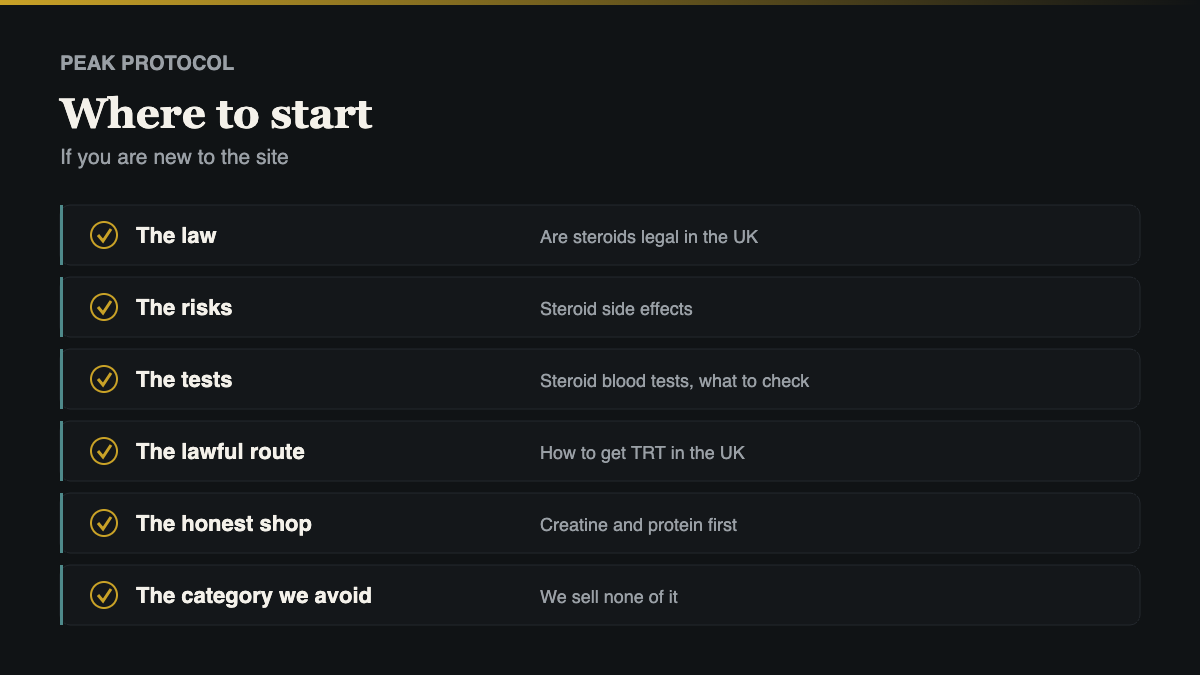
Blood pressure at home costs about twenty pounds and is the single highest value measurement available. A full lipid panel, a liver panel, haematocrit, and a hormone panel covering total testosterone, LH, FSH, oestradiol and prolactin cover most of what can be seen. Haematocrit in particular rises quietly and is a genuine thrombotic risk.
A GP can arrange all of it, and there is no legal jeopardy in that conversation because possession for personal use is not an offence. Our blood test guide lists exactly what to ask for.
Forum culture treats compound choice as the main variable. The evidence points elsewhere: total dose, total duration and the number of years accumulate risk far more reliably than which ester is in the vial.
A short, modest, single compound course sits in a different risk band from continuous multi compound use, and the side effects scale accordingly. That is the least glamorous finding in this category and probably the most useful one.
Nothing discussed in this category is for sale here. Our range is legal food supplements regulated as food by the Food Standards Agency, and none of them produce effects in this order of magnitude. Saying otherwise would be dishonest.
Where the underlying issue is genuinely low testosterone, medically supervised TRT is a legitimate route with monitoring attached. Where the goal is training performance, creatine and protein have the strongest evidence of anything we stock.
A large share of the harm in this area is not caused by the anabolic at all. It comes from what is taken alongside it, and that part is rarely discussed because it is nobody’s headline product.
Aromatase inhibitors taken without measurement crush oestradiol, and oestradiol that is too low produces joint pain, low mood and worse lipids than the steroid alone would. Diuretics used for a deadline are responsible for a disproportionate share of the deaths reported in this population. Stimulants stacked on top of already raised blood pressure compound a risk nobody was measuring.
The pattern is consistent: the side effects that put people in hospital usually involve three or four substances rather than one, taken to a schedule, without any measurement in between.
The evidence base here is weaker than either side of the argument admits, and that is worth stating rather than glossing.
Nobody runs randomised trials giving supraphysiological doses to healthy volunteers for years, so the literature is mostly observational: cohort studies of users, imaging studies, case reports and autopsy series. Those designs are good at showing that an association exists and poor at proving what caused it.
What that means in practice is that the cardiovascular findings are consistent across many studies and hard to dismiss, while precise risk figures should be treated with caution. Where we quote a number, the guide says what kind of study produced it, which is a standard our editorial policy requires.
Most of this category is about slow, silent change. A short list is not, and these warrant medical attention the same day rather than a forum post.
Chest pain or pressure, breathlessness at rest, or a sudden severe headache. Yellowing of the skin or eyes, dark urine or pale stools, which point at the liver. Calf pain and swelling on one side, or sudden shortness of breath, which point at a clot. Vision changes. Fainting. Any of those is 999 or 111 rather than a dose adjustment.
Nobody is going to be arrested for saying what they have taken, and the clinician needs to know in order to treat you properly. Withholding it is the most dangerous thing anyone does in an emergency in this area, and it happens constantly.
Gynaecomastia once glandular tissue has formed, and male pattern hair loss once triggered. Cardiac changes may only partly reverse. Everything else usually settles after stopping.
The dramatic ones often are. The cardiovascular and fertility effects are usually understated, which is the more dangerous error because neither produces symptoms early.
Monitoring reduces risk and does not remove it. Tests tell you what is happening; they do not stop it happening.
Usually, over months rather than weeks. Age, dose, duration and cycle history all affect it, and some people do not fully recover.
Lower risk is not the same as safe. Suppression is certain, and hair loss and gynaecomastia can both be triggered permanently in a single course.
It helps enormously and carries no legal risk, because possession for personal use is not an offence in the UK.
Every claim in these guides links to its source. Our editorial policy sets out how they are checked, and the NHS comes before this site for anything clinical.
An honest Nandrolone UK guide: the law, why deca stays detectable for months, the prolactin side effects, and how slow recovery really is.
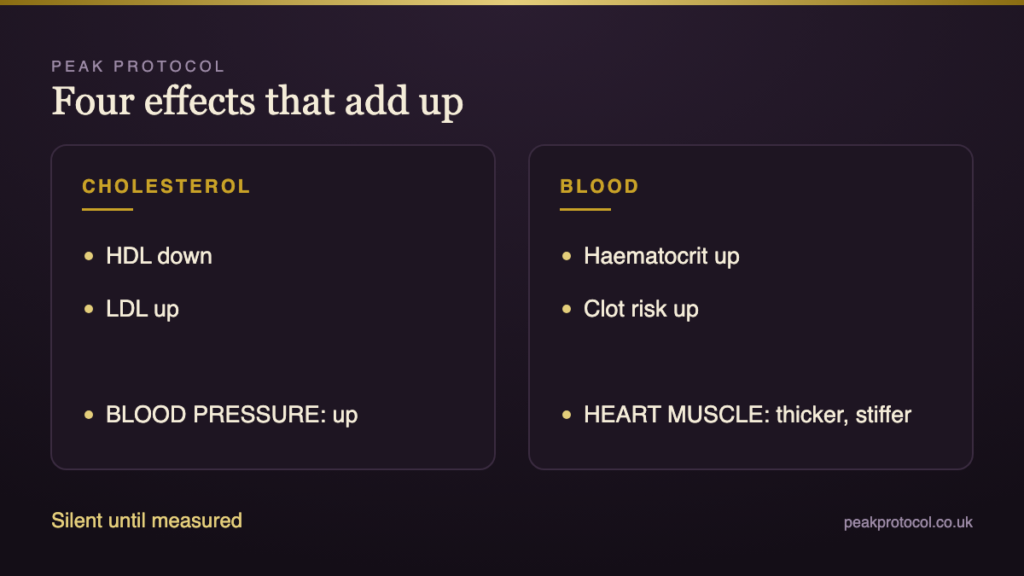
Steroids and heart health is the part of the subject that matters most and gets discussed least. The effects people notice, such as acne or mood swings, are rarely the dangerous ones. The changes that shorten lives happen quietly in blood pressure, cholesterol, blood thickness and the heart muscle…
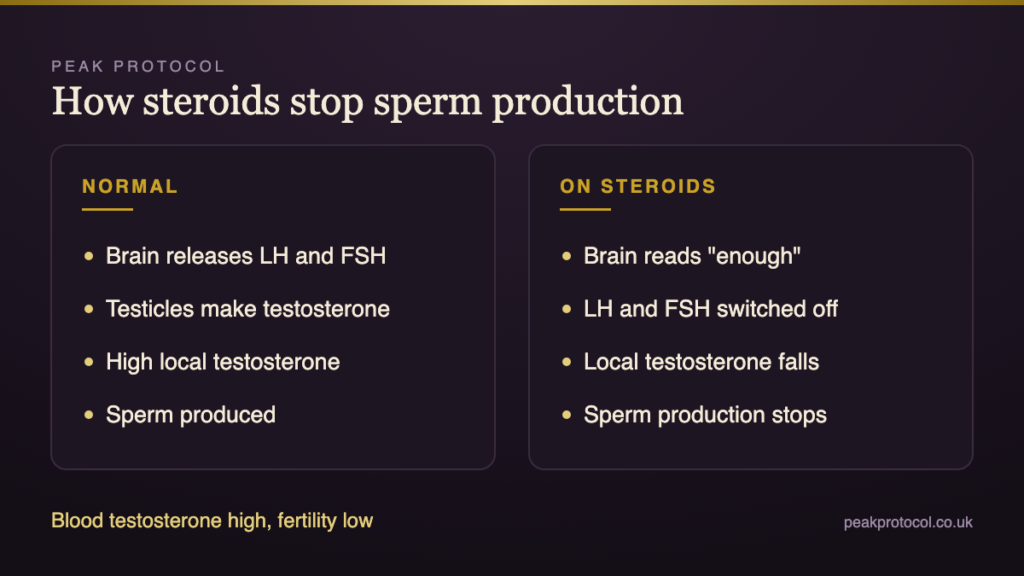
Steroids and fertility are closely linked, and in a way many users do not expect. Anabolic steroids are versions of a male hormone, yet one of their most reliable effects in men is to reduce or stop sperm production. In women they disrupt ovulation and the menstrual cycle. This guide explains why,…
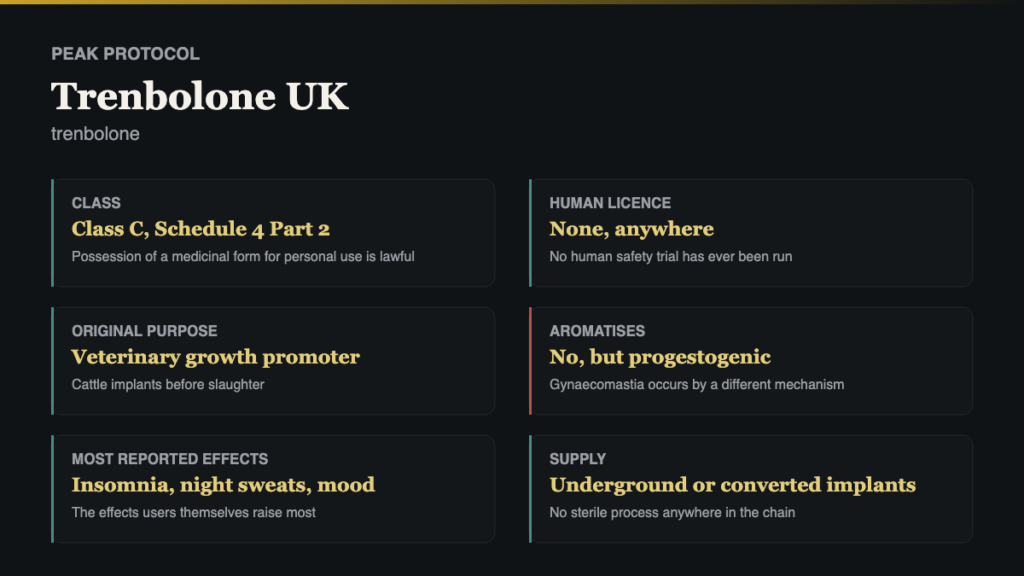
A Trenbolone UK guide without the folklore: the law, why no human safety data exists, the progestogenic risks, and what the supply chain really is.
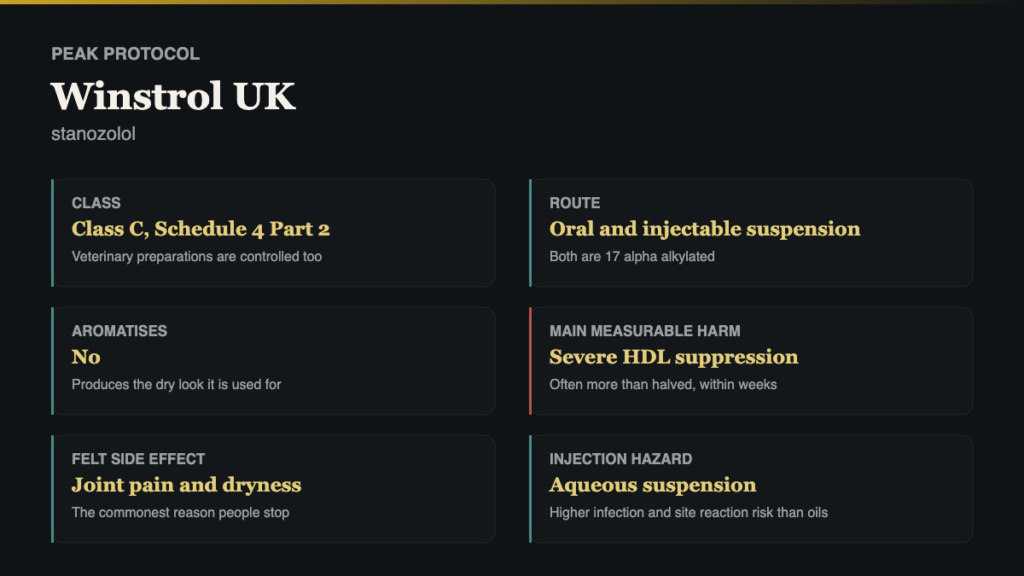
A clear Winstrol UK guide: the legal position, what stanozolol does to lipids and joints, and why injecting it does not spare the liver.
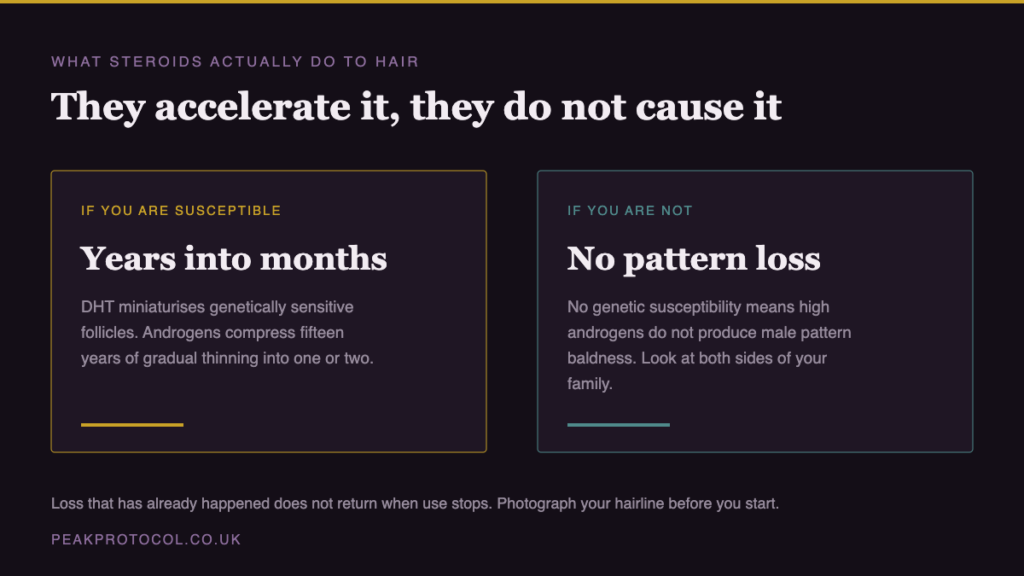
Steroids accelerate male pattern baldness rather than causing it. What DHT does to follicles, which compounds are worse, and what genuinely helps.
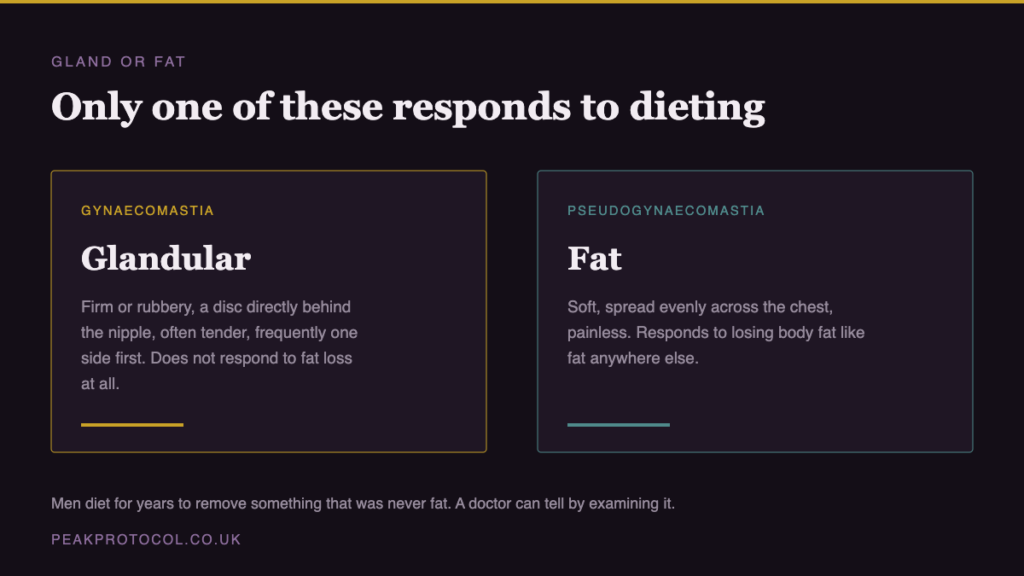
Why steroids cause it, how to tell glandular tissue from fat, the early warning that opens the only window to act, and why surgery is the route back.
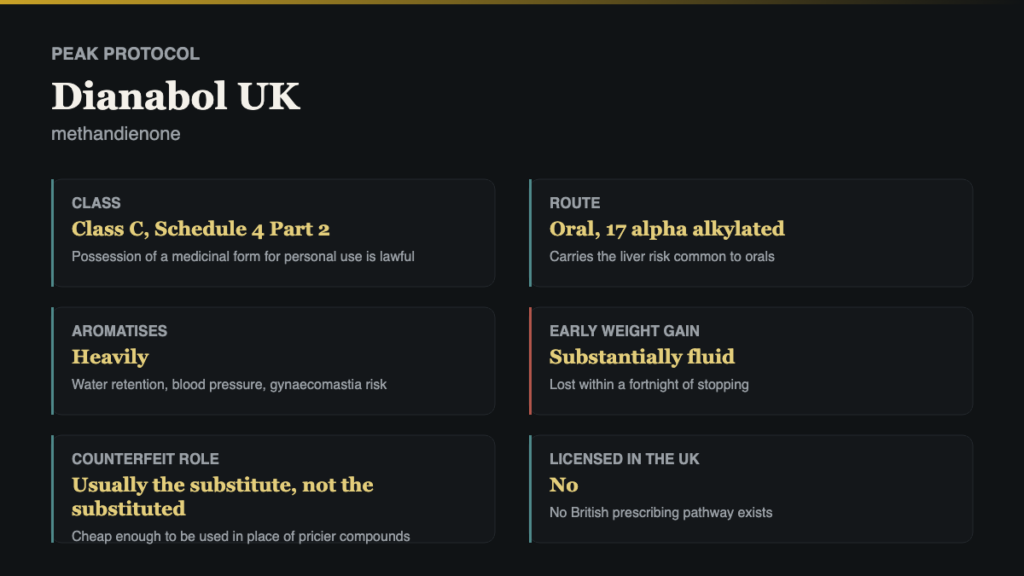
A straight Dianabol UK guide: the law, what methandienone does to oestrogen, liver and blood pressure, and why the early weight is not muscle.
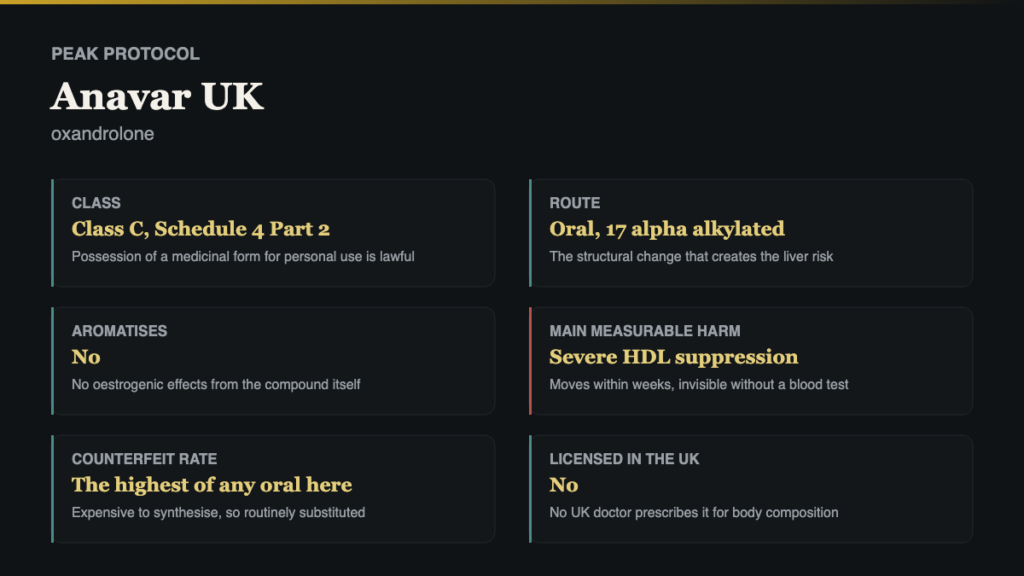
An honest Anavar UK guide: the legal position, what oxandrolone really does to lipids and liver, and why the mild reputation is only half earned.
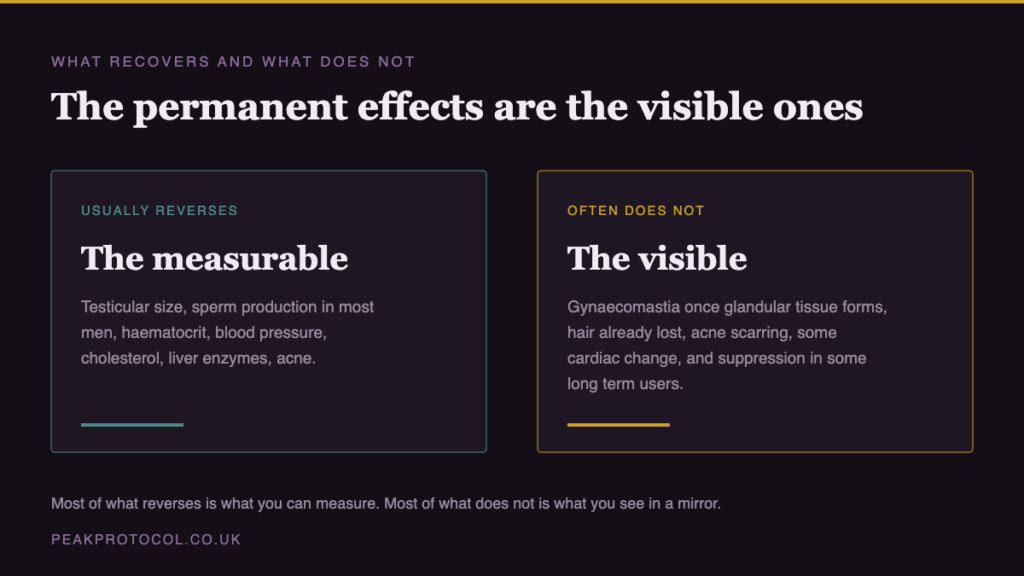
Cardiovascular, liver, fertility, gynaecomastia, hair and mental health effects, what reverses, what does not, and the signs that need A and E.