
Supplement evidence ranges from very strong to almost none, and marketing rarely tells you which is which. This page sets out how we judge the ingredients we sell and write about, the four questions we ask of every one, and our current view of the most common sports supplements, including the ones we sell that have weak evidence. It is the method behind every product page on the site and behind our editorial policy.
Supplement evidence: the short version
- We ask four questions of every ingredient: what it is, whether the dose matches the research, how strong that research is, and what its limitations are.
- Only a handful of sports supplements have strong evidence: creatine, caffeine, protein and, for specific uses, beta alanine and nitrate.
- Many popular products, including most marketed for testosterone, rest on small or indirect studies.
- We only use health claims authorised on the GB nutrition and health claims register, and we say so when an ingredient has none.
- Our content is written by the Peak Protocol editorial team and has not yet been reviewed by a medical professional.
- If we get something wrong, we correct it and note the change.
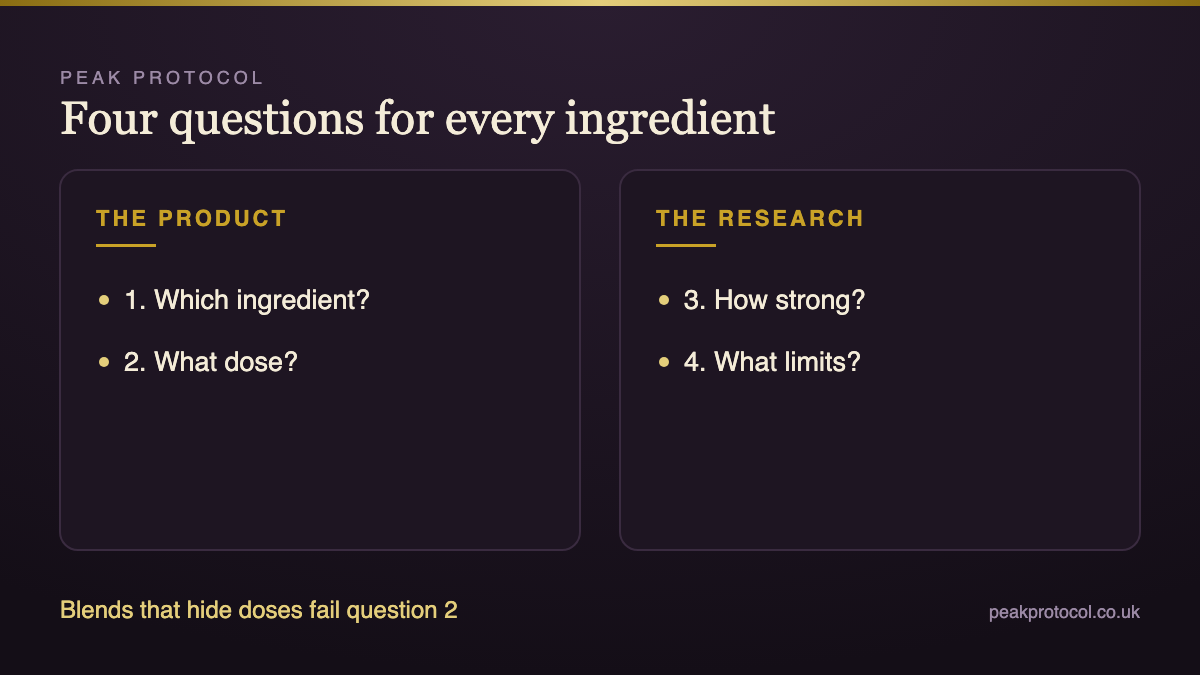
The four questions we ask
1. What is the ingredient? A named form matters. Magnesium bisglycinate is not magnesium oxide, and a study on one extract of a herb does not prove another extract works.
2. Does the dose match the research? Many products contain an ingredient with good evidence at a fraction of the studied dose. We compare the amount per serving with the amount used in trials, and proprietary blends that hide amounts fail this test automatically.
3. How strong is the evidence? We give most weight to systematic reviews, meta analyses and position statements from bodies such as the International Olympic Committee consensus statement on dietary supplements, then to well run randomised trials in people similar to our customers. Studies in cells, animals or small groups of untrained people count for much less.
4. What are the limitations? Who it does not help, what food does as well for less, side effects, interactions, and whether it could affect a drug test.
Our ratings for common sports supplements
These ratings summarise our reading of the evidence for the use most people buy each product for. They are general information, not personal advice, and they change when the research does.
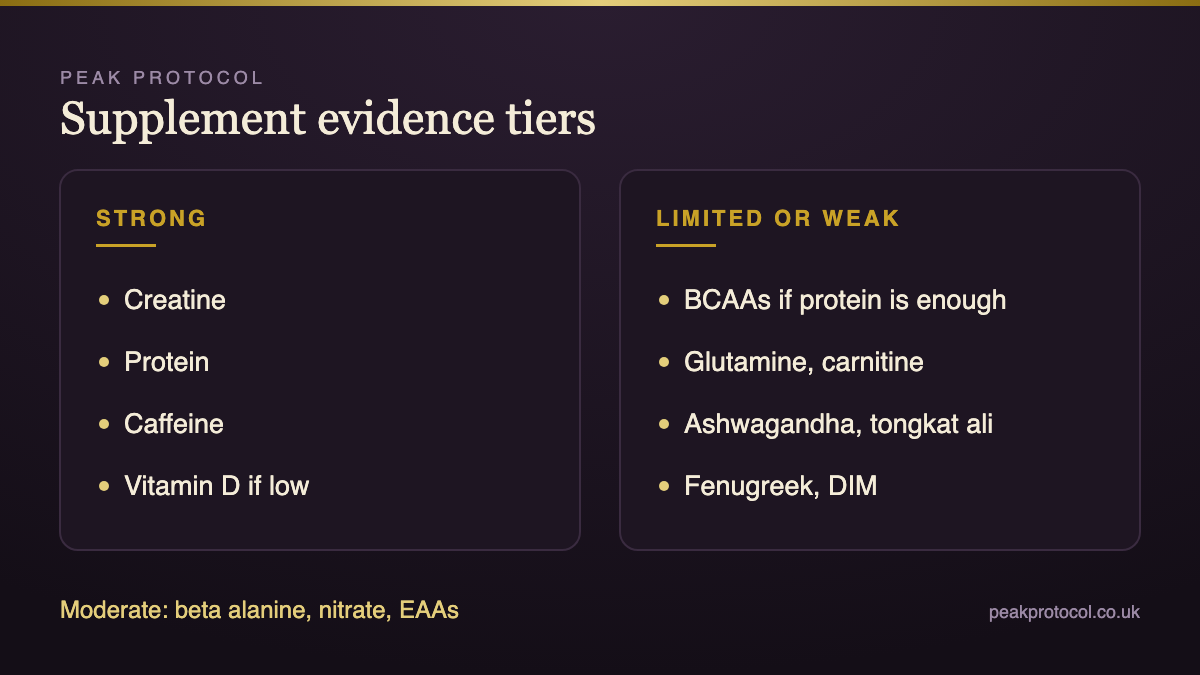
| Ingredient | Common use | Evidence | Our summary |
|---|---|---|---|
| Creatine monohydrate | Strength and power | Strong | Reliable, modest benefit; authorised GB claim |
| Protein | Muscle growth | Strong | Works through total daily intake; food works too |
| Caffeine | Performance | Strong | Effective at moderate doses; tolerance and sleep matter |
| Beta alanine | High intensity efforts of 1 to 4 minutes | Moderate | Useful for specific events, tingling is harmless |
| Nitrate (beetroot) | Endurance | Moderate | Stronger in less trained people |
| Citrulline malate | Pump and repetitions | Mixed | Some positive trials, not consistent |
| Essential amino acids | Recovery | Moderate | Helpful when protein intake is low |
| BCAAs | Recovery | Weak if protein is adequate | Little benefit on top of enough protein |
| Glutamine | Recovery | Weak | Little evidence in healthy people who eat enough protein |
| L carnitine | Fat loss | Weak | Not shown to aid fat loss in healthy people |
| Vitamin D | General health | Strong when deficient | Worth considering in UK autumn and winter |
| Zinc and magnesium | General health | Strong when deficient | Authorised claims; no benefit above adequate intake |
| Ashwagandha | Stress, testosterone | Limited | Some small trials; no authorised GB claim |
| Tongkat ali | Testosterone | Limited | Small studies; no authorised GB claim |
| Fenugreek | Testosterone | Limited | Inconsistent results; no authorised GB claim |
| DIM | Oestrogen balance | Very limited | Little human evidence in healthy men |
Testosterone support: the honest position
Products marketed for testosterone are where claims and evidence are furthest apart. The only authorised GB claim in this area is that zinc contributes to the maintenance of normal testosterone levels in the blood, which matters if you are short of zinc and does nothing extra if you are not. Herbal ingredients such as ashwagandha, tongkat ali and fenugreek have some small studies, but none has an authorised claim, and none is a treatment for low testosterone.
We sell products in our testosterone support range and describe them on that basis. Anyone with symptoms of low testosterone should see a GP, as explained in low testosterone symptoms and our TRT UK guide. Products that promise steroid like results are covered in legal steroids UK.
How claims are regulated in Great Britain
Health claims on food supplements in Great Britain must appear on the GB nutrition and health claims register, each with conditions of use such as a minimum dose. Anything else, however common online, cannot lawfully be made in marketing. Advertising is also policed by the Advertising Standards Authority, and food safety by the Food Standards Agency.
That is why our product pages are sometimes more cautious than competitors’. Where an ingredient has no authorised claim, we describe its composition and the research honestly and do not imply a benefit.
Quality, contamination and sport
Supplements are regulated as foods, not medicines, so they are not tested before sale in the way medicines are. Contamination with undeclared substances is a known risk, particularly in products sold on steroid style marketing. Athletes who are tested should read our anti-doping guide and consider batch tested products. Our product pages state what each product contains; we do not claim third party testing unless a certificate exists for that batch.
Who writes this, and review status
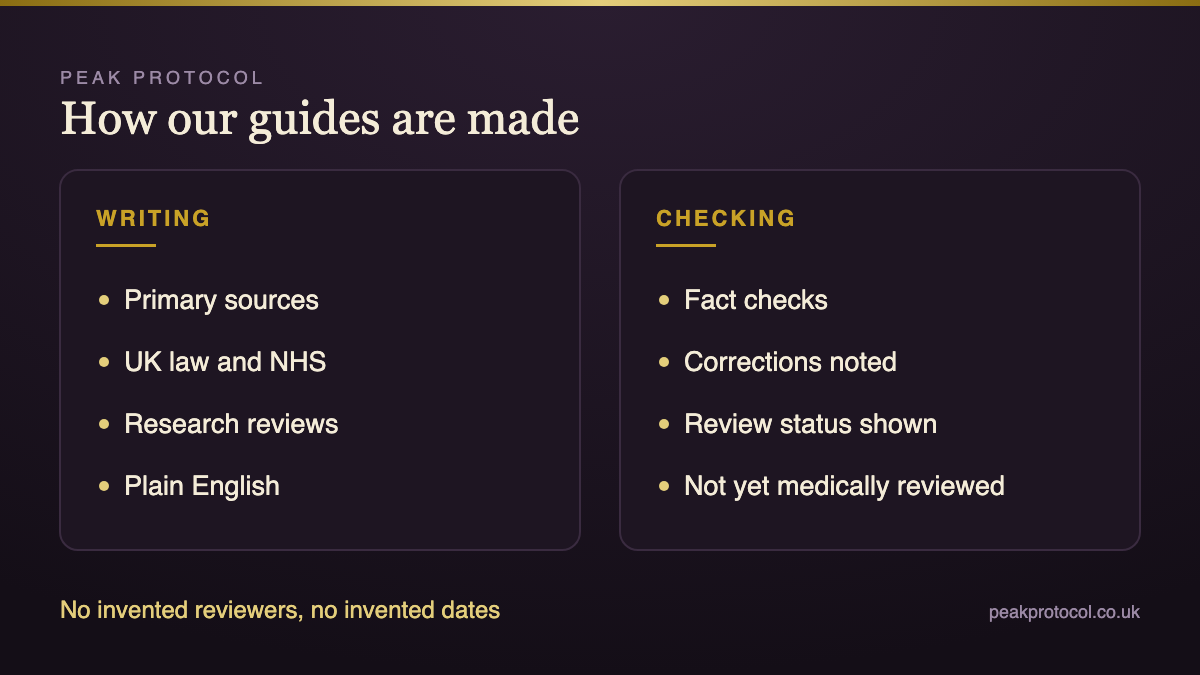
Guides on this site are researched and written by the Peak Protocol editorial team using the primary sources cited on each page. They have not yet been reviewed by a medical professional, and every health page says so. When a qualified reviewer is appointed, reviewed pages will name them and show the real review date. Our experts page and editorial policy explain this in more detail.
If you find an error, please tell us. We correct factual mistakes promptly and note significant changes on the page.
Why a supplement shop writes about steroids
Many people who search for supplements are also asking about steroids, testosterone and TRT, and much of what ranks for those questions is written to sell something. We publish the steroids in the UK hub because an evidence based shop should be able to say clearly what supplements can and cannot do compared with drugs, and what the law and the risks are. We do not sell anabolic steroids, SARMs or prescription medicines.
Five ways supplement marketing misleads
- Citing a study on a different form or dose.
- Hiding amounts in a proprietary blend.
- Presenting a result in rats or cells as a result in people.
- Using testimonials in place of evidence.
- Implying a drug like effect, especially with words like anabolic or steroid.
How to read a supplement study yourself
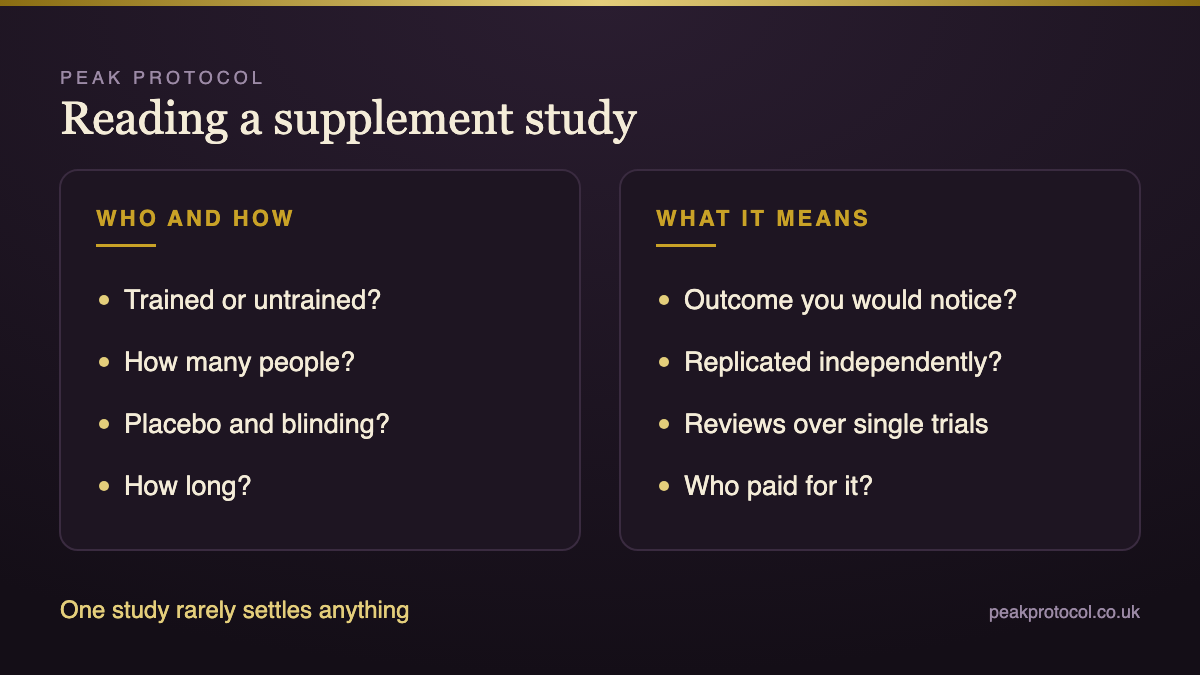
A few questions sort most studies quickly. Who took part: trained or untrained people, men or women, young or old? How many: ten people or several hundred? Was there a placebo and were participants blinded? How long did it last? What was measured: a blood marker, a lab test of performance, or something you would actually notice in training? And who paid for it? Industry funding does not make a study wrong, but it is a reason to look for independent replication.
Single studies rarely settle anything. Systematic reviews and meta analyses that pool many trials, and position statements from professional bodies, are a more reliable guide.
What we will not sell
Some products are easy to sell and wrong to stock. We do not sell anabolic steroids, SARMs, prohormones or prescription medicines. We do not stock pre workouts containing stimulants that are not permitted in food supplements in the UK, such as DMAA or DMHA. We do not sell products whose doses are hidden in proprietary blends. The information about controlled drugs on our steroids hub exists to inform, not to sell anything.
How these ratings change
Ratings on this page reflect our reading of the evidence at the time of writing. When a significant new review or position statement is published, we reassess the relevant ingredient and update both this page and the product pages that depend on it. If you think a rating is wrong, tell us which study or review we should look at.
Supplement evidence: common questions
Which supplements have the strongest evidence?
For sports performance, creatine, caffeine and adequate protein have the strongest evidence, with beta alanine and nitrate useful for specific types of exercise.
Do testosterone boosters work?
Most have limited evidence. The only authorised GB claim in this area is that zinc contributes to the maintenance of normal testosterone levels, which helps only if you are short of zinc.
Are BCAAs worth taking?
If you already eat enough protein, BCAAs add little. Essential amino acids or more protein are better options when intake is low.
Is Peak Protocol content medically reviewed?
Not yet. Our guides are written by the editorial team from primary sources, and every health page states that it has not been medically reviewed.
Why do your product pages make fewer claims than other shops?
We only use health claims authorised in Great Britain, and we say so when an ingredient has none rather than implying a benefit.
Can supplements cause a failed drug test?
Yes. Some products have contained undeclared banned substances. Tested athletes should use batch tested products and keep records.
Sources and review status
This page draws on the International Olympic Committee consensus statement on dietary supplements, the US Office of Dietary Supplements fact sheet on exercise and athletic performance, the GB nutrition and health claims register and guidance from the Advertising Standards Authority and the Food Standards Agency.
Written by the Peak Protocol editorial team. This page has not been reviewed by a medical or legal professional. It is information, not medical or legal advice, and it is not an encouragement to use any drug. Peak Protocol sells legal sports supplements and does not sell anabolic steroids, SARMs or prescription medicines. How we research and correct content is set out in our editorial policy.