SAN Nutrition
SAN Nutrition is a long standing American sports nutrition brand, and the three SAN Nutrition products we stock are all built around the same idea: that the standard forms of creatine and amino acids can be improved by modifying them. Two of the three are creatine products taking different routes to that goal, and the third is a branched chain amino acid formula.
This SAN Nutrition page is going to be unusually direct about the evidence, because the pH modified creatine category is the one place in sports nutrition where a marketing claim was tested head to head against plain monohydrate in a properly designed trial and lost. That does not make the product bad. It makes the reason to buy it different from the reason on the label.
On this page
The SAN Nutrition range we stock
Three SAN Nutrition products, two of them creatine based.
| Product | What it is | Category | Price |
|---|---|---|---|
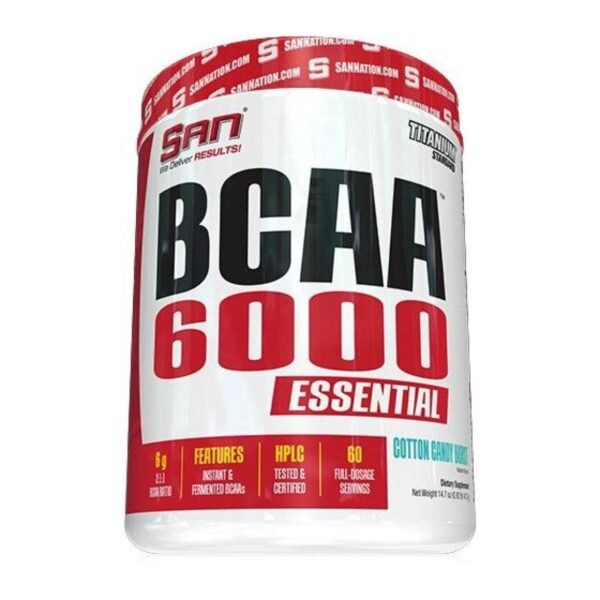
| San BCAA 6000 Essential | Branched chain amino acids at six grams per serving | amino acids and BCAA | £57.00 |
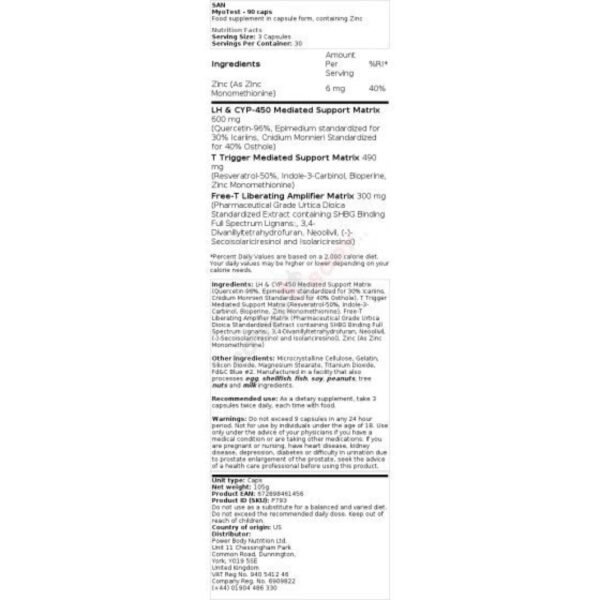
| San Myotest | A formulated creatine based product rather than a plain powder | creatine | £42.00 |
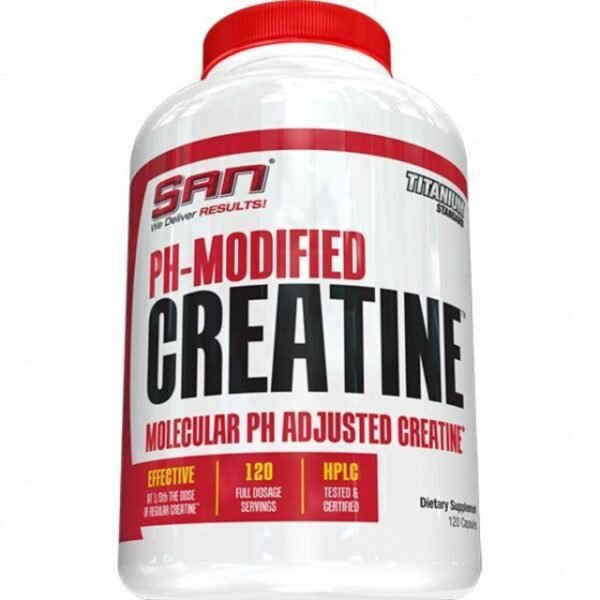
| San pH Modified Creatine | Buffered creatine, formulated at a higher pH to resist conversion | creatine | £17.00 |
The pH Modified Creatine at seventeen pounds is the cheapest item and the one worth the closest read. Myotest is a formulated creatine product rather than a plain powder, and BCAA 6000 Essential is a standard branched chain amino acid formula at the fifty seven pound price point shared by several BCAA products in this catalogue.
Choosing from the SAN Nutrition range
The SAN Nutrition choice depends almost entirely on how much weight you put on the buffered creatine evidence, so it is worth taking that head on.
If you want cheap creatine that works
Buy monohydrate. There is monohydrate in our creatine category from nineteen pounds, and it has several hundred controlled trials behind it. The pH modified product is two pounds cheaper and has a trial behind it that did not go its way.
If monohydrate genuinely upsets your stomach
This is the real use case for every alternative creatine form, and it is a legitimate one. A minority of people get bloating or discomfort from monohydrate, and if that is you, a buffered or hydrochloride form is worth trying. Seventeen pounds is a cheap experiment.
If you want a formulated creatine product
Myotest is the option here. Read the label for the creatine content per serving rather than the serving weight, because formulated products carry other ingredients and the comparison against a plain powder needs to be made on actual creatine.
If you are considering the BCAA
Check your daily protein intake first. Six grams of branched chain amino acids is less than a single scoop of whey supplies, and whey brings the other six essential amino acids with it. The ingredients section below explains why that matters more than the ratio does.
What is actually inside
The SAN Nutrition buffered creatine story is worth telling properly, because it is one of the clearest examples in this industry of a plausible mechanism failing an honest test.
The claim. Creatine converts to creatinine, an inert breakdown product, and that conversion happens faster in acidic conditions. Stomach acid is acidic. Therefore, the argument goes, a creatine formulated at a higher pH survives the stomach better, delivers more creatine to the muscle, and works at a smaller dose with less bloating. Every step of that sounds reasonable.
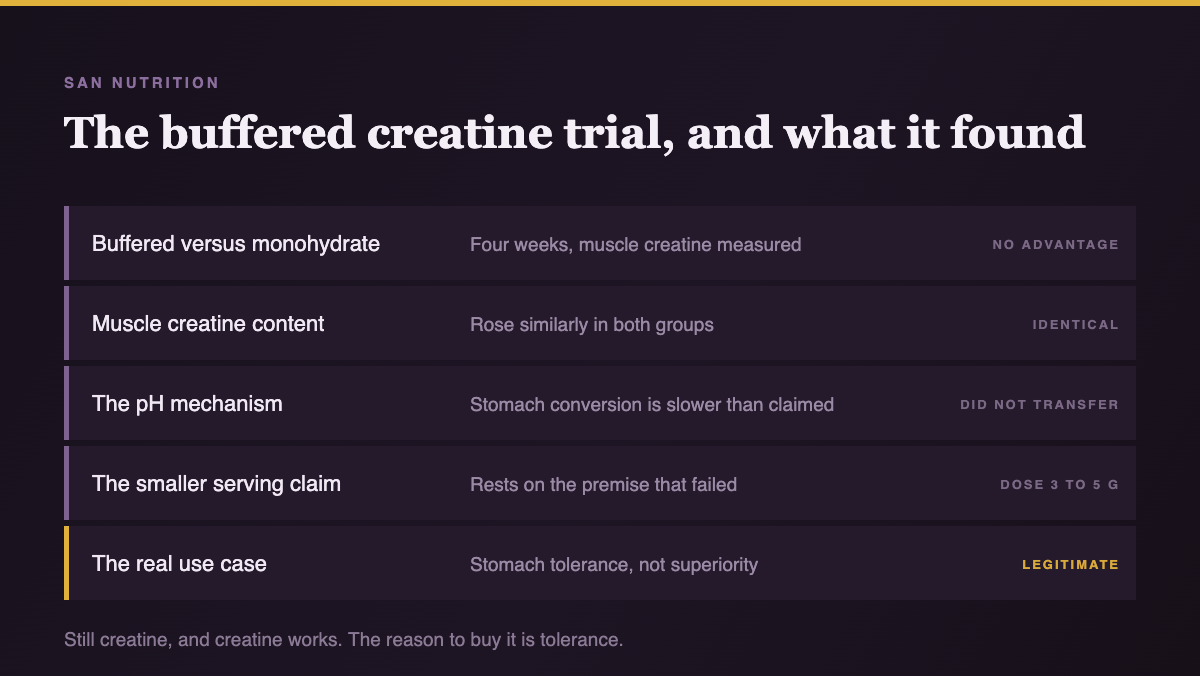
What happened when it was tested. A randomised controlled trial compared buffered creatine against creatine monohydrate against placebo over four weeks in resistance trained men, measuring muscle creatine content directly through biopsy alongside body composition and performance. Buffered creatine did not outperform monohydrate on any measure. Muscle creatine content rose similarly in both creatine groups. The finding has not been overturned.
Why the mechanism did not translate. The conversion of creatine to creatinine in the stomach is far slower than the marketing implies over the time a dose actually spends there, and creatine monohydrate is absorbed at close to complete efficiency to begin with. When a baseline is already near ceiling, there is nothing for an improvement to improve.
Where that leaves the SAN Nutrition products. Buffered creatine is still creatine, and creatine works. If you take an adequate daily dose you will saturate your muscle whichever form you use. The honest reasons to choose a modified form are gastrointestinal tolerance and personal preference, and both are perfectly good reasons. The reason printed on the category, that it is more effective, is not supported.
The BCAA question is the familiar one. Six grams of leucine, isoleucine and valine supplies three of the nine essential amino acids. Muscle protein needs all nine, and the trials adding BCAA on top of sufficient total protein have not found an additional effect. A full spectrum essential amino acid product answers the same want without the structural gap.
Dosing and timing
The dosing question on the SAN Nutrition modified creatine is the one place where the marketing and the evidence diverge in a way that costs you money. Products in this category are frequently labelled for servings well below the three to five grams of creatine used in the research, on the reasoning that better delivery permits a smaller dose. Since the delivery advantage did not appear in testing, the sensible approach is to dose on actual creatine content and aim for the same three to five grams a day you would take of monohydrate.
Read the creatine figure in the nutrition panel rather than the serving weight. On formulated products such as Myotest the two are not the same number, and the difference determines how many servings the tub really contains.
Saturation takes three to four weeks at a steady daily dose regardless of form, and about a week if you load with roughly twenty grams a day split across four servings. Rest days count, because you are maintaining a store rather than fuelling a session.
BCAA 6000 is labelled for use around training. If you take it, that is the timing to follow, and a fasted session is the context where the case is least weak.
How SAN Nutrition compares here
SAN Nutrition sits in the middle of the catalogue on price and at the sceptical end on evidence, which is a fair summary of the modified creatine category generally.
| Brand | Strongest here | Typical price position | Best for |
|---|---|---|---|
| SAN Nutrition | Buffered and formulated creatine | Mid to upper | Trying an alternative form after monohydrate trouble |
| Czech Virus | Creapure sourced monohydrate | Mid | Documented raw material at a generic price |
| Peak Protocol | Monohydrate, Creapure, capsules and HCL | Mid | Comparing every creatine form in one range |
| Chevron Nutrition | Cheapest creatine per gram | Lowest here | Cost above everything |
| Weider | Branded creatine variants | Highest | A specific branded formulation |
Across the whole catalogue the pattern in creatine is consistent: the cheaper the product, the stronger the evidence behind the form it uses. That is an uncomfortable thing for a shop to write and it is what the research says.
Labelling, testing and UK rules
SAN Nutrition products sold in Great Britain carry UK compliant labelling under the food labelling and packaging rules, including the ingredient list in weight order and the allergen statement.
The authorised creatine claim in the Great Britain nutrition and health claims register is conditional: it may be used only where the product provides a daily intake of three grams of creatine, and only in relation to physical performance in successive bursts of short term high intensity exercise. A modified creatine product labelled for a smaller serving may not reach that threshold, which is a practical reason to check the creatine content rather than trusting the serving suggestion.
Branched chain amino acids have no authorised claim in Great Britain. American labelling operates under a different regulatory system with a different standard of substantiation, so wording that appears on a United States label does not carry over. The Food Standards Agency guidance for food supplement businesses sets out the position here, and the Food Supplements (England) Regulations 2003 provide the underlying framework.
Who it suits, and who should skip it
SAN Nutrition suits people who have already tried creatine monohydrate, found it disagreed with them, and want a well made alternative rather than giving up on the ingredient. That is a genuine problem and this is a genuine answer to it.
SAN Nutrition suits people who like an American brand with a long history and want a formulated product rather than a bag of powder.
It is the wrong choice if you are buying on evidence per pound. Plain monohydrate is cheaper per gram, better supported, and available across several brands on this site. Our page on what the research actually supports covers the wider pattern, and the short version is that the most heavily marketed version of an ingredient is rarely the best evidenced one.
Buying SAN Nutrition in the UK
All three SAN Nutrition products are held in UK stock and dispatched domestically, so an American brand does not mean an American delivery time or an import charge. Same working day dispatch before the afternoon cut off.
Creatine of any form should be stored dry and sealed. The instability that the pH modified formulation is designed to address is a solution phase problem, not a shelf phase one, so a sealed tub in a cupboard keeps perfectly well whichever form you buy.
If you are trying a modified creatine specifically because monohydrate upset your stomach, buy the smallest quantity that will tell you the answer. Four weeks at a proper dose is enough to know whether the tolerance problem has gone.
Returns on unopened items and delivery timings are on shipping and returns.
Common questions
Is SAN Nutrition pH Modified Creatine better than monohydrate?
A randomised controlled trial comparing buffered creatine with monohydrate and placebo over four weeks, measuring muscle creatine directly, found no advantage on any measure. It is still creatine and it still works. The reason to choose it is stomach tolerance, not superiority.
Can I take a smaller dose of buffered creatine?
The labels often suggest so, and the reasoning behind that suggestion did not survive testing. Dose on actual creatine content and aim for three to five grams a day, the same as monohydrate.
Why is buffered creatine sold as more effective if the trial says otherwise?
Because the mechanism is plausible and the marketing predates the trial. Creatine does convert faster to creatinine in acid, but the conversion over the time a dose spends in the stomach is small, and monohydrate absorption is already near complete.
What is in Myotest beyond creatine?
It is a formulated product rather than a plain powder, so the tub carries additional ingredients alongside the creatine. Read the nutrition panel for the creatine figure per serving, which is the number that matters for comparing it against a plain monohydrate.
Is BCAA 6000 Essential worth it if I use protein powder?
Probably not. Six grams of branched chain amino acids is less than a scoop of whey supplies, and whey also brings the other six essential amino acids that a BCAA product leaves out.
Should I try a modified creatine if monohydrate gives me bloating?
Yes, that is exactly what these products are useful for. Bloating on monohydrate affects a minority of users and often resolves on a buffered or hydrochloride form, or simply on splitting the dose across the day.
Read next
- What actually has evidenceOur honest read on which legal supplements earn their place and which are sold on marketing.
- The Peak Protocol guide libraryEvery long form guide we publish, from UK law to blood work.
- Where UK law sitsClass C, the personal possession position, and why importing is the part that bites.
- Testosterone replacement in the UKHow TRT is actually assessed and prescribed, and what it is not.
Everything we publish is in the Peak Protocol guide library.
Showing all 3 results