
Athlete multivitamin at a glance
- Format: Tablets
- Price: £21.99
- Who it is for: people training regularly who want the gaps covered rather than a long ingredient list
- What it is not: Athlete multivitamin is a food supplement, not a medicine, and not an alternative to one.
Everything below sets out what athlete multivitamin does, what may lawfully be claimed for it in Great Britain, and who should not bother. We would rather lose the sale than overstate it. The full athlete multivitamin specification, price per serving and the alternatives worth considering are all further down this page.
Most supermarket multivitamins are formulated for a sedentary adult, and training hard raises requirements for several micronutrients well beyond that.
This provides twenty six vitamins and minerals across two tablets daily.
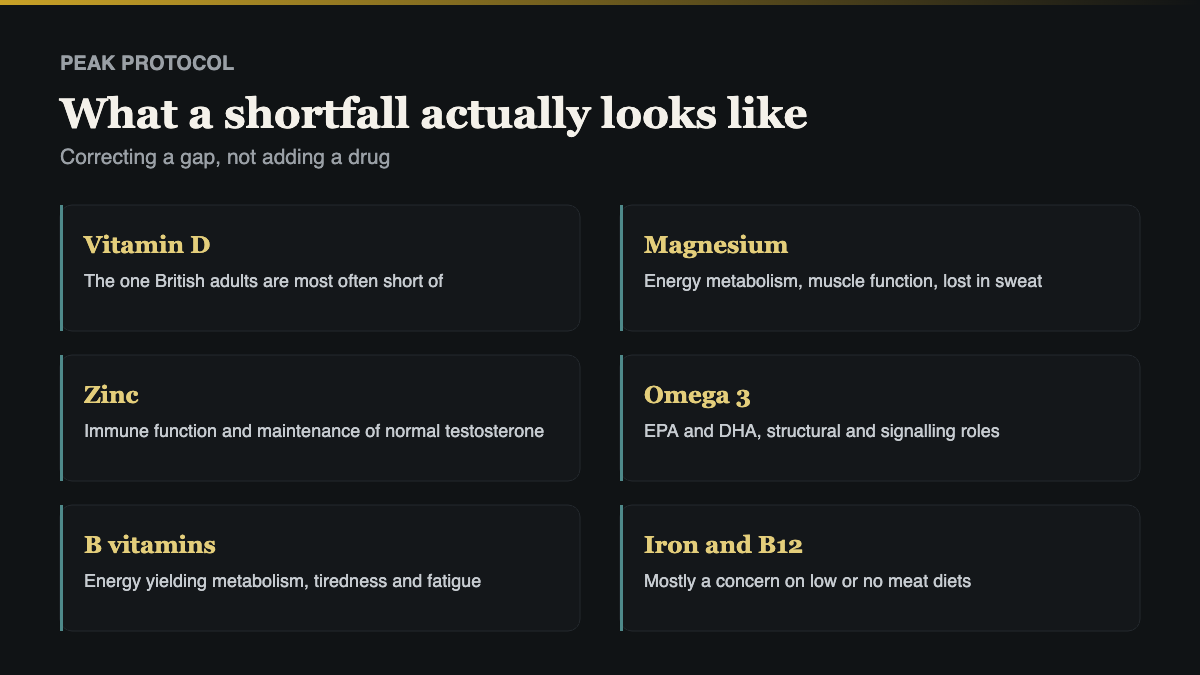
Vitamin C and magnesium contribute to a reduction of tiredness and fatigue.
Vitamin D contributes to the maintenance of normal muscle function.
Zinc contributes to normal protein synthesis and to the maintenance of normal testosterone levels in the blood.
Iron contributes to normal oxygen transport in the body.
B vitamins contribute to normal energy yielding metabolism.
We use the more absorbable forms throughout, methylfolate rather than folic acid and magnesium bisglycinate rather than oxide, which costs more and is the entire point.
On this page
- Athlete multivitamin at a glance
- Athlete Multivitamin: the honest summary
- Why this athlete multivitamin in particular
- What the evidence says about athlete multivitamin
- What athlete multivitamin actually does
- Who athlete multivitamin is for, and who should skip it
- What we can and cannot claim about athlete multivitamin
- What to expect from athlete multivitamin, week by week
- How to read the label on athlete multivitamin
- Athlete multivitamin: what you are actually buying
- Stacking athlete multivitamin without doubling up
- How to take athlete multivitamin
- Quality, testing and what you are trusting
- Ordering athlete multivitamin: delivery and returns
- Common mistakes with athlete multivitamin
- Athlete multivitamin: common questions
- How athlete multivitamin compares with the alternatives
Athlete Multivitamin: the honest summary
Athlete Multivitamin is stocked because most supermarket multivitamins are formulated for a sedentary adult, and training hard raises requirements for several micronutrients well beyond that.

Everything else in vitamins and minerals is here. Our guide explains why a blood test beats guesswork. Also worth reading: NHS guidance on vitamins and minerals.
Why this athlete multivitamin in particular
Look at the individual amounts rather than the length of the ingredient list. A formula with sensible levels of the things people are actually short of beats one with fifty ingredients at token doses, and a shorter list is usually a sign of a more considered formula rather than a cheaper one.
This is built around the gaps that actually show up in people who train, rather than around the longest possible ingredient list. That means sensible amounts of vitamin D, the B vitamins involved in energy metabolism, magnesium and zinc, rather than fifty ingredients at doses too small to matter. A formula aimed at athletes should reflect that training raises requirements for some things and not for others, and most of the market ignores that entirely.
What the evidence says about athlete multivitamin
Some of this rests on good evidence and some on habit, so here is the split.
The evidence that multivitamins improve health outcomes in well nourished populations is weak, and large trials have repeatedly failed to show benefit. The evidence that correcting a specific deficiency helps is strong and uncontroversial. Both statements are true, and which one applies to you depends entirely on your diet. For British adults the deficiency worth taking seriously is vitamin D, particularly between October and March when sunlight is insufficient to make it.
What athlete multivitamin actually does
A multivitamin is insurance rather than a performance product, and it is worth being straight about that. It does not make a poor diet adequate and it does not add anything to a diet that is already varied.
What it does is cover the gaps that appear when someone is training hard, eating in a deficit, or repeating the same few meals. In Britain the gaps that turn up most reliably are vitamin D through the winter, and iron and B12 in people eating little or no meat. The rest of a multivitamin is mostly there for completeness.
Who athlete multivitamin is for, and who should skip it
This suits a narrow group well and everybody else poorly, so here is the line. Suited to people who will take it consistently for months rather than in bursts.
A waste of money if you are already meeting the requirement through food. If in doubt, spend the money on food and sleep first and come back later.
What we can and cannot claim about athlete multivitamin
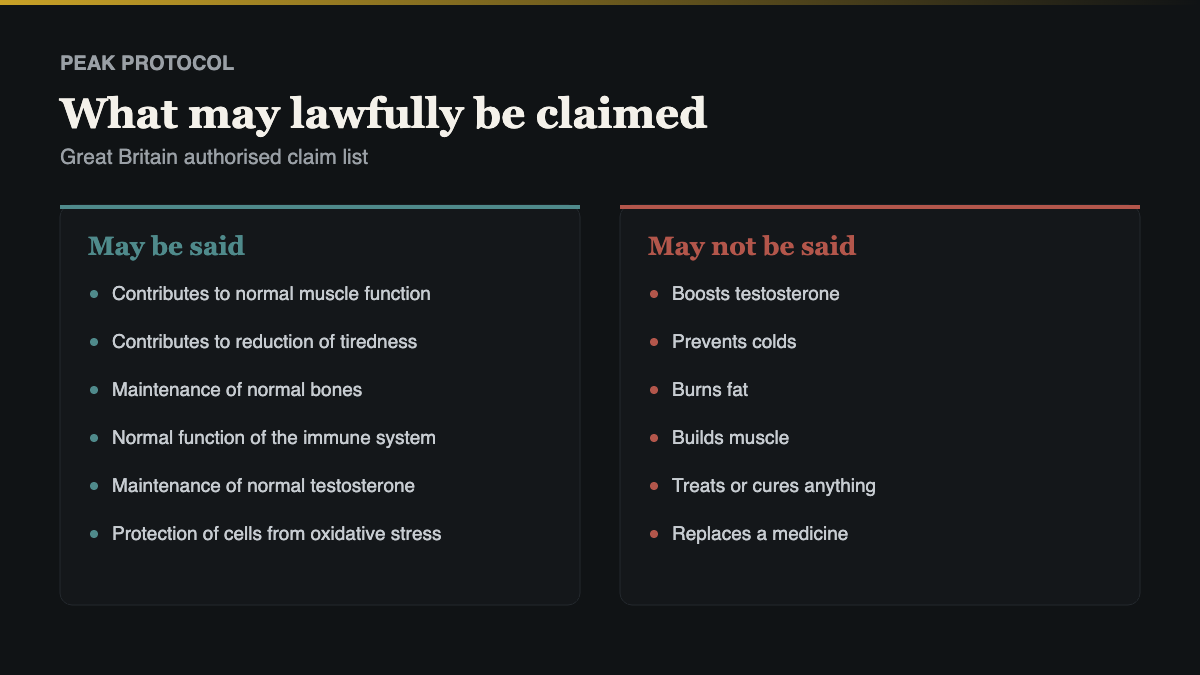
There is an authorised list of nutrition and health claims in Great Britain, and anything outside it may not lawfully be said. Here is what applies.
Individual vitamins and minerals carry their own authorised claims. Vitamin D contributes to normal muscle function and the maintenance of normal bones. B vitamins contribute to normal energy yielding metabolism and the reduction of tiredness and fatigue. Vitamin C contributes to normal collagen formation and the normal function of the immune system. A multivitamin as a product carries no claim of its own.
What to expect from athlete multivitamin, week by week
The usual mistake is judging too early, so here is what the weeks actually look like. Expect a flat fortnight. Physiology does not move on a retail timescale. Weeks three to eight are where a genuine shortfall starts closing, if there was one.
By month three you should be prepared to stop, and we would rather you did than reorder out of habit. Whatever you measure, measure it the same way each time or the comparison is worthless.
How to read the label on athlete multivitamin
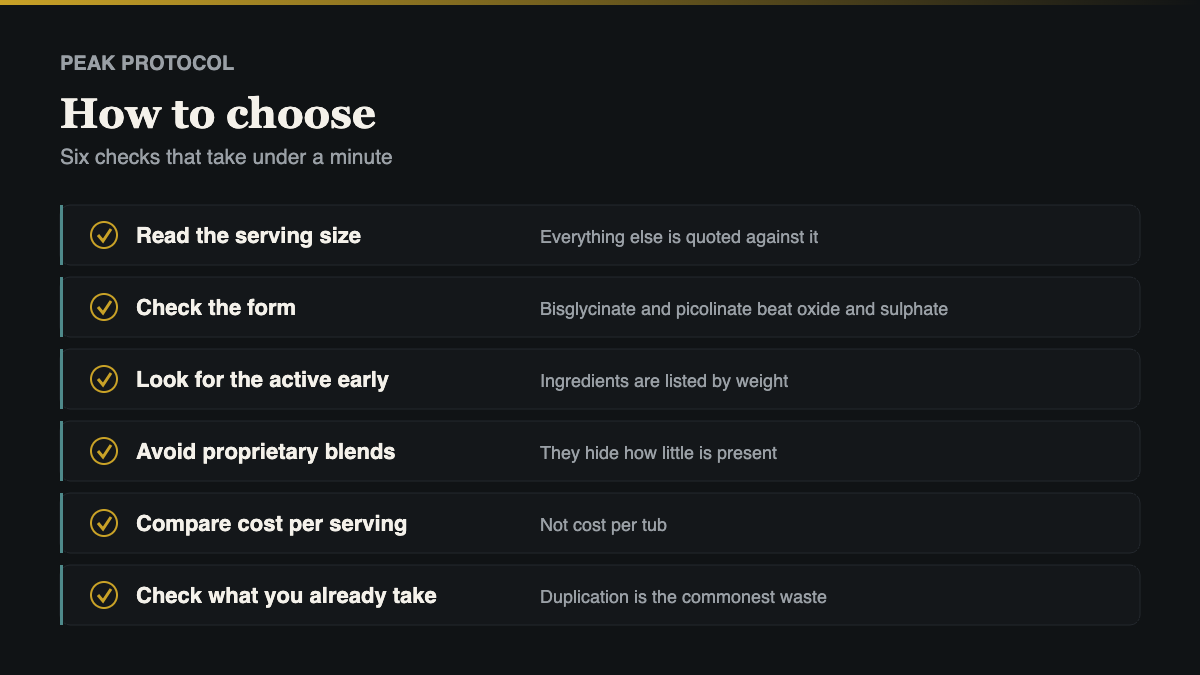
Learning to read one of these properly is the single most useful skill in this aisle. Percentage of reference intake is worth a glance, but it is a general population figure and says nothing about someone training five times a week.
Read the milligrams, not the percentage, and compare those between products. If an active appears below the flavourings, it is there for the label rather than for you.
Athlete multivitamin: what you are actually buying
Own brand pricing against branded athlete formulas that frequently cost twice as much for a similar profile. The place to compare is the individual amounts on the back rather than the number of ingredients listed on the front.
The published specification is below. The honest comparison is cost per dose, and it is rarely the comparison the packaging invites.
| Detail | This product |
|---|---|
| Format | Tablets |
| Price | £21.99 |
| Brand | Peak Protocol own brand |
Stacking athlete multivitamin without doubling up
This is the section where we talk you out of a second purchase. Add up the shared ingredients across everything you take before adding one more.
Fat soluble vitamins accumulate, so doubling those is the one case where overlap matters medically. Fewer products taken properly will beat more products taken sporadically every time.
How to take athlete multivitamin
Take with a meal and plenty of water. Tablets are pressed denser than capsules, so they take longer to break down, and swallowing them dry is the usual cause of the aftertaste people complain about.
If a tablet is large, taking it partway through a meal rather than before it makes the whole thing easier.
One tablet with a meal, ideally one containing some fat so the fat soluble vitamins are absorbed properly. Taking it with breakfast is the easiest habit to keep.
Quality, testing and what you are trusting
Quality in supplements means one thing: the contents match the panel. Analytical surveys of sports supplements make consistently uncomfortable reading.
Anyone drug tested at work or in sport should treat that as a live risk and use batch tested products only. Ask us for what we hold on a batch and we will tell you what we actually have.
Ordering athlete multivitamin: delivery and returns
Logistics first, because they decide whether the rest of this page matters to you. Nobody handling the parcel learns anything from it, which matters more to some buyers than others. Estimates are generated per order at checkout, which is why this page does not carry one.
Unopened items can be returned within the statutory window. A damaged parcel gets replaced or refunded on a photograph, not on a form.
Common mistakes with athlete multivitamin
A short list of errors accounts for most of the money wasted on this sort of product.
- Using it to justify a narrow diet rather than to cover the edges of a decent one
- Doubling up with a separate vitamin D and a greens powder that also contains the same vitamins
- Expecting to feel something, when the point is the absence of a deficiency rather than a sensation
None of those are unique to athlete multivitamin, and all of them cost either money or the effect itself.
Athlete multivitamin: common questions
Is an athlete multivitamin different from a normal one?
It should be, and this one is. Training raises requirements for some nutrients and not others, so the formula weights vitamin D, the B vitamins and the minerals lost through sweat rather than spreading the budget evenly across everything.
Do I still need this if I eat well?
Probably less than the marketing suggests. The gap that persists for most people in Britain regardless of diet is vitamin D through the winter.
Do I need a multivitamin if I eat well?
Probably not, with the likely exception of vitamin D through a British winter. The honest use for a multivitamin is covering gaps during a deficit or a monotonous stretch of eating.
Is it better to take it with food?
Yes. The fat soluble vitamins, A, D, E and K, are absorbed considerably better alongside a meal that contains some fat.
Is it worth taking every day or only on training days?
Take it consistently rather than around sessions. The physiology here works on weeks of average intake, not on what you did this afternoon.
How is it stored and how long does it keep?
Somewhere cool, dark and dry. The expiry date and the period after opening are separate figures and the second one is usually the binding one.
What is the difference between your own brand and the branded products?
Price and scale, mostly. Own label skips licensing and marketing cost so you pay for the ingredient. The branded products bring longer track records and deeper quality control.
Do I need to take this with food?
The label answers it. Fat soluble ingredients do better alongside a meal, and taking anything with food is the first fix for tolerance problems.
Will this show up on a drug test?
Nothing here contains a controlled substance or a banned performance enhancer. If you are tested in sport, buy batch certified products, because contamination is the real risk rather than the formulation.
How do I store it once opened?
Keep it sealed somewhere cool and dark. A wet scoop returned to the tub is the usual cause of clumping.
How do I know the tub contains what the label says?
You cannot verify it at home, which is why manufacturing standards matter more than branding. Where a product carries independent certification the page says so.
Do you offer a subscription?
No. A subscription is good for us and usually bad for the buyer, so we have left it alone.
How athlete multivitamin compares with the alternatives
If you are weighing this against the alternatives we stock, the table sets out the differences that actually matter.
| Product | Format | Price | Brand |
|---|---|---|---|
| Athlete Multivitamin (this one) | Tablets | £21.99 | Own brand |
| Zinc Picolinate 25mg | Capsules | £13.99 | Own brand |
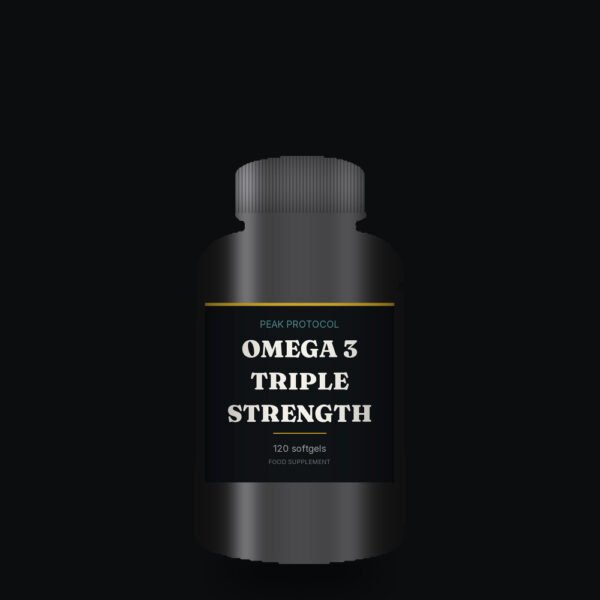
| Omega 3 Triple Strength | Softgels | £24.99 | Own brand |
| Magnesium Bisglycinate 400mg | Capsules | £18.99 | Own brand |
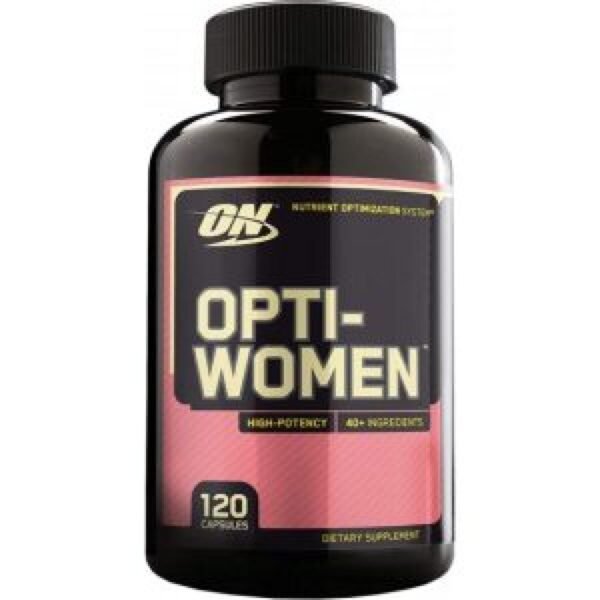
| Optimum Nutrition Opti Women | Tablets | £32 | Optimum Nutrition |
| Optimum Nutrition Opti Men | Tablets | £33 | Optimum Nutrition |
No claim here goes beyond what the evidence and the regulations support, which is the whole of our pitch.
Athlete multivitamin is a legal food supplement and nothing more. Peak Protocol does not sell, supply or source anabolic steroids, and no product here is positioned as an alternative to a prescription medicine or a controlled substance. Nothing on this page is medical advice. Our legal steroids UK guide explains honestly what supplements like athlete multivitamin can and cannot do, and our anabolic steroids guide covers the category we deliberately stay out of.
Reviews
There are no reviews yet.