
Anti-doping rules apply to far more people than most realise. If you compete in a sport with a national governing body, you can be tested, whether you are an Olympian or a club level lifter. This guide explains who runs anti-doping in the UK, why anabolic steroids, SARMs and clenbuterol are banned at all times, what strict liability means, how therapeutic use exemptions work and how to reduce the risk from supplements. It is part of our steroids in the UK hub.
Anti-doping: the short version
- UK Anti-Doping runs anti-doping in the UK under the World Anti-Doping Code.
- Anabolic agents, including anabolic steroids, SARMs and clenbuterol, are prohibited at all times under the World Anti-Doping Agency Prohibited List.
- Strict liability means you are responsible for any prohibited substance in your sample, however it got there.
- The standard sanction for intentional use of an anabolic steroid is a four year ban.
- A therapeutic use exemption can permit a prescribed medicine, such as testosterone for diagnosed deficiency, if approved in advance.
- Contaminated supplements cause positive tests. Batch tested products reduce, but do not remove, the risk.
Who runs anti-doping in the UK
UK Anti-Doping is the national anti-doping organisation. It tests athletes, investigates possible violations, brings cases and runs education programmes. It works under the World Anti-Doping Code, the framework adopted by sports and governments worldwide, and the list of banned substances is set each year by the World Anti-Doping Agency.
Sports governing bodies sign up to the UK National Anti-Doping Policy. When you join a club or register to compete under a governing body, you usually agree to its anti-doping rules, and that is what makes you subject to testing. Many people competing at amateur level have agreed to this without noticing.
Why steroids are banned at all times
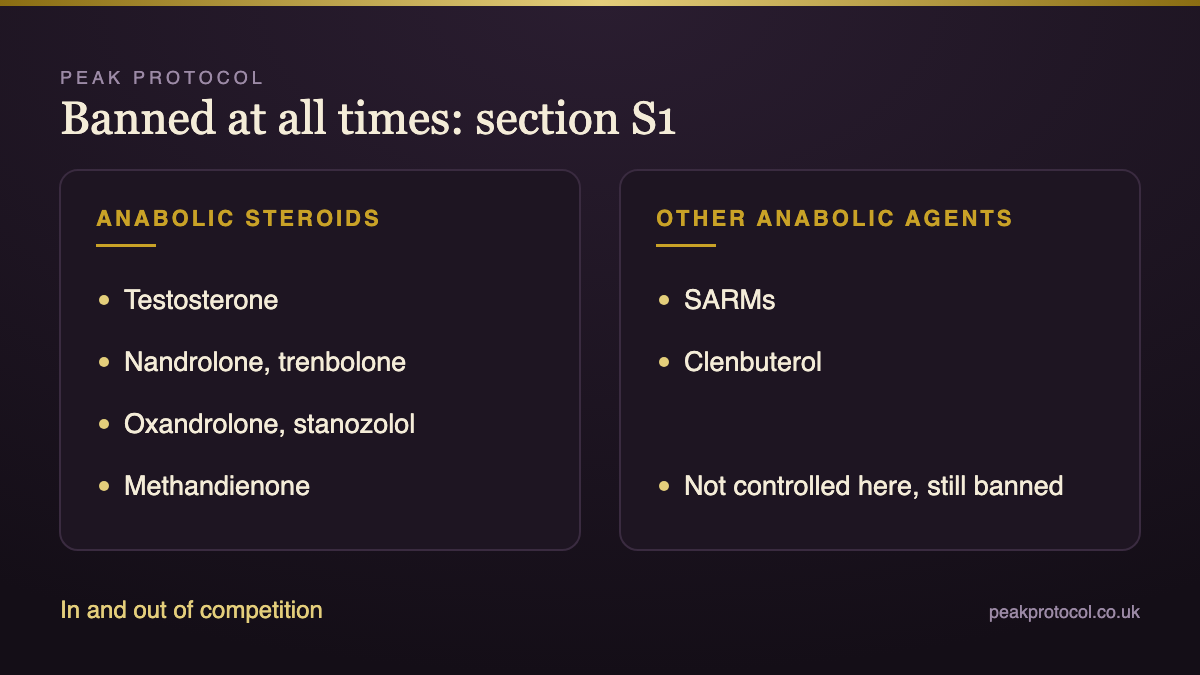
The Prohibited List splits banned substances into those banned only in competition, such as many stimulants, and those banned at all times. Anabolic agents are in section S1 and are banned at all times, because their effects on muscle and recovery persist long after use stops.
Section S1 covers anabolic androgenic steroids, including testosterone and every compound discussed in our guides to Anavar, Dianabol, Winstrol, trenbolone and nandrolone. It also covers other anabolic agents, which include SARMs and clenbuterol. The fact that SARMs and clenbuterol are not controlled drugs under UK steroid law makes no difference in sport.
Growth hormone, peptide hormones and drugs that alter hormone levels, such as aromatase inhibitors and anti oestrogens, are covered by other sections and are also banned. The World Anti-Doping Agency Prohibited List is published every year and is the only authoritative source.
Strict liability
Under the Code, athletes are strictly liable for any prohibited substance found in their sample. The anti-doping organisation does not have to prove that you meant to take it. If it is there, it is a violation.
What intent affects is the length of the ban. For anabolic steroids, which are not “specified substances”, the standard sanction where use was intentional is four years. If an athlete can show how the substance got into their system and that they bore no significant fault, for example through a proven contaminated product, the ban can be reduced. In practice that is hard to prove and often requires the product itself to be tested.
| Situation | Typical outcome under the Code |
|---|---|
| Intentional use of an anabolic steroid | Four year ban |
| Unintentional, but fault established | Up to two years |
| Proven contaminated product, no significant fault | Reduced ban, from a reprimand upwards |
| Refusing or evading a test | Treated as a violation, up to four years |
| Approved therapeutic use exemption | No violation |
How testing works
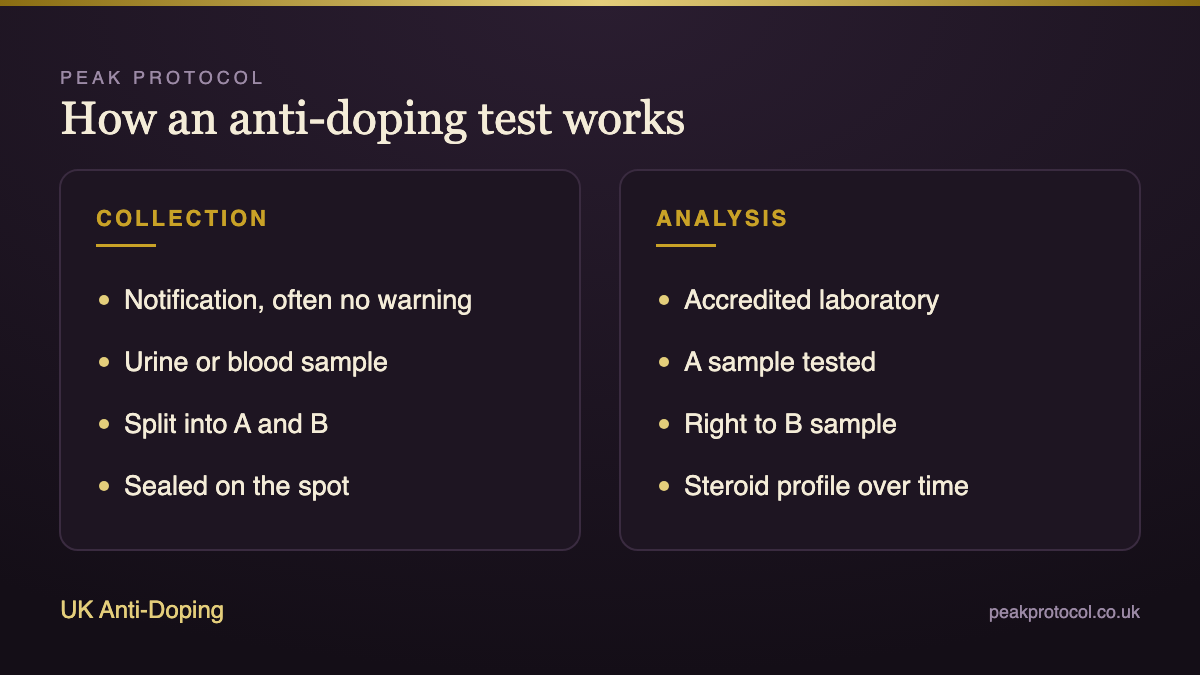
Samples are collected by trained doping control officers and chaperones, in competition or out of competition, usually without advance notice. Urine is the most common sample, and blood is also collected. The sample is split into A and B portions, sealed and sent to an accredited laboratory, and the athlete has the right to have the B sample tested if the A sample is positive.
Testing for anabolic steroids is sensitive and can detect some compounds for weeks or months after use. The steroid profile, part of the athlete biological passport, tracks an individual’s natural hormone markers over time, so even substances that have cleared can leave a detectable pattern. A counterfeit product containing a different steroid from the label, as described in counterfeit steroids, can mean a detection window far longer than the athlete expected.
Therapeutic use exemptions
An athlete with a genuine medical need for a prohibited medicine can apply for a therapeutic use exemption (TUE). It has to be supported by medical evidence and approved before the medicine is used where possible. For testosterone, applications are assessed strictly: a clear diagnosis of testosterone deficiency from a recognised cause, supported by blood tests, is required.
Anyone on prescribed TRT who competes, or plans to, should check their sport’s rules and speak to the relevant body before competing. Our guide to how to get TRT in the UK explains the diagnostic process that a TUE application relies on.
Supplements and contamination
Supplements are one of the most common explanations athletes give for positive tests. Some products have been found to contain steroids, SARMs or stimulants that are not on the label, either through deliberate adulteration or cross contamination in manufacturing.
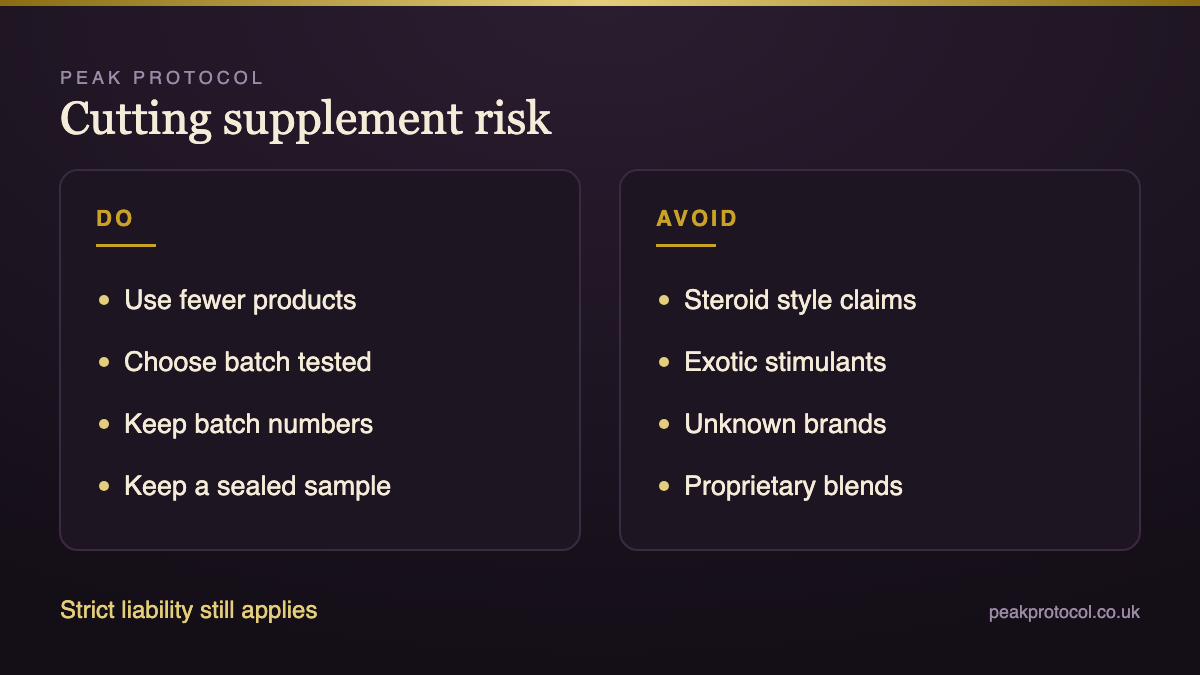
Schemes such as Informed Sport test batches of participating products for a wide range of banned substances. A certified batch lowers the risk but cannot remove it, and strict liability still applies. Practical steps: use as few supplements as you need, avoid anything marketed with steroid like claims, and keep a record of the product, batch number and a sealed sample from the same batch.
Our legal steroids UK guide explains why products sold on steroid style marketing are the highest risk, and the evidence based basics, creatine and protein, are covered in our shop.
Beyond the ban
A violation is published, can end sponsorship and funding, and during a ban an athlete cannot train with their club or take part in any sport that has signed up to the Code, including coaching. The health consequences described in steroid side effects are separate and apply whether or not anyone is caught.
If you know of doping in your sport, UKAD runs a confidential reporting line through its website.
Five common mistakes
- “I am only amateur, I will not be tested.” Membership of a governing body usually means you can be.
- “SARMs are legal, so they are allowed.” They are banned at all times in sport.
- “It was only a supplement.” Strict liability still applies.
- “I stopped months ago.” Some steroids are detectable for months, and the steroid profile tracks changes over time.
- “My doctor prescribed it, so I am covered.” A prescription is not a TUE. Apply before competing.
Your rights and responsibilities during a test
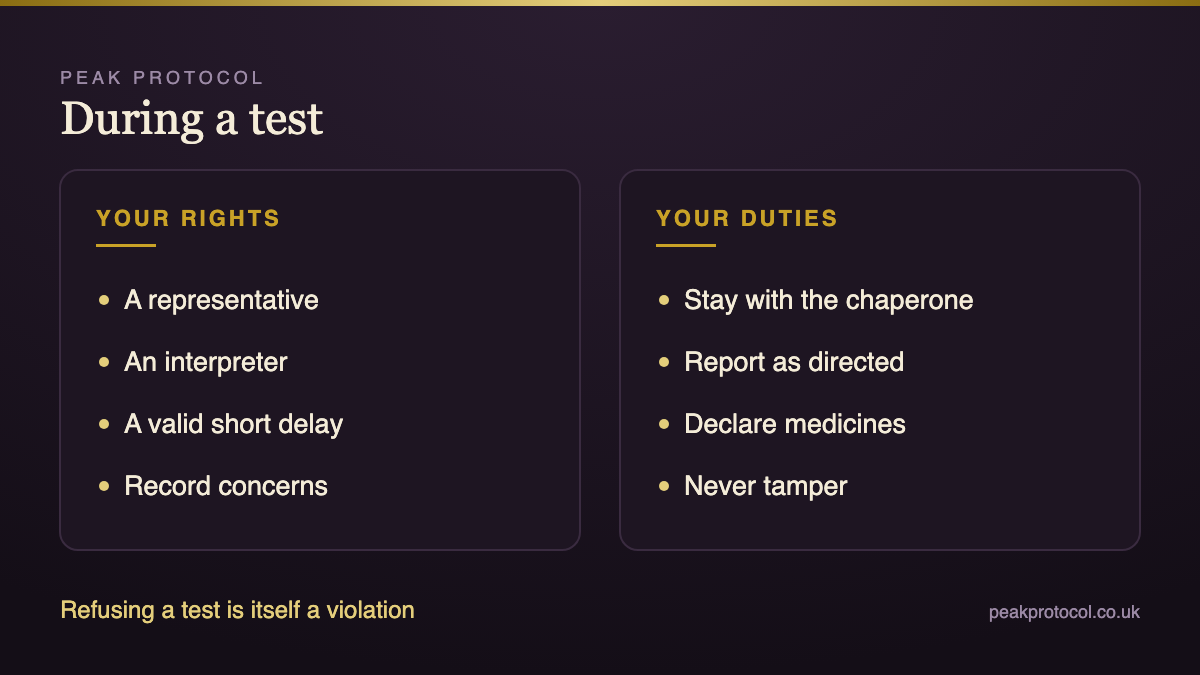
When you are notified for a test you must report to the doping control station as directed and stay in view of the chaperone. You have the right to a representative and, where needed, an interpreter. You can ask for a short delay for valid reasons, such as finishing a warm down or receiving medical treatment, if the officer agrees and you remain chaperoned.
You will be asked to declare any medicines and supplements you have taken recently. Declaring them does not make a violation more likely, and it can help explain results. Read the paperwork before signing and note any concerns about the procedure on the form. Refusing to provide a sample, or tampering with the process, is itself a violation.
Young athletes and untested competitions
The rules apply to young athletes too, and the consequences of steroid use are more serious for teenagers, whose growth can stop early. UKAD runs education programmes for young athletes, parents and coaches, and many governing bodies require completion of clean sport education at certain levels.
Some strength and physique competitions are run by federations that do not test, or test only at certain events. Competing in an untested federation does not remove the health risks, and if you also compete in a sport covered by the Code, an untested competition does not protect you from testing in that sport.
Clean sport education materials are published free on the UK Anti-Doping website.
Why the health side still matters
Anti-doping rules exist partly to protect fair competition and partly to protect athletes’ health. The second part is easy to forget. The effects described in steroids and heart health, steroids and fertility and coming off steroids apply to athletes exactly as they do to anyone else, and competitive pressure often means higher doses and more compounds. An athlete who is already using should prioritise the health checks regardless of their competitive status.
Anti-doping: common questions
Are steroids banned in sport?
Yes. Anabolic steroids are banned at all times, in and out of competition, under the World Anti-Doping Agency Prohibited List, which UK Anti-Doping enforces.
Can amateur athletes be drug tested in the UK?
Yes. Anyone competing under a sport that has adopted the UK National Anti-Doping Policy can be tested, including many amateur and club level competitors.
How long is a ban for steroids?
The standard sanction for intentional use of an anabolic steroid is four years. It can be reduced in limited circumstances, such as a proven contaminated product with no significant fault.
Are SARMs banned in sport?
Yes. SARMs are listed as other anabolic agents in section S1 of the Prohibited List and are banned at all times.
Can I compete while on TRT?
Only with an approved therapeutic use exemption. Testosterone is prohibited and a prescription alone does not permit it in sport.
Can supplements cause a positive test?
Yes. Some supplements have contained undeclared banned substances. Batch tested products reduce the risk, but strict liability still applies.
Sources and review status
This guide draws on the World Anti-Doping Code, the World Anti-Doping Agency Prohibited List, guidance from UK Anti-Doping and information from Informed Sport. Sanctions described are the standard provisions of the Code; each case is decided on its own facts.
Written by the Peak Protocol editorial team. This page has not been reviewed by a medical or legal professional. It is information, not medical or legal advice, and it is not an encouragement to use any drug. Peak Protocol sells legal sports supplements and does not sell anabolic steroids, SARMs or prescription medicines. How we research and correct content is set out in our editorial policy.