
Steroids and heart health is the part of the subject that matters most and gets discussed least. The effects people notice, such as acne or mood swings, are rarely the dangerous ones. The changes that shorten lives happen quietly in blood pressure, cholesterol, blood thickness and the heart muscle itself, and they can usually only be found by measuring. This guide explains each one, what the research shows and which checks to ask for. It is part of our steroids in the UK hub.
Steroids and heart health: the short version
- Anabolic steroids lower HDL (protective) cholesterol and raise LDL (harmful) cholesterol, sometimes dramatically.
- Blood pressure tends to rise, and high blood pressure has no symptoms until it causes damage.
- Steroids increase red blood cell production. Thicker blood raises the risk of clots, heart attack and stroke.
- Long term use is linked to a thickened, stiffer heart muscle that pumps less efficiently, and not all of that reverses.
- A blood pressure reading, a lipid panel and a full blood count are cheap, quick and catch most of these problems early.
- Chest pain, sudden breathlessness, fainting or signs of stroke need 999, not a wait and see approach.
Why the heart takes the most damage
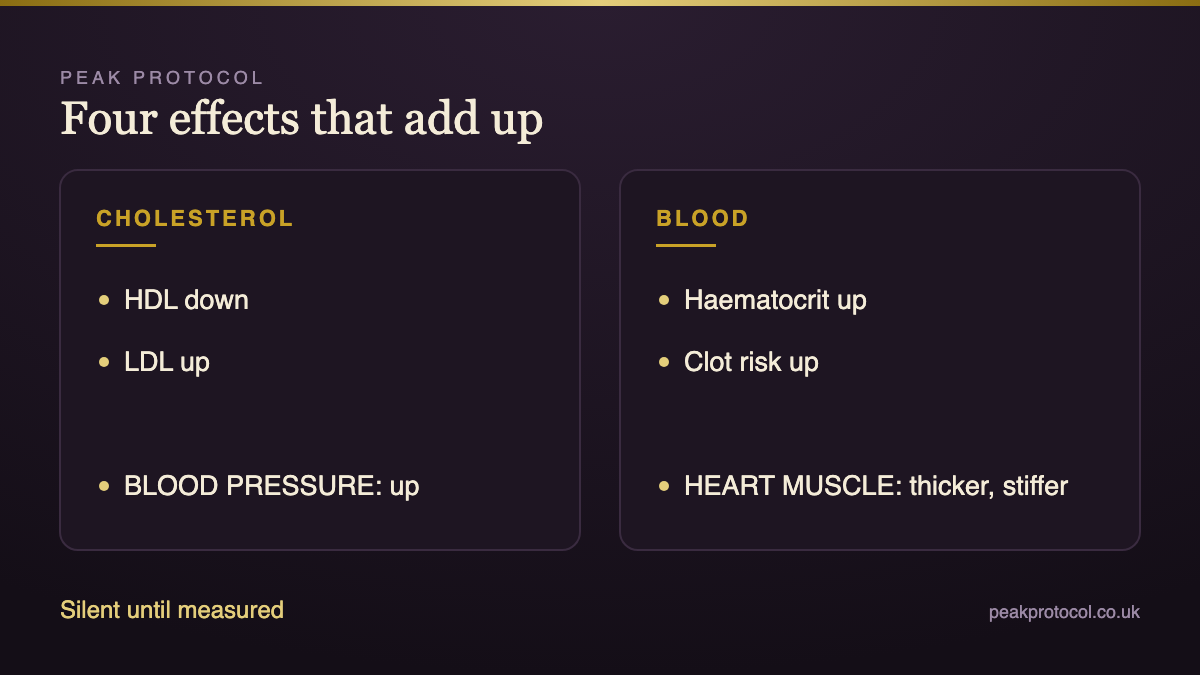
Most harms from anabolic steroids affect one organ or one system. Cardiovascular harm is different because several separate effects push in the same direction at once: worse cholesterol, higher blood pressure, thicker blood and a heart muscle under strain. Each would raise risk on its own. Together they compound.
The NHS guidance on anabolic steroid misuse lists heart attack and stroke among the serious risks of steroid misuse, and studies comparing long term users with non users consistently find more heart disease and earlier deaths among users. Because the people involved are often young and otherwise fit, those events come as a shock, but the warning signs were usually there on a blood test or a blood pressure cuff for years beforehand.
Cholesterol: HDL down, LDL up
HDL cholesterol carries fat away from artery walls, and higher HDL is associated with lower risk. LDL cholesterol deposits fat into artery walls, and higher LDL is associated with higher risk. Anabolic steroids push both the wrong way, and oral steroids are generally the worst offenders because they pass through the liver first. Our guides to Anavar and Winstrol explain why those two in particular are known for severe HDL suppression.
These changes cause no symptoms. They show only on a lipid panel, which is a routine blood test your GP can arrange. Cholesterol usually moves back towards baseline within months of stopping, but the damage done to arteries during a long period of poor cholesterol does not simply disappear. The NHS high cholesterol guidance explains what the numbers mean.
Blood pressure
Steroids can raise blood pressure through fluid retention, effects on the kidneys and blood vessels, and in some cases through conversion to oestrogen. Some compounds, such as Dianabol, are particularly associated with water retention and higher readings.
High blood pressure is called a silent condition because most people feel nothing. Over years it damages arteries, the heart, the kidneys and the brain. The only way to know is to measure it, either at a GP surgery or pharmacy, or with a validated home monitor. The NHS high blood pressure guidance gives the ranges: readings consistently at or above 140/90 in a clinic, or 135/85 at home, are generally considered high.
Thicker blood
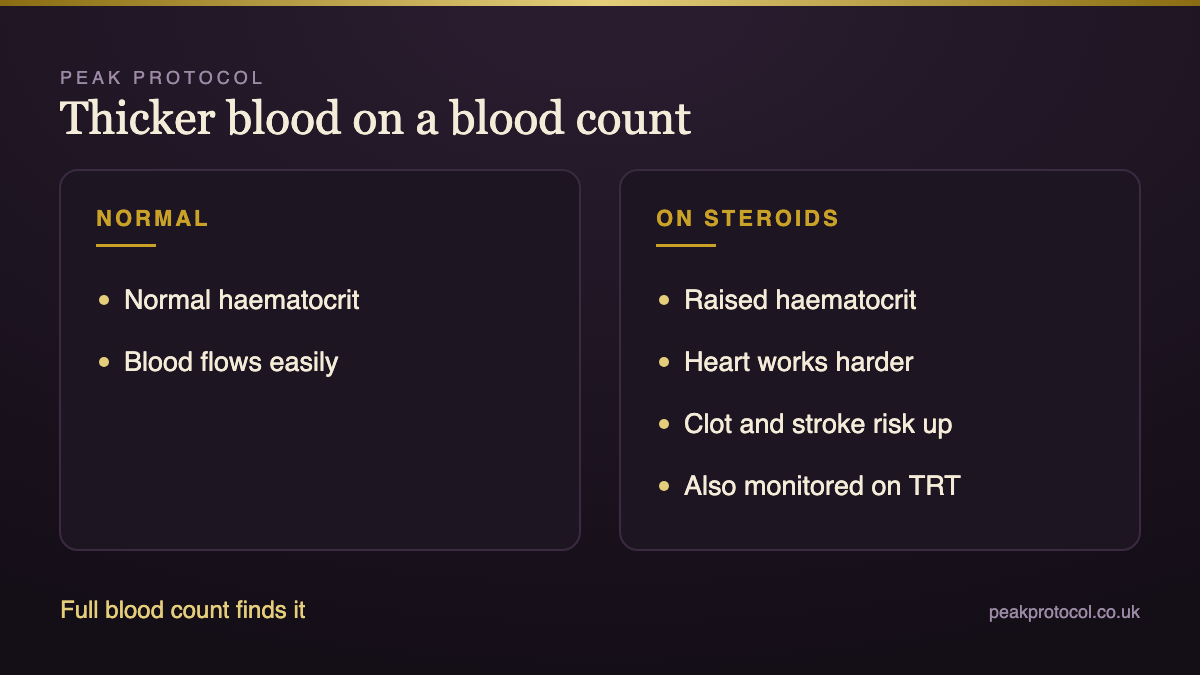
Androgens stimulate the bone marrow to make more red blood cells. A full blood count shows this as a raised haemoglobin and haematocrit, which is the proportion of blood made up of red cells. Above a certain point, blood becomes more viscous, the heart has to work harder and the risk of clots rises. Clots can cause a stroke, a heart attack or a pulmonary embolism.
This is one of the most common abnormal results in people using steroids, and it also happens on prescribed TRT, which is why haematocrit is monitored during treatment. It is easy to detect and should never be ignored.
Changes to the heart muscle
Imaging studies of long term steroid users have found thicker heart walls, particularly in the left ventricle, and reduced ability of the heart to relax and fill between beats. Some studies have also found reduced pumping function. Unlike the thickening seen in athletes from training alone, this pattern is associated with stiffness and poorer function rather than better fitness.
Some of these changes improve after stopping. Others appear to persist. Irregular heart rhythms have also been reported, and stimulant drugs often used alongside steroids, such as clenbuterol, add their own strain on heart rhythm.
What to measure, and how often
Nobody using or having used anabolic steroids should rely on how they feel as a guide to their heart. These checks cover most of the risk and are available through a GP.
| Check | What it shows | Why it matters |
|---|---|---|
| Blood pressure | Pressure in the arteries | High readings cause silent damage over years |
| Lipid panel | HDL, LDL, triglycerides | Steroids push cholesterol in the harmful direction |
| Full blood count | Haemoglobin and haematocrit | Thicker blood raises clot risk |
| Kidney function | Creatinine and eGFR | Blood pressure and the kidneys affect each other |
| ECG or echocardiogram | Heart rhythm and structure | Arranged by a GP or cardiologist if indicated |
Our guide to steroid blood tests explains each marker and how to read results, and the British Heart Foundation publishes clear information on heart conditions and risk.
Reducing cardiovascular risk
The most effective step is stopping, and the second is measuring so that problems are found early. Beyond that, the ordinary advice applies and matters more for steroid users than for most people: do not smoke, keep alcohol within guidelines, get regular aerobic exercise as well as weight training, keep salt down and sleep well. None of that cancels the effect of the drugs, but it avoids adding to it.
People sometimes buy supplements hoping to protect their heart. No supplement offsets steroid effects on cholesterol or blood pressure, and some products marketed for that purpose are unregulated. If a GP finds a problem, prescribed treatment is available and works.
When to call 999
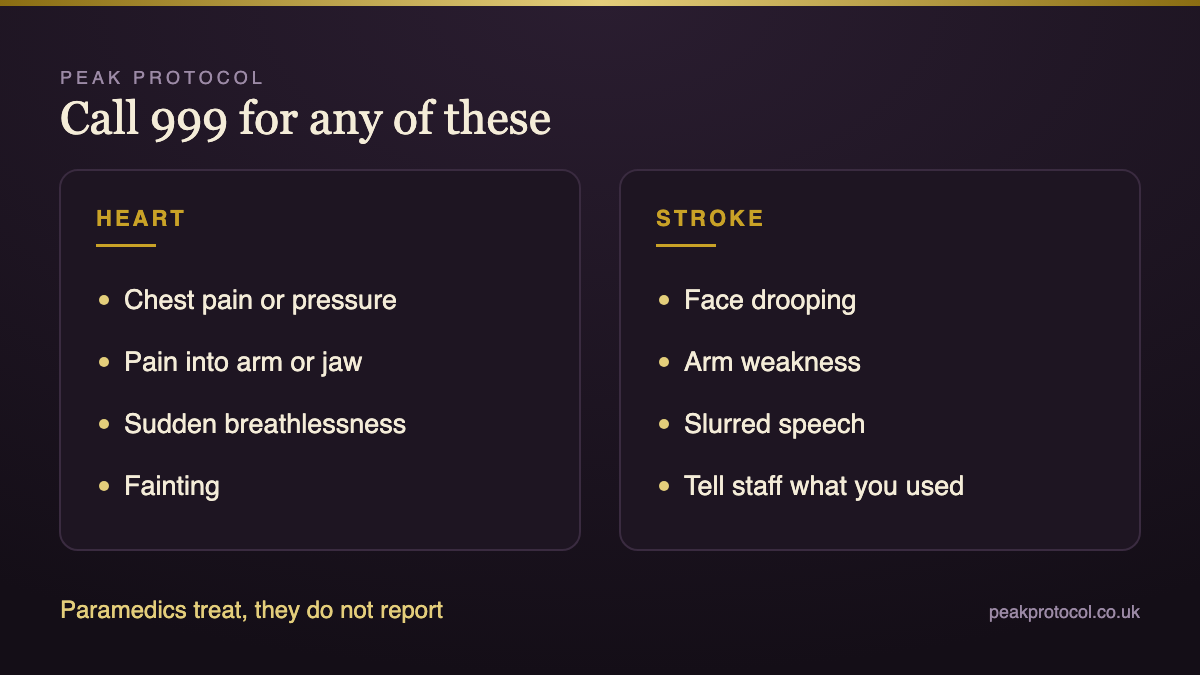
Call 999 for chest pain or pressure, pain spreading to the arm, jaw or back, sudden breathlessness, fainting, a racing or very irregular heartbeat, or signs of stroke: a drooping face, weakness in an arm, or slurred speech. Tell the paramedics or hospital staff about any steroid or stimulant use, because it changes what they look for. They are there to treat you, not to involve the police.
Who is at highest risk
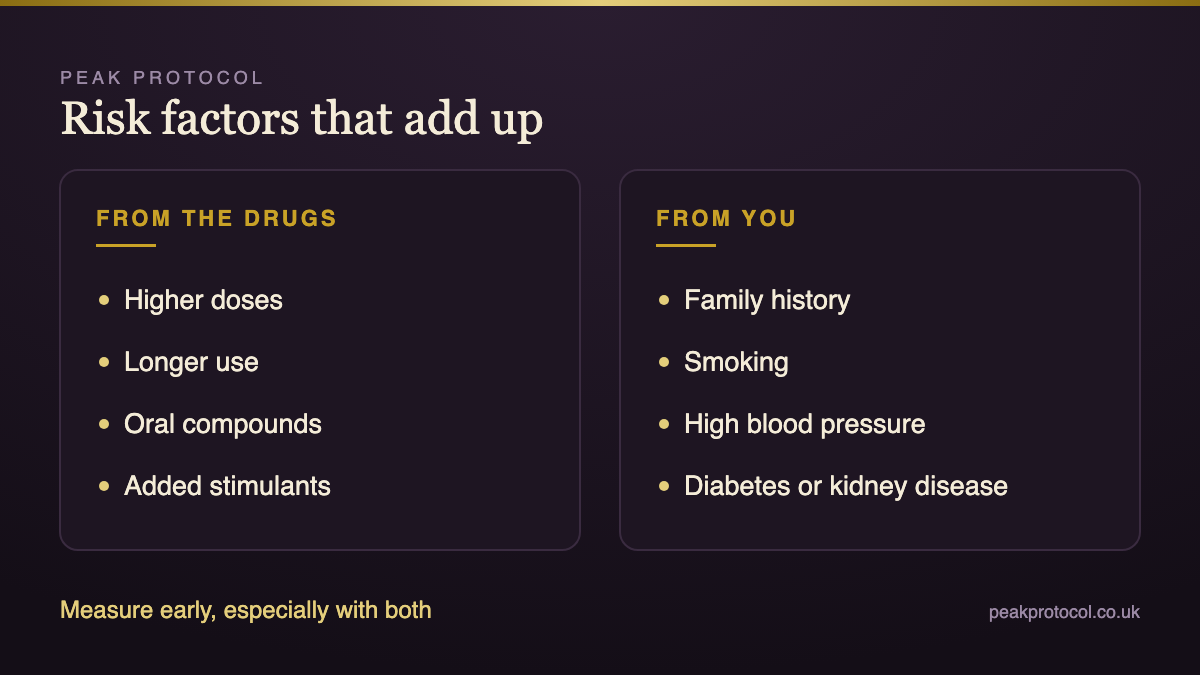
Cardiovascular risk from steroids is not the same for everyone. It rises with higher doses, longer use, oral compounds, combining several drugs and adding stimulants. It is higher again in people who already have risk factors: a family history of early heart disease, smoking, high blood pressure before starting, diabetes, high cholesterol or kidney disease.
Age matters too. Risk accumulates, so someone who has used steroids on and off for fifteen years carries a different profile from someone who has just started, even if both feel fine. The NHS Health Check, offered in England to adults aged 40 to 74 without existing heart disease, is a useful starting point, but anyone who has used steroids should ask for checks earlier and be open about their history.
Stimulants and fat burners
Steroid use is often combined with stimulants for fat loss. Clenbuterol raises heart rate, can disturb heart rhythm and lowers potassium. Thyroid hormone taken without medical need speeds the heart. Some unregulated fat burners have contained DNP or stimulants that are banned in food supplements. Each adds cardiac strain on top of the effects described above, and the combination is where many of the most serious emergencies come from.
Even legal pre workout products can contain high doses of caffeine. For most healthy adults, moderate caffeine is fine, but it is worth knowing how much you are taking across coffee, energy drinks and supplements. Our pre workout range states the caffeine per serving on every product for that reason.
Five misunderstandings about steroids and the heart
- “I am fit, so my heart is fine.” Fitness does not protect against high blood pressure, poor cholesterol or thicker blood.
- “I would feel it if something was wrong.” Most of these changes cause no symptoms until an event.
- “Orals are milder.” Oral steroids are often the worst for cholesterol.
- “Giving blood solves thick blood.” Blood donation services have their own eligibility rules and are not a treatment service. Raised haematocrit needs a doctor.
- “It all goes back to normal when I stop.” Cholesterol and blood pressure often improve, but some heart muscle changes appear to persist.
Steroids and heart health: common questions
Do steroids damage your heart?
Long term anabolic steroid use is linked to high blood pressure, harmful cholesterol changes, thicker blood and a thickened, stiffer heart muscle. Together these raise the risk of heart attack and stroke.
Do steroids raise blood pressure?
They commonly do, through fluid retention and effects on blood vessels and kidneys. It usually causes no symptoms, so it has to be measured.
What do steroids do to cholesterol?
They lower HDL, the protective cholesterol, and raise LDL, the harmful cholesterol. Oral steroids tend to have the strongest effect.
Is heart damage from steroids reversible?
Cholesterol and blood pressure often improve within months of stopping. Some changes to the heart muscle appear to persist, which is why early detection matters.
What tests should a steroid user have for their heart?
At minimum a blood pressure reading, a lipid panel and a full blood count. A GP may add kidney function, an ECG or a referral for an echocardiogram.
Does TRT affect the heart?
Prescribed TRT aims for normal hormone levels and is monitored, including haematocrit. The cardiovascular effects of normal range testosterone are very different from those of high dose steroid use.
Sources and review status
This guide draws on the NHS guidance on anabolic steroid misuse, the NHS high blood pressure guidance, the NHS high cholesterol guidance and heart health information from the British Heart Foundation.
Written by the Peak Protocol editorial team. This page has not been reviewed by a medical or legal professional. It is information, not medical or legal advice, and it is not an encouragement to use any drug. Peak Protocol sells legal sports supplements and does not sell anabolic steroids, SARMs or prescription medicines. How we research and correct content is set out in our editorial policy.